
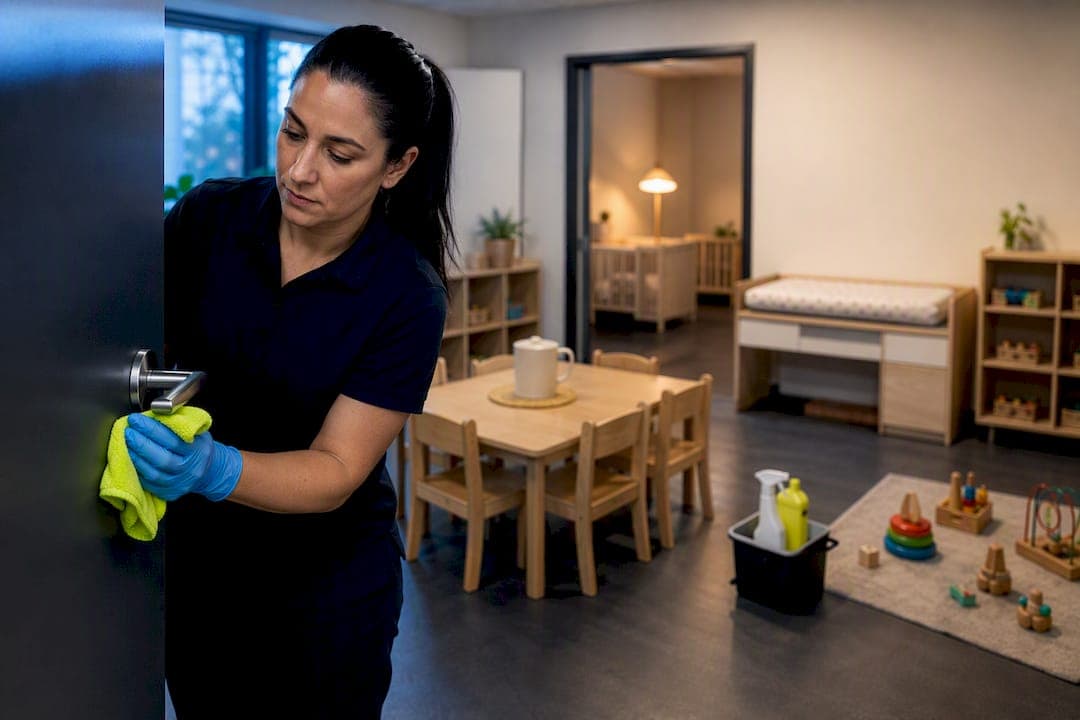
Australian childcare cleaning obligations sit on two pillars: the National Quality Framework, assessed by ACECQA under Quality Area 2, and the NHMRC's Staying Healthy guidance on cleaning versus disinfection. In practice, that means daily high-touch cleaning, a documented cleaning schedule, a hazardous-chemicals register with current SDS sheets, and staff induction that covers infection control. The single next step for most services: get your daily, weekly and periodic cleaning plan into writing, and keep the records where an assessor can find them in seconds.
TL;DR:
- Most childcare services must document their cleaning schedules, policies, and staff training to meet ACECQA assessment standards and pass inspection.
- Daily routines should include high-touch surface disinfection, toy cleaning in infant rooms, and spill management procedures following NHMRC guidelines.
- Proper sequence of cleaning and disinfecting requires thorough cleaning with detergent first, followed by disinfection, especially after bodily fluid spills.
- Staff must maintain current SDS records, store chemicals properly, and undergo regular infection control and chemical safety training to ensure audit readiness.
- Routine cleaning is insufficient after major events like outbreaks or renovations, which often require professional eco-friendly deep cleaning for effective decontamination.
Table of Contents
- What Australia's national framework requires of childcare cleaning
- Building a routine cleaning schedule that matches real risk
- Toileting, nappy changes, spills and food areas: the procedures that matter most
- Cleaning versus disinfecting: get the sequence right
- Managing chemicals safely: SDS, registers and storage
- Training staff and documenting practice for audit readiness
- A sample daily and weekly checklist you can adapt today
- When a specialist deep decontamination makes more sense than in-house cleaning
- Where most services actually lose points on assessment
- When an eco-friendly deep decontamination service is the right call
- Sources
What Australia's national framework requires of childcare cleaning
The Education and Care Services National Law and Regulations don't hand you a cleaning checklist. They set an outcome: children's health and safety, protected through systems a service can prove it runs consistently. That's where Quality Area 2 of the National Quality Standard comes in. Assessors want evidence of infection-control practice, not just a tidy room on the day they visit.
What ACECQA assessors typically look for:
- A written service plan or policy naming who cleans what, and when
- Cleaning schedules or logs with dates and initials, not blank templates
- Staff who can explain the nappy-change or spill procedure without checking a poster
- Consistency across rooms and shifts, including relief staff and contractors
The NHMRC's Staying Healthy guidance fills the operational gap the National Law leaves open. It's the document that tells you to clean daily, disinfect only when needed, and wash toys on a set rota. Treat the National Law as the "why" and Staying Healthy as the "how." Services that only have one or the other tend to fail on documentation even when their actual cleaning is fine.
Building a routine cleaning schedule that matches real risk
Cleaning frequency in a childcare setting isn't one number. It's a matrix: some tasks happen every day regardless, others are triggered by visible mess, and a smaller set only needs attention weekly or termly. State departmental guides built for schools translate well into early learning settings once you adjust for nappy-age rooms and mealtimes.
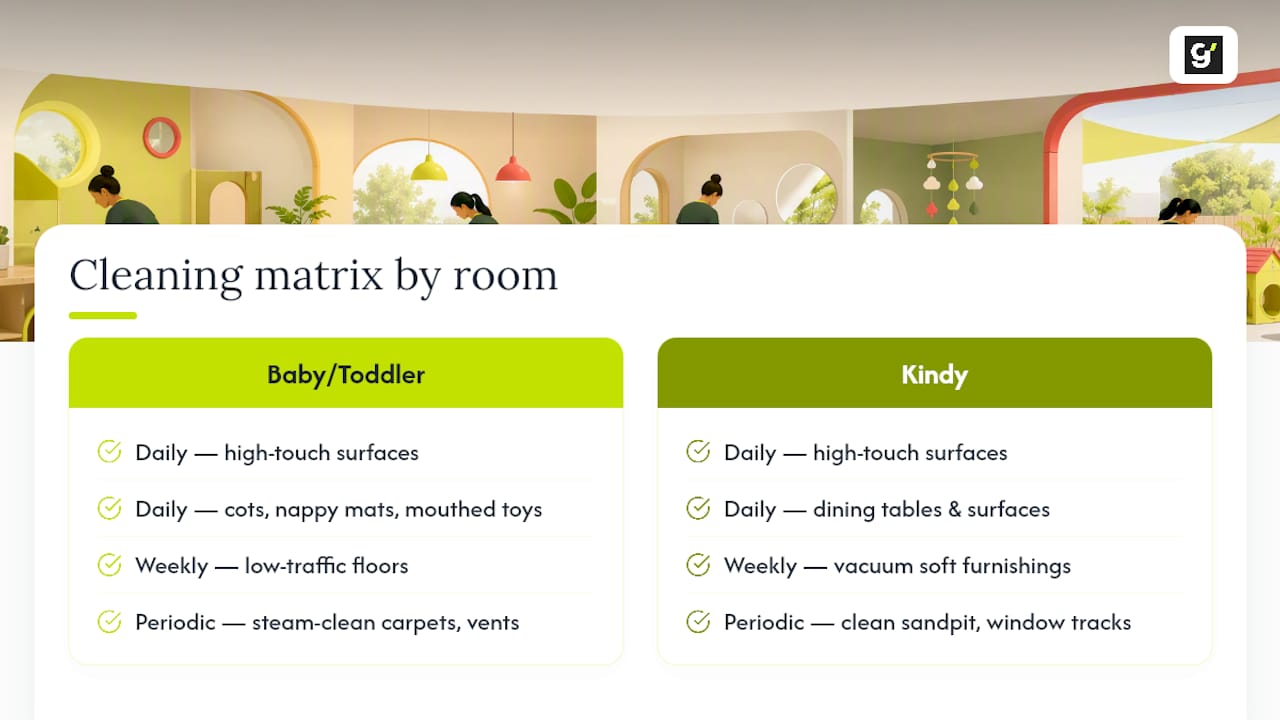
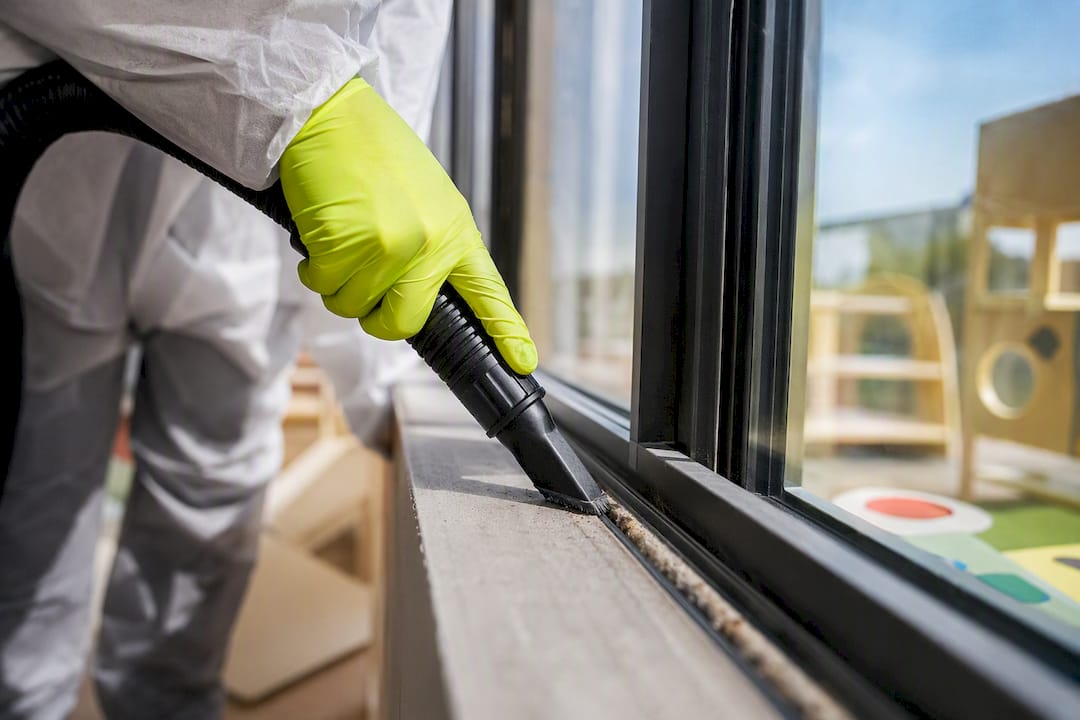
A workable frequency structure includes daily cleaning of high-touch surfaces such as door handles, light switches, taps, toilet seats and surrounds, nappy-change mats, and dining tables before and after meals; daily cleaning in baby/toddler rooms of items like cots, floor mats, and mouthed toys; regular weekly cleaning of floors in low-traffic areas, spot-checking curtains, and vacuuming soft furnishings; and periodic cleaning such as steam-cleaning carpets, turning or replacing sandpits, and cleaning air vents and window tracks according to needs.
Set a trigger system on top of the calendar: anything visibly soiled gets cleaned immediately regardless of schedule, high-use areas escalate to daily even if the matrix says weekly, and any gastro or respiratory outbreak bumps the whole service to outbreak-mode cleaning until case numbers drop. Build the matrix per room, not per centre. A baby room and a kindy room have different risk profiles and shouldn't share a schedule.
Toileting, nappy changes, spills and food areas: the procedures that matter most
These are the tasks where a slack process turns into a genuine health incident, and they're the ones ACECQA assessors probe hardest.
- Nappy changing: gloves on before you start, contain the soiled nappy immediately, wipe the child, then clean the mat with detergent and water, disinfect if there's been a stool, and log the change. Wash hands (not just gloves off) before touching the next child.
- Body-fluid spills: contain and clean visible soil first, then disinfect the area, following the clean-then-disinfect sequence Education Queensland sets out for exactly this scenario. Household bleach diluted 1:50 is appropriate for certain blood and gastro spills, not for routine use.
- Food-prep areas: a hand basin dedicated to food prep only, separate from the nappy-change basin, cleaned between uses and never shared with cleaning-cloth rinsing.
- Toys: mouthed toys daily in infant rooms, shared toys weekly elsewhere, sooner if a child in the room has been unwell.
Pro Tip: Colour-code your cloths and buckets, red for bathrooms, blue for general surfaces, so relief staff can't accidentally cross-contaminate a nappy-change area with a lunch table wipe.
Cleaning versus disinfecting: get the sequence right
Cleaning and disinfecting aren't interchangeable, and using them in the wrong order wastes the disinfectant entirely. Cleaning removes dirt, food and organic matter with detergent and water. Disinfection kills the microbes left behind, but only works if the surface is already clean, since grime shields germs from most disinfectant chemistry.
The NHMRC's guidance is blunt on this: clean first, disinfect second, and reserve disinfection for situations that actually warrant it.
- Routine daily surfaces need detergent and water, not a disinfectant spray every time
- Disinfect after body-fluid spills, during gastro or flu outbreaks, and on nappy-change surfaces after every use
- Never store diluted disinfectant solutions for later use; mix fresh, use, and discard
- Ventilate the room while disinfecting and afterwards; some products cause respiratory irritation in enclosed spaces
Overusing potent disinfectants isn't a sign of thoroughness. It adds unnecessary chemical exposure for children without improving hygiene outcomes.
Managing chemicals safely: SDS, registers and storage
Every cleaning chemical on site needs a current Safety Data Sheet and an entry in your hazardous-chemicals register, listing the product, its hazard classification, storage location and the quantity typically held. This is a WHS obligation, not an optional extra, and it's one of the first things an assessor or WHS inspector will ask to see.
- Keep SDS sheets accessible to staff, either physically or digitally, not filed away unread
- Label every container clearly using GHS pictograms, even decanted spray bottles
- Store all chemicals in a locked cupboard or high shelf entirely out of children's reach, separate from food storage
- Provide PPE, gloves and eye protection at minimum, for anyone mixing or applying disinfectant
- If you engage contractors, ask for their own SDS list and confirm their products match your register before they start work
A toxic ingredient warning label guide is worth keeping on hand for staff who aren't confident reading GHS symbols at a glance.
Training staff and documenting practice for audit readiness
Systems only count if staff can demonstrate them consistently, which is exactly what ACECQA assessors are testing for under Quality Area 2. Induction should cover infection control basics, where the SDS register lives, the nappy-change procedure step by step, and what to do the moment a spill happens.
- Run infection-control and chemical-safety induction for every new staff member before their first shift, not weeks later
- Use daily checklists co-signed by two staff members; a single unsigned log is one of the most common assessor flags
- Keep an incident log for spills, outbreaks and any exposure events, and retain records for the period your state regulator requires
- If you outsource cleaning, put the scope of work in writing and verify completion against your own checklist, not just the contractor's invoice
Pro Tip: Ask relief and casual staff to complete a five-minute cleaning-procedure refresher on their first shift back after any absence longer than a fortnight. It catches drift before it becomes habit.
A sample daily and weekly checklist you can adapt today
Start simple. A one-page daily sheet covering arrival hygiene, high-touch surfaces, toy checks and wet areas gets you most of the way to audit-ready documentation.
Daily: door handles and light switches wiped, hand basins checked and restocked with soap, nappy-change mats cleaned between every use, dining tables before and after meals, mouthed toys in infant rooms, floors spot-cleaned as needed.
Weekly: general floor mopping, soft furnishings vacuumed, shared toys washed, window tracks wiped, bins emptied and sanitised.
Termly: carpets steam-cleaned, curtains laundered, sandpit turned or topped up, deep clean of outdoor equipment.
A commercial workspace deep-cleaning schedule template is a useful starting structure to adapt for the termly tier. Keep every completed log for at least the retention period your state regulator sets, stored somewhere an assessor can pull up on the spot.
When a specialist deep decontamination makes more sense than in-house cleaning
Some jobs sit outside what a routine cleaning roster was built for. Post-construction dust and residue, a severe or prolonged outbreak, or the reset needed at end of term all call for a different level of clean than daily wiping down surfaces.
That's where non-toxic hazardous-waste cleaning approaches matter for centres with infants and children who react to harsh chemical residue. Low-residue, eco-friendly agents reduce that exposure risk without cutting corners on decontamination.
Where most services actually lose points on assessment
Unsigned checklists, an SDS folder nobody's updated in a year, and induction that's a five-minute chat rather than a documented session. Those three account for most flags I see raised. Fix the paperwork before you fix the mop technique, and pressure-test your checklist against a surprise visit scenario.
— Lead
When an eco-friendly deep decontamination service is the right call
Routine cleaning covers daily wear. It doesn't cover the aftermath of renovation dust settling into every vent, a gastro outbreak that's moved through three rooms, or the deep reset most centres want done properly at the end of term. That's a gap filled by professional eco-friendly deep cleaning services for those needing more than a mop and a roster, without introducing the harsh chemical residue that routine disinfectant use already tries to limit around children.
Grimescene's deep decontamination service uses non-toxic, bleach-free agents built for exactly this kind of full-sweep clean, sensitive enough for infant rooms while still targeting the buildup routine cleaning leaves behind. For centres managing high-frequency turnover, such as a service running holiday-program spaces, the short-term rental reset protocols show how the same approach handles rapid turnaround without cutting corners. If your next end-of-term clean, post-construction job or outbreak response needs more than your roster can cover, consider contacting professional services for a quote and scheduling.
Sources
- Staying healthy: preventing infectious diseases in early childhood education and care (NHMRC)
- QA2 introduction (ACECQA)
- Cleaning frequency table overview (Education Victoria)
- General cleaning and disinfection (Education Queensland)