
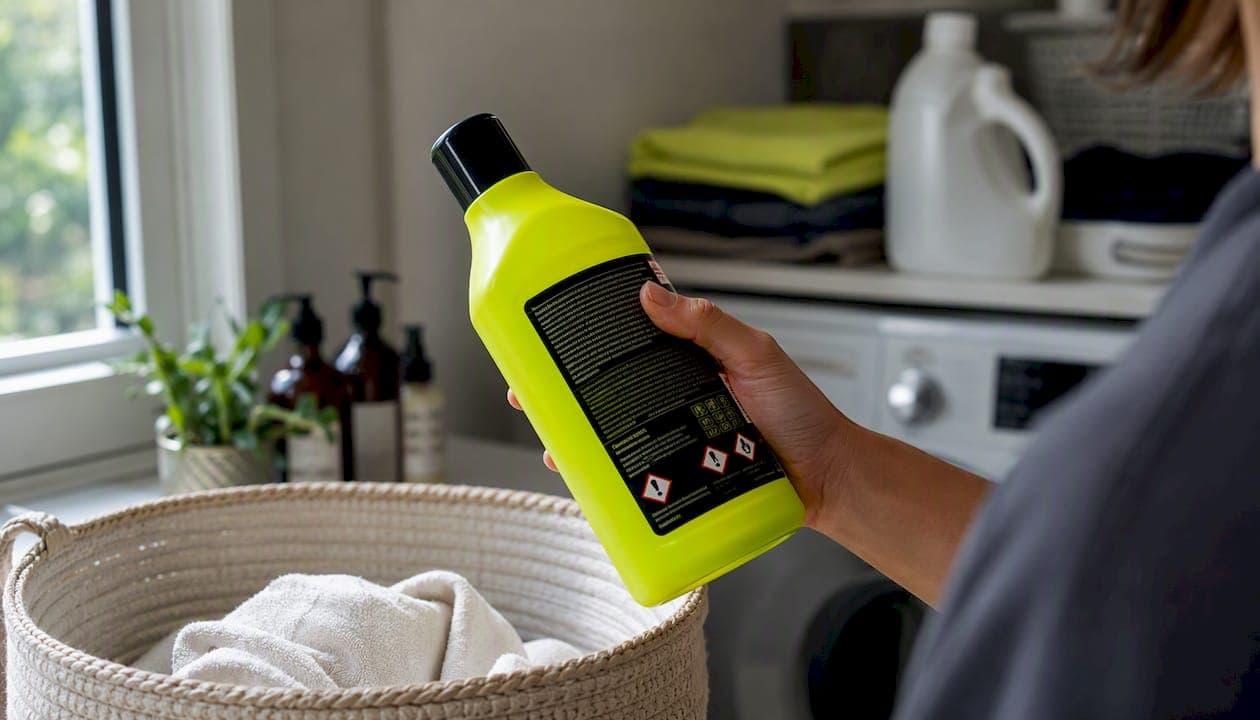
On Australian cleaning product labels, three signal words tell you how serious the hazard is: Danger (highest), Warning (moderate), and Caution (lower). If someone is exposed to a hazardous cleaning product, follow the label's first-aid instructions immediately and call the Poison Information Centre Australia on 13 11 26.
- Danger — the product poses a severe, potentially life-threatening hazard. Requires the greatest care, appropriate personal protective equipment (PPE), and strict handling controls.
- Warning — moderate hazard. The product can cause significant harm under certain conditions; follow all precautionary statements on the label.
- Caution — lower hazard, but not harmless. Still requires safe handling and storage away from children.
As the WHO's child injury prevention report confirms, clear labelling and immediate access to poison centres are among the most effective ways to reduce harm from household chemical exposures. That context matters: a label is not just packaging, it is the first line of defence.
Emergency contacts: Poison Information Centre Australia: 13 11 26 (24 hours, 7 days) Emergency services: 000
Pro Tip: Save 13 11 26 in your phone now. In a poisoning emergency, having the number ready saves critical seconds.
Key takeaways
Understanding toxic cleaning ingredient warning labels in Australia comes down to reading signal words correctly, knowing which regulator applies to your product, and having emergency contacts ready before you need them.
| Point | Details |
|---|---|
| Signal words map to hazard severity | Danger = highest hazard, Warning = moderate, Caution = lower; all require safe handling. |
| Never mix bleach with ammonia or acids | These combinations produce toxic gases; vinegar and hydrogen peroxide together form peracetic acid, a potent irritant. |
| Call 13 11 26 in any exposure emergency | The Poison Information Centre operates 24/7 and gives product-specific advice; call 000 if the person is unconscious or not breathing. |
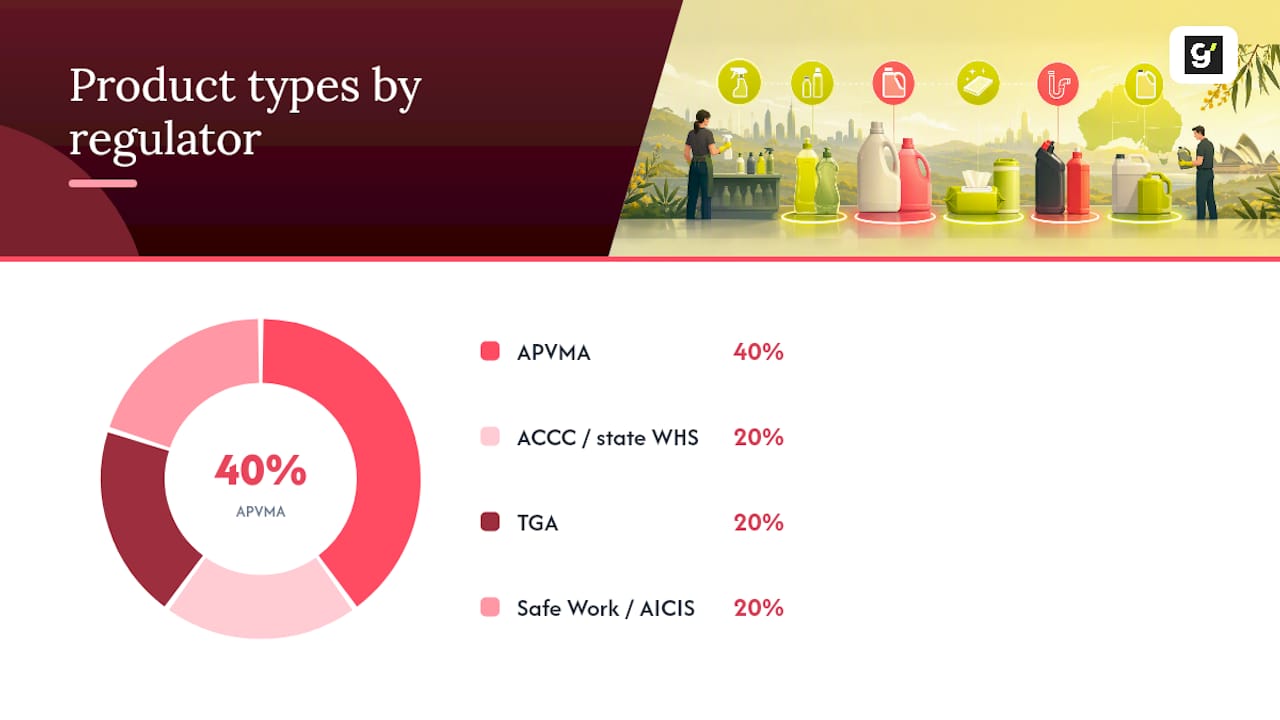
| Regulatory responsibility is split by product function | Disinfectants need APVMA registration; therapeutics go to TGA; industrial chemicals go through AICIS; consumer products fall under the ACCC. |
| Grimescene uses non-toxic, bleach-free agents | Lower-hazard formulations reduce SDS obligations, PPE requirements, and chemical exposure risks for occupants and workers. |
Table of Contents
- Which Australian laws and regulators control cleaning-product labelling?
- What a valid hazard label looks like in Australia
- Common toxic or hazardous cleaning ingredients to watch for
- Workplace labels vs household labels: what professionals must do differently
- How to read a Safety Data Sheet and ingredient list
- Label elements checklist and what a compliant Australian label looks like
- What to do immediately if someone is exposed to a toxic cleaning product
- Compliance checklist for manufacturers, suppliers, and professionals
- Why Grimescene chooses non-toxic agents and what that means for labelling
- Grimescene's professional cleaning services: non-toxic, compliant, and ready to deploy
- Sources
Which Australian laws and regulators control cleaning-product labelling?
Regulatory responsibility for cleaning products in Australia is split by what a product does and how it is marketed, not simply what it contains. The same chemical formulation can fall under different agencies depending on whether it is sold as a disinfectant, a therapeutic, a pesticide, or a general consumer cleaner, as the American Cleaning Institute notes.
The main regulators and instruments:
- Safe Work Australia — sets the national framework for workplace hazard communication, including the Globally Harmonised System (GHS) of Classification and Labelling of Chemicals and Safety Data Sheet (SDS) requirements under the Work Health and Safety (WHS) laws adopted across most states and territories.
- Australian Industrial Chemicals Introduction Scheme (AICIS) — regulates the introduction of industrial chemicals (including many cleaning-product ingredients) into Australia. Manufacturers and importers must assess and register new chemicals with AICIS before they enter the supply chain.
- Australian Pesticides and Veterinary Medicines Authority (APVMA) — APVMA guidance confirms that many disinfectants are regulated as pesticides in Australia and require APVMA registration and compliant labelling when sold for disinfectant use.
- Therapeutic Goods Administration (TGA) — governs antiseptics, medicated hand sanitisers, and other products that make therapeutic claims. These must meet TGA labelling standards under the Therapeutic Goods Act 1989.
- ACCC / productsafety.gov.au — the ACCC's product safety guidance covers consumer-facing obligations, including mandatory safety standards, recalls, and enforcement for hazardous household goods.
- Poisons Standard (SUSMP) — administered by the Department of Health, the Standard for the Uniform Scheduling of Medicines and Poisons classifies substances into schedules (S5, S6, S7 for household and industrial chemicals) and dictates packaging, labelling, and storage requirements.
- State and territory health and environment agencies — provide local guidance and enforcement. WorkSafe Victoria, SafeWork NSW, and equivalent bodies in other states and territories administer WHS laws and can inspect workplaces for label and SDS compliance.
| Product type | Primary regulator | When it applies |
|---|---|---|
| Domestic detergent / general cleaner | ACCC / state WHS authority | Consumer sale; workplace use triggers SDS obligation |
| Disinfectant (pesticidal claim) | APVMA | Product claims to kill bacteria, viruses, or fungi |
| Antiseptic / medicated sanitiser | TGA | Therapeutic or skin-contact antimicrobial claim |
| Industrial degreaser / solvent | Safe Work Australia / AICIS | Workplace supply; new chemicals require AICIS assessment |
| Pesticide / biocide | APVMA | Registered pest-control or disinfectant use |
Key insight: A product labelled "disinfectant" in Australia is almost certainly regulated by the APVMA, not just the ACCC. Selling a disinfectant without APVMA registration is a legal breach, regardless of what the label says about cleaning performance.
Pro Tip: When in doubt about which regulator applies to your product, start with Safe Work Australia's Hazardous Chemicals guidance and cross-check with the APVMA and TGA product-type definitions.
What a valid hazard label looks like in Australia
A compliant Australian hazard label is not just a list of ingredients. It is a structured communication tool with specific required elements, and missing any one of them is a compliance failure.
Required label elements under GHS and Australian standards:
- Product identifier — the chemical name, trade name, or mixture name that matches the SDS.
- Signal word — "Danger", "Warning", or "Caution" printed prominently. Signal words correspond directly to hazard severity: Danger indicates the highest hazard level and demands the greatest protective measures.
- GHS pictograms — standardised black symbols on a white background inside a red diamond border. Common ones on cleaning products include the skull and crossbones (acute toxicity), the exclamation mark (irritant/harmful), the corrosion symbol (skin/eye damage), and the health hazard symbol (respiratory sensitiser or carcinogen).
- Hazard statements (H-codes) — standardised phrases describing the nature of the hazard, e.g., H314 "Causes severe skin burns and eye damage."
- Precautionary statements (P-codes) — instructions for safe handling, storage, disposal, and first aid, e.g., P260 "Do not breathe vapours" or P305+P351+P338 for eye-contact first aid.
- First-aid instructions — specific steps for inhalation, skin contact, eye contact, and ingestion.
- PPE requirements — gloves, eye protection, respiratory protection where required.
- Manufacturer or supplier contact details — name, address, and emergency telephone number.
- Batch/lot number and expiry date — required for certain scheduled substances and pesticides.
WA Health's guidance on household chemical labels provides a clear, Australia-specific breakdown of these elements and is worth bookmarking for consumer reference.
On GHS pictograms: The exclamation mark is the most commonly misread symbol. Many people assume it means "handle carefully." It actually signals that the product is an irritant, harmful if swallowed or inhaled, or may cause allergic skin reactions — a meaningfully higher concern than simple caution.
Pro Tip: The SDS, not the consumer label, is where you find CAS numbers and exact concentration ranges. For any product used in a workplace, always pull the SDS from the supplier before first use. CAS numbers let you cross-check ingredient hazards against databases like PubChem in seconds.
Pro Tip: Consumer labels are legally required to carry first-aid instructions for scheduled substances. If a product's label omits first-aid steps entirely, that is a red flag worth reporting to the ACCC.
Common toxic or hazardous cleaning ingredients to watch for
Most cleaning products work because they are chemically aggressive. That aggression is the hazard. The table below covers the ingredients that appear most frequently in harm reports and SDS incident data.
| Ingredient | Common uses | Main hazards | Handling notes |
|---|---|---|---|
| Sodium hypochlorite (bleach) | Disinfection, whitening, mould removal | Corrosive to skin and eyes; releases chlorine gas when mixed with acids or ammonia | Dilute per label; never mix; ventilate |
| Ammonia / ammonium hydroxide | Glass cleaners, degreasers, floor products | Respiratory irritant; toxic gas when mixed with bleach; eye and skin burns | Use in ventilated spaces; avoid with bleach |
| Quaternary ammonium compounds (QACs) | Disinfectants, sanitisers, fabric softeners | Skin and respiratory sensitiser; linked to occupational asthma | Wear gloves; avoid aerosol inhalation |
| Glycol ethers | Degreasers, multi-surface sprays, solvents | Reproductive toxicity concerns; absorbed through skin; VOC contributor | Wear nitrile gloves; ventilate |
| Ethanolamines (MEA, DEA, TEA) | Surfactants in all-purpose cleaners | Respiratory irritant; VOC contributor; potential sensitiser | Limit inhalation; linked to respiratory effects |
| Hydrogen peroxide | Disinfectants, mould treatments, whiteners | Oxidiser; irritant at higher concentrations; dangerous when mixed with vinegar | Use at recommended dilution; store away from heat |
| Fragrances / synthetic VOCs | Masking odours in most consumer cleaners | Trigger asthma and headaches; many components undisclosed on labels | Choose fragrance-free or low-VOC products |
| Hydrochloric acid | Toilet bowl cleaners, descalers | Severely corrosive; releases toxic fumes; dangerous with bleach | Full PPE; extreme ventilation required |
Mixing hazards you must know
Two combinations cause the most preventable chemical injuries in Australian homes and workplaces.
Bleach + ammonia produces chloramine gases. Even at low concentrations, these cause coughing, shortness of breath, chest pain, and in enclosed spaces, can be life-threatening. This combination appears when people mix a bleach-based bathroom cleaner with an ammonia-based glass cleaner, often without realising both are in use.
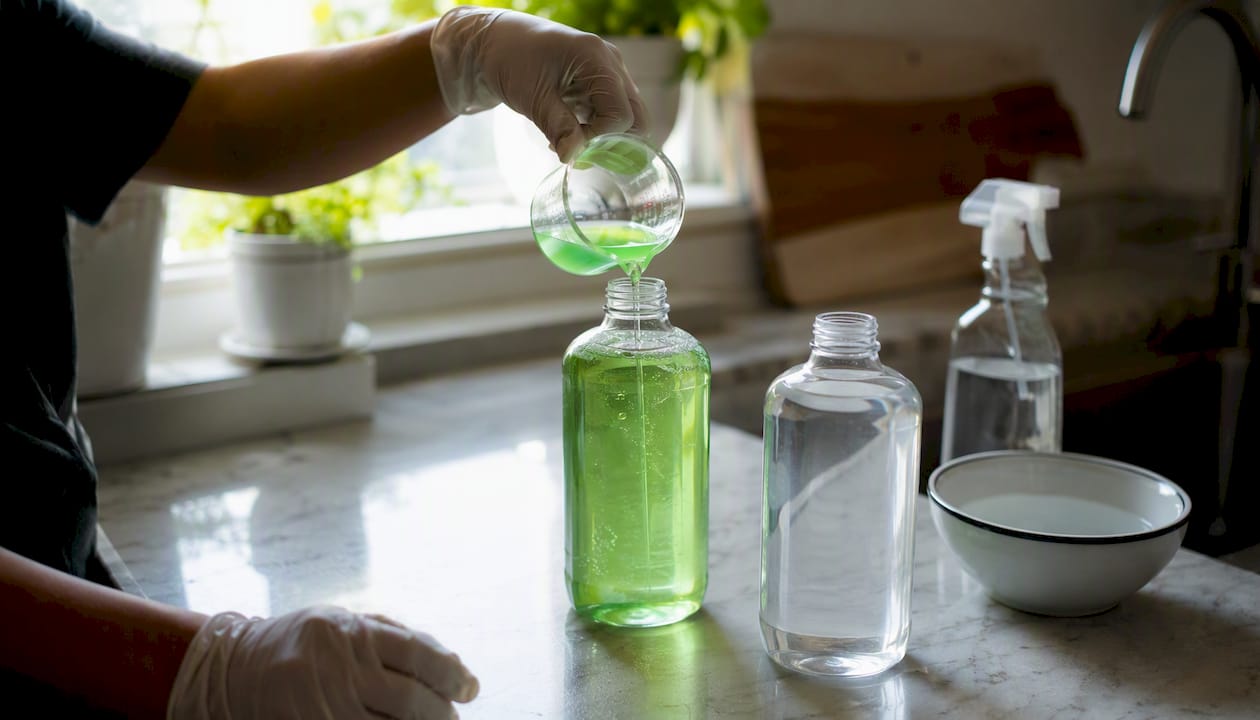
Vinegar + hydrogen peroxide forms peracetic acid. As Victoria's Department of Health confirms, this is a potent irritant to the eyes, skin, and respiratory system. The two products are sometimes used sequentially as a "natural" disinfecting method, but combining them in the same space or container is genuinely hazardous.
Bleach + acids (including many toilet bowl cleaners and descalers) releases chlorine gas. Even brief exposure causes severe respiratory distress.
Safer alternatives and practical behaviour changes:
- Choose products certified under the US EPA Safer Choice programme or equivalent low-VOC, fragrance-free formulations as a procurement baseline.
- Always dilute to the label's specified ratio. Stronger is not safer; it is just more hazardous.
- Ventilate every time. Open windows and run exhaust fans before and during use.
- Wear nitrile gloves and eye protection when handling any product carrying a Danger or Warning signal word.
- Store products in original containers with lids sealed. Never decant into unlabelled bottles.
- Read Grimescene's non-toxic hazardous waste cleaning guide for practical alternatives to high-hazard formulations.
Pro Tip: "Eco" and "natural" on a label are marketing terms, not regulatory classifications. Check the actual ingredient list and signal word before assuming a product is low-hazard. The eco cleaning myths debunked guide covers the most common misconceptions.
Workplace labels vs household labels: what professionals must do differently
Consumer labels and workplace hazard labels serve different audiences and carry different legal obligations. A bottle of bleach sold at a supermarket and the same chemical supplied to a commercial cleaning contractor are governed by different requirements the moment they enter a workplace.
Consumer labels must carry the signal word, pictograms, hazard and precautionary statements, first-aid instructions, and manufacturer contact. They are designed for a general public audience and assume no specialist training.
Workplace / industrial labels must additionally be supported by a Safety Data Sheet (SDS) — a 16-section technical document the supplier is legally required to provide. Under WHS laws aligned with Safe Work Australia's GHS framework, employers must:
- Obtain and maintain a current SDS for every hazardous chemical in the workplace.
- Make SDS documents accessible to workers at all times during their shift.
- Train workers to read and act on SDS information before they handle any hazardous chemical.
- Provide appropriate PPE and verify it is used correctly.
- Ensure correct storage, segregation, and disposal per SDS Section 7 and Section 13.
- Keep records of chemical inventories and exposure monitoring where required.
Professional compliance checklist:
- Maintain a physical or digital SDS binder for every product on site, updated whenever a product is reformulated.
- Conduct induction training that covers signal words, GHS pictograms, and emergency procedures.
- Post emergency contacts (13 11 26, 000) and the SDS location in every cleaning-product storage area.
- Audit PPE against SDS Section 8 requirements for each product, not just a generic "wear gloves" instruction.
- Never substitute a product without obtaining and reviewing the new SDS first.
SDS request template for suppliers:
Understanding the difference between commercial-grade eco cleaning and consumer-grade products is part of this professional obligation.
How to read a Safety Data Sheet and ingredient list
An SDS has 16 standardised sections. Most professionals never need to read all 16 in detail. The six that matter most for day-to-day safety decisions are:
- Section 2 — Hazard identification: The signal word, GHS pictograms, hazard statements, and precautionary statements. This is the SDS equivalent of the label. Read it first.
- Section 3 — Composition / information on ingredients: Lists each ingredient by chemical name and CAS number, with concentration ranges. This is where you find what is actually in the product, at what levels, and whether any sensitising agents are present.
- Section 4 — First-aid measures: Specific instructions for inhalation, skin contact, eye contact, and ingestion. These should match the label; if they do not, the label may be outdated.
- Section 8 — Exposure controls / personal protection: Workplace exposure standards (WES), engineering controls, and PPE requirements. Safe Work Australia publishes Australian WES values that apply here.
- Section 11 — Toxicological information: Health effects by exposure route, including acute and chronic data. This section reveals whether an ingredient has reproductive toxicity, carcinogenicity, or sensitisation concerns.
- Section 15 — Regulatory information: Classification under Australian law, scheduling under the Poisons Standard, and any APVMA or TGA registration details. Practitioners should check this section for regulatory and classification notes; it often reveals allergens and trace toxicants not disclosed on the consumer label.
Reading the ingredient list on a consumer label:
- Ingredients are not always listed by concentration on consumer cleaning labels (unlike cosmetics). Look for the signal word and H-codes first.
- If a CAS number appears on the label or SDS, search it in PubChem to retrieve full hazard and toxicological data.
- "Fragrance" or "parfum" on a label can represent dozens of undisclosed chemicals, some of which are respiratory sensitisers.
- Concentration ranges in Section 3 of the SDS tell you whether an ingredient is present at a trace level or a hazardous concentration.
When to escalate:
- The SDS is missing, incomplete, or more than five years old without a revision note.
- An ingredient appears in Section 3 with no CAS number and no concentration range.
- The product is being used in a way not described in Section 1 (intended use).
- A worker reports symptoms consistent with chemical exposure.
In any of these situations, contact Safe Work Australia, your state WHS regulator, or an accredited occupational hygienist before continuing use.
Pro Tip: Section 3 concentration ranges are often expressed as percentage bands (e.g., 5–10%). A product with ammonia at 10% is meaningfully more hazardous than one at 1%. Never assume "low concentration" from a vague label claim; check the SDS.
Label elements checklist and what a compliant Australian label looks like
Use this checklist to audit any cleaning product label quickly, whether you are a consumer buying off the shelf or a procurement officer reviewing a supplier's product range.
Must-have label elements:
- Product name / trade name (matching the SDS)
- Signal word: Danger, Warning, or Caution — printed prominently
- GHS pictogram(s) in red-bordered diamond(s)
- Hazard statements (H-codes) describing the nature of the hazard
- Precautionary statements (P-codes) for handling, storage, and disposal
- First-aid instructions for each exposure route (inhalation, skin, eyes, ingestion)
- PPE requirements
- Manufacturer or Australian importer name, address, and emergency contact
- Net quantity / concentration
- Batch or lot number (required for scheduled substances and pesticides)
- Expiry date (where applicable, e.g., disinfectants with registered efficacy claims)
- APVMA registration number (for registered disinfectants and pesticides)
- Poisons Schedule (e.g., "Schedule 6 Poison") where required under the SUSMP
Sample compliant label text block (generic, illustrative):
ACME Surface Disinfectant Concentrate DANGER — Corrosive Contains: Sodium hypochlorite 5–10%, Sodium hydroxide 1–5% H314: Causes severe skin burns and eye damage. P260: Do not breathe vapours. P280: Wear protective gloves and eye protection. P305+P351+P338: IF IN EYES: Rinse cautiously with water for several minutes. Remove contact lenses if present and easy to do. Continue rinsing. Seek medical attention. First aid — Skin: Remove contaminated clothing. Rinse skin with water for 20 minutes. Seek medical advice. Emergency: 13 11 26 | Supplier: [Name, address, phone] APVMA Reg. No. XXXXXX | Batch: XXXXXX | Exp: MM/YYYY
If label information is missing or unclear:
Contact the supplier in writing and request the current SDS and label artwork. If the supplier cannot provide a compliant SDS within a reasonable timeframe, report the product to the ACCC via Productsafety or to your state WHS regulator. Repeated non-compliance by a supplier is grounds for sourcing an alternative product.
Pro Tip: For short-term rental hosts and property managers, keep a copy of the SDS for every cleaning product used on the property. If a guest or cleaner is exposed, having the SDS on hand means the Poison Information Centre can give faster, more specific advice.
What to do immediately if someone is exposed to a toxic cleaning product
Speed matters. The steps below apply to the most common exposure scenarios with household and commercial cleaning products.
Inhalation:
- Move the person to fresh air immediately. Do not re-enter a contaminated space without respiratory protection.
- If breathing is difficult or the person is unconscious, call 000 without delay.
- Call 13 11 26 for advice on the specific chemical involved.
Skin contact:
- Remove contaminated clothing and footwear.
- Flush the affected skin with large amounts of water for at least 20 minutes.
- Do not apply creams, oils, or neutralising agents unless the SDS or Poison Centre specifically advises it.
- Seek medical attention for any corrosive product (Danger signal word).
Eye contact:
- Flush eyes immediately with clean, running water for at least 20 minutes, holding eyelids open.
- Remove contact lenses if present and easy to remove, then continue flushing.
- Call 13 11 26 and seek urgent medical attention.
Ingestion:
- Do not induce vomiting unless the Poison Information Centre or a medical professional specifically instructs you to. For corrosive products, vomiting causes additional chemical burns to the oesophagus.
- Rinse the mouth with water.
- Call 13 11 26 immediately and follow their instructions.
Have the product container or SDS ready when you call 13 11 26. The more specific the information you can give — product name, active ingredients, concentration, quantity involved — the faster and more accurate the advice will be.
Pro Tip: Do not rely on internet searches during a poisoning emergency. Call 13 11 26 directly. The centre's toxicologists have access to product-specific data that general search results do not.
Compliance checklist for manufacturers, suppliers, and professionals
This checklist is ordered by priority. Work through it sequentially when auditing a new product or reviewing an existing one.
- Confirm the correct regulator. Identify whether the product requires APVMA registration (disinfectant/pesticide), TGA listing (therapeutic), AICIS assessment (new industrial chemical), or ACCC compliance (consumer product safety standard).
- Verify GHS classification. Classify the product or mixture under the GHS criteria adopted by Safe Work Australia. Assign the correct signal word, pictograms, and H/P statements.
- Prepare or obtain a compliant SDS. The SDS must follow the 16-section GHS format, be in English, and be current (revised within five years or after any reformulation).
- Check label content against the mandatory elements checklist (signal word, pictograms, H-codes, P-codes, first-aid, manufacturer contact, batch number, and any schedule or registration number required).
- Confirm Poisons Standard scheduling. Check whether any ingredient triggers S5, S6, or S7 scheduling under the SUSMP and apply the required packaging, labelling, and storage conditions.
- Train all workers who handle the product. Training must cover signal words, GHS pictograms, SDS location, PPE requirements, and emergency procedures. Keep training records.
- Maintain a chemical register. List every hazardous chemical on site with its SDS location, quantity, and storage location. Safe Work Australia's hazardous chemicals guidance provides the register template.
- Re-audit after any reformulation. If a supplier changes the formula, request a new SDS and review whether the signal word, pictograms, or scheduling have changed. Update labels and training accordingly.
- Lodge enquiries and reports with the correct body:
- Label or SDS non-compliance by a supplier: ACCC / Productsafety
- Unregistered disinfectant: APVMA
- Workplace WHS breach: state or territory WHS regulator
- New chemical introduction: AICIS
- Therapeutic product concern: TGA
Pro Tip: After a product reformulation, the supplier is required to provide an updated SDS. Do not assume the old SDS still applies. A change in concentration of even one ingredient can shift the GHS classification and signal word.
Why Grimescene chooses non-toxic agents and what that means for labelling
Most professional cleaning operations carry a chemical register that reads like a hazard catalogue: sodium hypochlorite at 10%, ammonia-based degreasers, solvent-heavy floor strippers. Each product brings its own SDS obligations, PPE requirements, disposal costs, and exposure risks for the people working in and occupying the space.
Grimescene's approach is different by design. Working exclusively with non-toxic, bleach-free formulations means the labelling risk profile is fundamentally lower. Products that do not carry a Danger signal word do not require the same level of PPE, do not generate the same disposal complications, and do not leave residues that occupants need to ventilate away after a clean. For short-term rental hosts, that matters directly: guests return to a property that smells clean because it is clean, not because a fragrance is masking a chemical residue.
From a procurement standpoint, choosing lower-hazard formulations also reduces the administrative burden. Fewer scheduled substances means simpler chemical registers, shorter SDS binders, and less time spent on compliance paperwork. That is not a minor convenience for a property manager running multiple sites.
Clients working with Grimescene should ask any cleaning provider, before engaging them, for the SDS of every product they intend to use on the property. A provider who cannot or will not supply those documents is not operating to the standard Australian WHS law requires. The eco-friendly cleaning vs professional services guide covers what to look for when making that assessment.
Grimescene's professional cleaning services: non-toxic, compliant, and ready to deploy
Knowing what toxic cleaning ingredient warning labels mean is one thing. Having a cleaning provider whose entire product range avoids those hazards is another.
Grimescene's deep decontamination service handles post-construction residue, biohazard sanitisation, and high-impact zone cleaning using bleach-free, non-toxic agents throughout. No chlorine gas risk, no corrosive residue, no Danger-labelled products left in your building. For short-term rental hosts, the Scene Reset turnover service delivers a guest-ready property without the chemical exposure risks that come with conventional disinfectant-heavy turnarounds. Every product Grimescene uses carries a lower-hazard profile, and SDS documentation is available on request. Book a service or request a site risk assessment at Grimescene.
Sources
Australian regulators and emergency contacts:
- Cleaning and COVID-19: Read the label — School Integrated Pest Management (Texas A&M)
- Understanding the labels on household chemicals | WA Health
International science and hazard references: