
Before a cleaner sets foot in your property, get three things in writing: a current certificate of public liability insurance with a limit that matches the risk, proof that everyone attending is covered for workers' compensation, and confirmation that your own host or property insurance stays active regardless. A cleaner's policy adds a layer of protection. It never replaces the cover you're already required to carry.
TL;DR:
- Public liability insurance limits should be proportionate to the property's risk, with higher coverage needed for furnished rentals, expensive fittings, or bio-hazard work.
- Verifying an insurer's coverage requires requesting the certificate of currency, insurer details, and policy pages, especially for high-risk jobs.
- Workers' compensation coverage for contractors varies by jurisdiction and job setup; owners must confirm premiums are current and that subcontractors are covered under the correct policy.
- Hosts must maintain their own insurance for third-party injury or property damage, regardless of the cleaner’s policy or certificate of currency.
- Proper contract language should specify insurer details, liability limits, indemnity clauses, and incident notification procedures to ensure adequate legal protection.
Table of Contents
- What public liability insurance covers and how much you should require
- Does workers' compensation matter for a cleaner who isn't your employee?
- How host insurance and cleaner insurance work together
- Verifying documents and spotting red flags before you book
- Building insurance obligations into your cleaning contract
- How we handle verification at Grime Scene Services
- Book a vetted, eco-friendly clean without the insurance guesswork
- Where to check the rules yourself
- Sources
- FAQ
What public liability insurance covers and how much you should require
Public liability insurance pays out when a cleaner damages your property or injures someone while working on it. Think broken pipes flooding a unit below, a slip on a wet floor that hurts a guest, or a dropped vacuum cracking a marble benchtop. Without it, you or the cleaner wears that cost personally.
There's no fixed national minimum limit for cleaners in Australia. The right figure depends on what's being cleaned and where, and the Insurance Council of Australia has specifically argued that governments and property owners should set requirements proportionate to the activity and risk, not apply a blanket figure regardless of context.
A few factors should push you toward a higher limit:
- A furnished short-term rental with guest turnover, where damage or injury claims involve third parties you've never met.
- Expensive fittings, artwork, or equipment on site that would cost more than a standard limit to replace.
- Post-construction or bio-hazard work, where the margin for error (and the cost of getting it wrong) is much higher.
When you ask a provider for evidence, don't settle for a verbal assurance. Request the certificate of currency, the insurer's name, and the policy number. For higher-risk jobs, ask for the relevant pages of the policy wording, or get the insurer to confirm cover directly.
Pro Tip: Save every certificate of currency you collect, even for one-off jobs. If something goes wrong six months later, you'll want to proof the cover was valid on the day the work was done, not just a fading memory of a PDF you glanced at.
Does workers' compensation matter for a cleaner who isn't your employee?
Yes, and this is where most property owners get caught out. Workers' compensation rules differ by state and territory, and having an ABN doesn't automatically settle whether someone is covered. SafeWork NSW advises anyone hiring contractors to check that workers' compensation is actually in place and premiums are current, because some contractors are treated as workers depending on how the job is actually run day to day.
Here's a simple verification sequence to run through before you book anyone:
- Ask for the name of the cleaning provider's workers' compensation insurer and their policy number.
- Confirm whether the policy covers employees only, or subcontractors and labour-hire staff as well.
- Check that premiums are current, not lapsed or in arrears.
- If the provider sends different people to different jobs, ask specifically who will be attending your property and whether that person is covered.
Paying an individual cleaner directly, rather than through a registered business, changes the picture. WorkSafe Queensland warns that directly paying a household worker can turn you into an employer for insurance purposes, and household-worker claims can run high. If you're paying someone informally with no business structure behind them, get advice from your insurer or a broker before you proceed.
How host insurance and cleaner insurance work together
Your policy and the cleaner's policy aren't interchangeable. They cover different things, and assuming one fills the gaps left by the other is how hosts end up unprotected.
Some examples of how the split usually works:
- If a cleaner accidentally damages a guest's belongings while working, their public liability cover typically responds.
- If a guest slips on a wet floor left unmarked and injures themselves, your own liability cover as the host is usually what's triggered first, because you're the one responsible for the premises.
- If a cleaner is injured on site and isn't covered by their own workers' compensation, you could be exposed depending on the payment arrangement.
NSW's short-term rental guidance is explicit that hosts must hold their own insurance covering liability for third-party injury or death, and that a cleaner's certificate doesn't remove that obligation. Check your own policy's exclusions, confirm it actually permits short-term rental use (some standard home policies don't), and ask your insurer directly whether a cleaner's certificate of currency changes anything about your cover.
Verifying documents and spotting red flags before you book
A certificate of currency on its own tells you a policy exists. It doesn't tell you whether that policy will actually pay out for the incident you're worried about, so run through a proper verification sequence rather than taking the document at face value.
- Request the certificate of currency and confirm the dates are current, not expired or about to lapse.
- Cross-check the insurer's name and policy number, ideally by calling the insurer rather than relying solely on the document.
- For higher-risk jobs, ask for the specific policy wording pages that show relevant covers, or get written insurer confirmation.
- Confirm whether subcontractors are covered under the same policy, or whether they need separate proof.
Watch for exclusions that quietly gut the cover you thought you had. Common ones include damage caused while property is in the cleaner's "care, custody, or control", pollution or bio-hazard exclusions (relevant if you're booking anything like a decontamination job), unattended premises exclusions, and capped limits for subcontracted work.
Pro Tip: If a provider hesitates to name their insurer or give you a policy number, treat that as your answer. A legitimate business with current cover has no reason to be vague about who insures them.
Red flags worth escalating to a broker or legal adviser: refusal to provide insurer details, a certificate with a business name that doesn't match who's actually attending your property, or vague language like "we're fully insured" with nothing to back it up.
Building insurance obligations into your cleaning contract
A verbal assurance about insurance is worth nothing once something's gone wrong. Get the obligations written into the booking agreement or contract before work starts, especially for recurring arrangements or higher-value properties.
Items worth including every time:
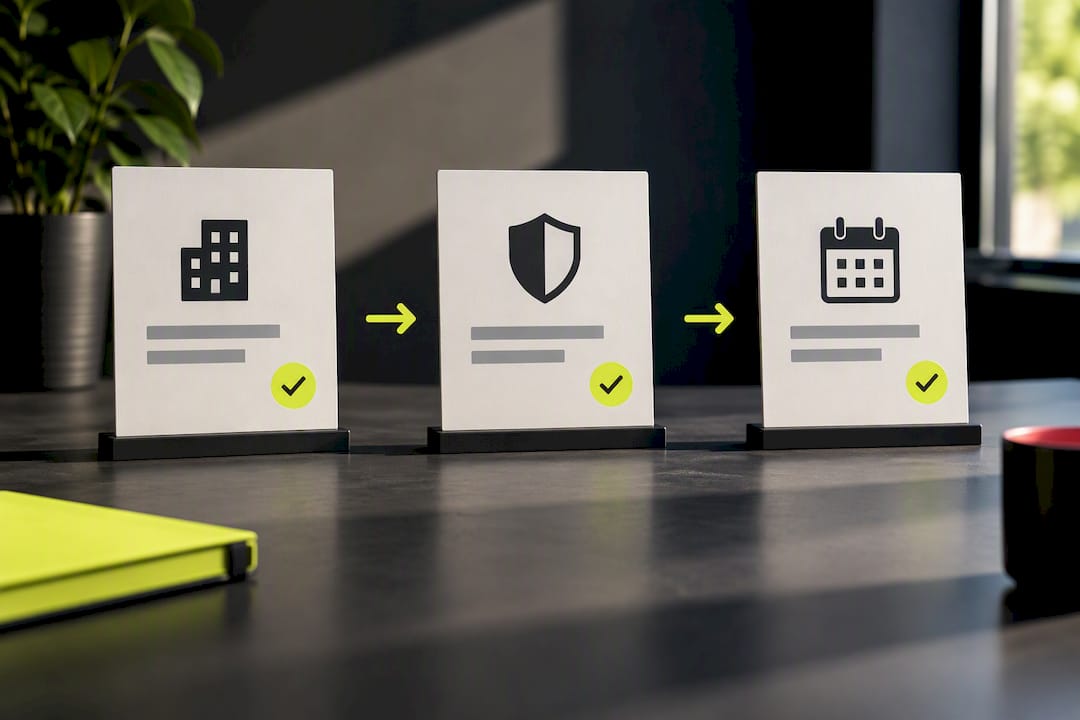
- The insurer's name and policy number, recorded in writing, not just sighted once and forgotten.
- A minimum public liability limit, scaled to the risk of the property and the work involved.
- Indemnity language covering subcontractors, so you're not exposed if the provider sends someone else's staff.
- Clarity on who's responsible for keys and unattended access, and what happens if something goes missing.
- A clear process for notifying you of any incident, damage, or injury within a set timeframe.
| Contract item | Why it matters |
|---|---|
| Insurer name and policy number | Lets you verify cover independently, not just trust the paperwork |
| Proportionate public liability limit | Matches cover to actual risk, per Insurance Council of Australia guidance |
| Subcontractor indemnity | Closes the gap if the provider sends staff who aren't directly employed |
| Key and access responsibility | Sets liability clearly if access is misused or lost |
| Incident notification clause | Ensures you hear about damage or injury before it becomes a dispute |
For high-value properties or genuinely hazardous work, like post-construction cleans or bio-hazard sanitisation, involve an insurance broker or lawyer before you sign anything. It's a small cost against a large exposure.
How we handle verification at Grime Scene Services
Insurer verification is integrated into the booking process rather than treated as an afterthought. Before any turnover or deep decontamination job, the service provider can confirm who will attend the property and share insurer details on request. If you're comparing providers, ask every one of them the same question we expect to be asked: who's your insurer, and can you prove it's current?
Book a vetted, eco-friendly clean without the insurance guesswork
This approach is practical for hosts and property managers who want verification handled upfront rather than chased down after a booking is confirmed.
Whether you need a Premium Clean for routine upkeep, a Final Case bond or vacate clean, or a Rapid Response two-hour tactical clean between guest stays, we'll confirm insurer details and who's attending before the job starts. Short-term rental hosts managing tight turnovers can check our Scene Reset service for rentals directly. Head to our full service scope to see what's available and get a quote for your property.
Where to check the rules yourself
- SafeWork NSW: contractors and labour hire
- WorkSafe Queensland: household worker insurance
- NSW host obligations for short-term rental accommodation
- Creative Workplaces: workers compensation insurance by jurisdiction
Sources
- Contractors and labour hire | SafeWork NSW
- Household worker insurance (WorkSafe Queensland)
- Host obligations for short‑term rental accommodation (NSW)
FAQ
Is there a legal minimum public liability amount for cleaners in Australia?
No, there's no fixed national minimum. The Insurance Council of Australia recommends limits be proportionate to the actual risk of the job, so a routine residential clean and a post-construction sweep shouldn't carry the same expectation.
Does an ABN mean a cleaner has workers' compensation cover?
No. An ABN shows someone is registered for business purposes, but it says nothing about whether workers' compensation applies to them or anyone they bring with them. SafeWork NSW advises checking the actual policy and working arrangement, not just the paperwork on the quote.
Can I skip my own insurance if the cleaner has a policy?
No. NSW host obligation guidance is clear that a cleaner's insurance doesn't remove your own requirement to hold cover for third-party injury or death on your property. Keep your policy active and check it permits short-term rental use if that applies to you.
Does the cleaning service provider provide insurer details before a booking?
Insurer details and confirmation of attendance can be provided on request before the job is booked. Current service pricing for offerings like the Premium Clean and Final Case is available directly on the site.