
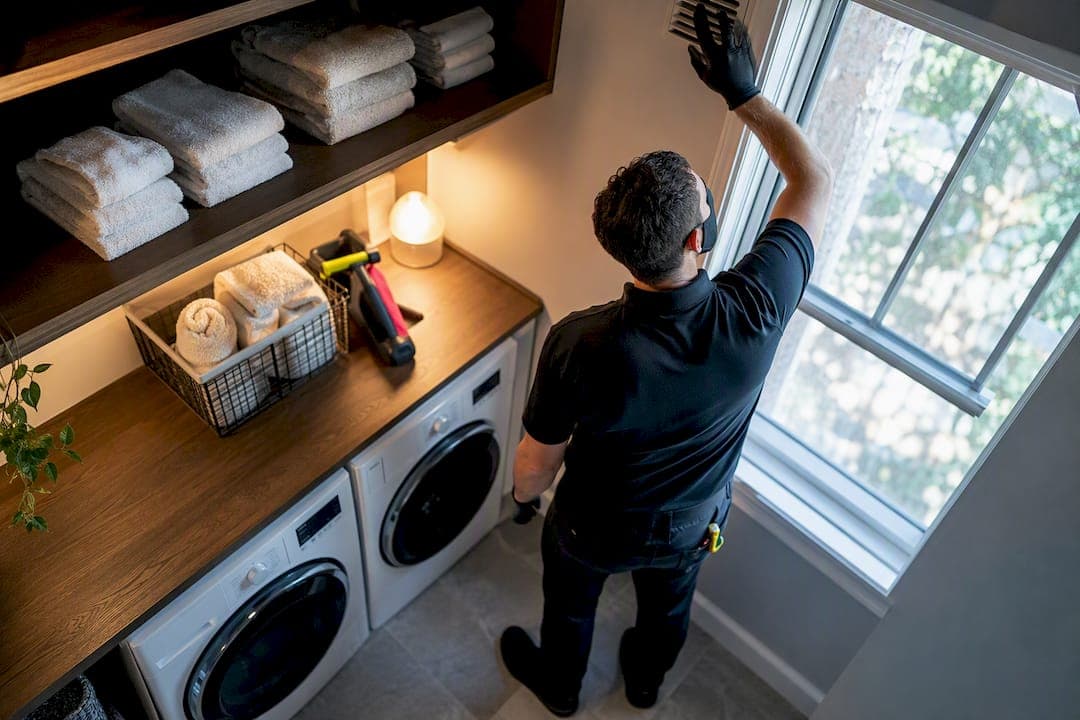
Call a rapid-response eco-friendly cleaning crew immediately, and follow a five-minute containment routine while you wait. Tell dispatch what happened, isolate the area, protect anyone still on-site, and photograph everything before you touch a thing. Depending on the mess, ask specifically for same-day rapid response, a full Scene Reset, or deep decontamination. Grime Scene Services runs all three, and which one you need changes everything about your next 30 minutes.
TL;DR:
- Rapid response teams should arrive within hours, especially for same-day turnovers, with extra charges for after-hours or urgent bookings.
- The scene containment and documentation process before crew arrival can significantly improve cleanup speed and insurance claims, including photos and detailed incident reports.
- Request the Scene Reset protocol for moderate contamination cases to ensure non-toxic, fragrance-free decontamination that is guest and health-safe.
- Standard cleaning procedures prioritize hazard assessment, zone sequencing, and verification, relying on eco-friendly, non-toxic agents and mechanical removal methods.
- Clear communication and detailed, timestamped documentation during cleanup are essential to protect your reputation and streamline dispute resolution.
Table of Contents
- The five-minute to 30-minute checklist that protects your booking
- What is the Scene Reset protocol and when should you request it?
- How does the full emergency cleaning protocol actually run?
- Which equipment and eco-friendly products actually get results?
- What documentation actually protects you in a dispute?
- How fast should a crew arrive, and what will it cost?
- Why eco-friendly protocols are the smarter operational choice
- Booking the right service when things go wrong
- Sources
The five-minute to 30-minute checklist that protects your booking
What you do before the crew arrives determines how fast they can work and whether your insurer or bond claim survives scrutiny. Follow this sequence:
- Isolate the space. Shut the door, block off the area, and keep guests, kids and pets well clear of anything wet, sharp or chemical.
- Check for immediate danger. Gas smell, exposed wiring, structural sag or broken glass means you wait for professionals. Do not enter.
- Photograph and film before touching anything. Wide shots of the whole room, then close-ups of the damage, with a timestamp and a one-line caption for each ("stain on lounge carpet, 6:40am, guest checkout").
- Contain what you can. Towels or absorbent pads around a spill stop it spreading, but resist the urge to scrub, bleach or "fix" anything yourself.
- Notify the guest or tenant and lock in the clean. A short message explaining the delay and the plan heads off a bad review far better than silence does.
- Prep access for the crew. Have keys, gate codes, parking instructions and a plain-English hazard note ready so nobody wastes time at the door.
This mirrors the sequencing logic in Lodgify's turnover checklist guidance: the fewer decisions a crew has to make on arrival, the faster the job moves.
Pro Tip: Keep a laminated card near the linen cupboard with your cleaner's emergency number, your gate code, and the words "do not use bleach on grout" if that's a house rule. It saves ten frantic minutes every single time.
What is the Scene Reset protocol and when should you request it?
Scene Reset is Grime Scene Services' structured response for turnovers and remediation jobs that need more than a standard clean but don't require full hazmat handling. It's built for the grey zone: a burst pipe, a messy checkout, a bad tenant handover, mould creeping along a bathroom ceiling.
The protocol runs in four stages:
- Triage — the crew assesses scope, hazard level and whether specialists need to be brought in before cleaning starts.
- Targeted deep decontamination — affected zones get treated first, using non-toxic agents rather than reaching for bleach or ammonia.
- Airflow and soft-furnishing treatment — ventilation, dehumidifying and fabric care to stop odour and moisture becoming next week's problem.
- Documented final verification — a photo-backed sign-off before the crew leaves.
Why non-toxic over harsh chemicals? Because a rental full of bleach fumes is its own liability. A growing share of travellers actively seek fragrance-free, toxin-free accommodation, and synthetic fragrances are a documented trigger for asthma, headaches and skin irritation in sensitive guests. Combine non-toxic chemistry with mechanical removal and you get the same decontamination result without the health trade-off. Hosts who request Scene Reset typically get same-day readiness, a full photo record, and a space staged for the next check-in, not just "clean" but guest-ready.
How does the full emergency cleaning protocol actually run?
Once the crew is on-site, the work follows a fixed sequence, not guesswork. Knowing the order helps you brief guests accurately and spot a crew that's cutting corners.
Step one: safety and triage. Technicians assess hazards before anything else, gloving up, checking ventilation, and flagging anything outside their scope. Genuine biohazard, asbestos or structural water damage gets handed to a specialist restorer rather than papered over.
Step two: zone sequencing. Laundry starts first because it runs unattended while other work happens. Bathrooms get tackled early since they're usually the worst offenders, and the crew finishes on a full walkthrough so nothing gets missed. This "strip and start laundry, bathroom first" logic comes straight from production-rate playbooks used across the short-term rental industry, and it shaves real minutes off a same-day turn.
The cleaning itself leans on:
- Enzymatic cleaners that break down organic matter rather than mask it.
- Mechanical removal and HEPA-filtered vacuums to lift particulates instead of just relocating them.
- Targeted steam for grout, upholstery and hard-to-reach grime.
Step three: soft furnishings and linens. Contaminated textiles get bagged and laundered to a set standard, or replaced outright if they're beyond saving. There's a clear threshold: if a stain won't lift after one proper wash cycle, it doesn't go back on the bed.
Step four: verification and handover. A photo checklist, a written incident report, and a signature close out the job. This is the same discipline behind Airbnb's own five-step framework of prepare, clean, sanitise, check, reset, adapted for jobs that go well beyond a standard turnover.
Which equipment and eco-friendly products actually get results?
The gear a crew brings tells you a lot about how the job will go. On the mechanical side, look for HEPA-certified vacuums, portable extractors for wet extraction, and enough absorbent pads and pumps to contain a spill before it spreads.
On the chemistry side, effective crews lean on:
- Plant-based enzymatic cleaners for organic stains and odours.
- Neutral pH surfactants that lift grime without degrading grout, timber or stone.
- Fragrance-free disinfectants that meet hygiene standards without the chemical haze.
- Soft-surface treatments safe for upholstery, rugs and mattresses in occupied homes.
Microfibre and mechanical capture matter more than most people realise: they physically lift and trap particulates instead of pushing them around, which is exactly why HEPA tools paired with non-toxic chemistry can match or beat harsh-chemical results without the fumes. Strong oxidisers and bleach have a place, but not in an occupied bedroom or a rental turning over guests within hours.
Pro Tip: If a quote mentions "hospital-grade disinfectant" with no ingredient list, ask what's actually in it. Fragrance-free and non-toxic should be provable, not just marketing.
What documentation actually protects you in a dispute?
Photos win disputes. Vague descriptions lose them. Before and after every incident, capture:
- Wide shots of the full room from at least two angles.
- Close-ups of specific damage or contamination, with a timestamp.
- A brief caption noting location, cause (if known), and time discovered.
An incident report should record who found the issue, what it was, when it happened, and what immediate action was taken before the crew arrived. That single page is often the difference between a bond claim that sails through and one that drags on for weeks, a pattern well documented in structured commercial cleaning checklists used across facility management.
For guest communication, keep it short: acknowledge the issue, state the plan, give a realistic timeframe, and confirm once the space is verified clean. The same clarity applies to landlord-tenant handovers where documentation prevents the "he said, she said" spiral entirely.
How fast should a crew arrive, and what will it cost?
Genuine rapid-response outfits dispatch within hours, not days, particularly for same-day turnover deadlines. Expect an after-hours or weekend surcharge; a 2am callout costs more to staff than a Tuesday afternoon booking, and that's reflected in the quote.
Common pricing structures include:
- A call-out minimum that covers the first hour or two on-site.
- Hourly rates for extraction and deep decontamination work beyond the basics.
- Fixed fees for standard turnover cleans.
- Premium surcharges for after-hours or same-day emergency dispatch.
Industry examples of urban emergency cleaning services show same-day dispatch windows measured in hours rather than a next-business-day model, with call-out fees starting in the low hundreds and scaling from there. Some jobs sit outside any cleaning company's remit entirely: structural water damage, asbestos, and violent crime scenes need licensed restoration or forensic specialists, not a cleaning crew, however good.
Why eco-friendly protocols are the smarter operational choice
Chemical-heavy cleanups feel decisive, but they're often the slower option once you account for airing out fumes, protecting finishes, and managing guest complaints about smell. Non-toxic agents paired with mechanical removal get a room back to guest-ready faster because there's no waiting for chemical residue to clear.
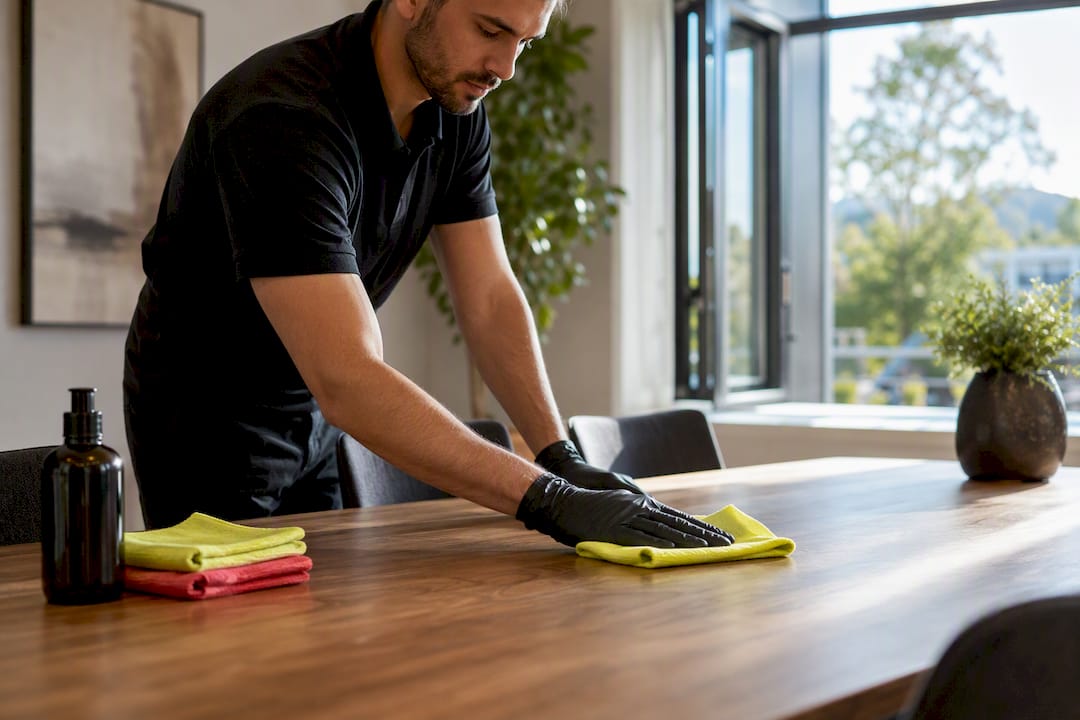
There's a health angle too, and it cuts both ways: fragrance-free products protect the guests staying next week as much as the crew doing the work today. Cleaners who aren't breathing bleach fumes all day make fewer mistakes and work more consistently across a long shift.
The documentation habit matters just as much as the chemistry. A time-stamped photo record and a signed incident report turn "trust me, it's clean" into proof, and that proof is what keeps a host's rating intact when a guest disputes a charge or a bond claim gets challenged. Operational transparency isn't a nice add-on anymore. It's become the baseline expectation.
— Lead
Booking the right service when things go wrong
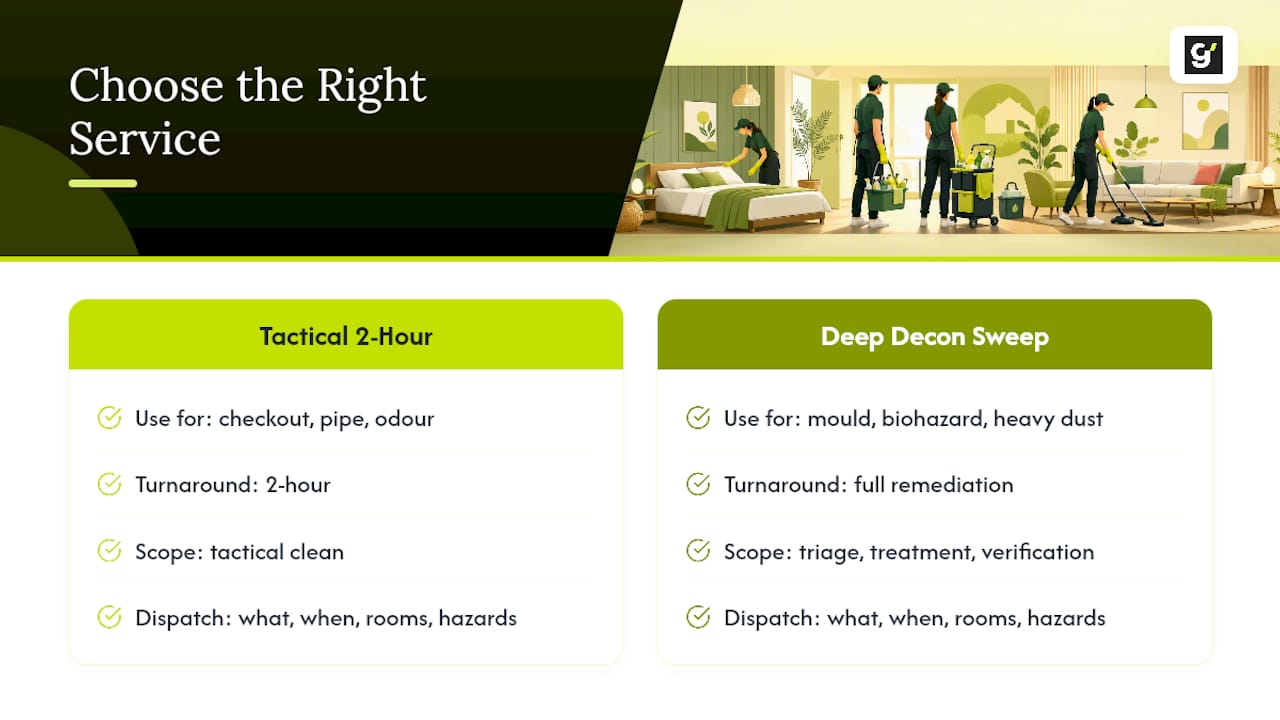
Match the job to the service, not the other way around. A guest checkout disaster, a burst pipe, or an urgent odour complaint calls for the Rapid Response 2-Hour Tactical Clean, built for exactly the kind of same-day turnaround this article has walked through. Heavier jobs, mould, biohazard contamination, post-construction dust, or a property that's been neglected for a while, need the Deep Decontamination Full Sweep, which covers the triage, treatment and verification stages in full.
When you call, give dispatch the specifics: what happened, when, which rooms are affected, and any hazards you've already spotted. That detail gets the right crew and equipment on the truck the first time, not a second trip.
After-hours and same-day bookings carry a surcharge, and every job wraps with photo documentation so you have proof for guests, owners or insurers. If you're not sure which service fits, describe the mess and let the crew tell you. That's a faster fix than guessing.
Sources
The health case for fragrance-free cleaning comes from VTSTRA's research on allergen-free vacation rentals. Turnover sequencing and checklist structure draw on Lodgify's Airbnb cleaning checklist guide and Opora's turnover cleaning playbook. For deeper protocol detail, see Grimescene's guides on the Scene Reset process and what to do in the first five minutes after a spill or incident.
- A Cleaner Stay: Why More Guests Are Seeking Allergen-Free, Toxin-Free Vacation Rentals — VTSTRA
- Best Airbnb cleaning checklist template for a spotless rental — Lodgify
- Airbnb turnover cleaning playbook: SOP, time — Opora