
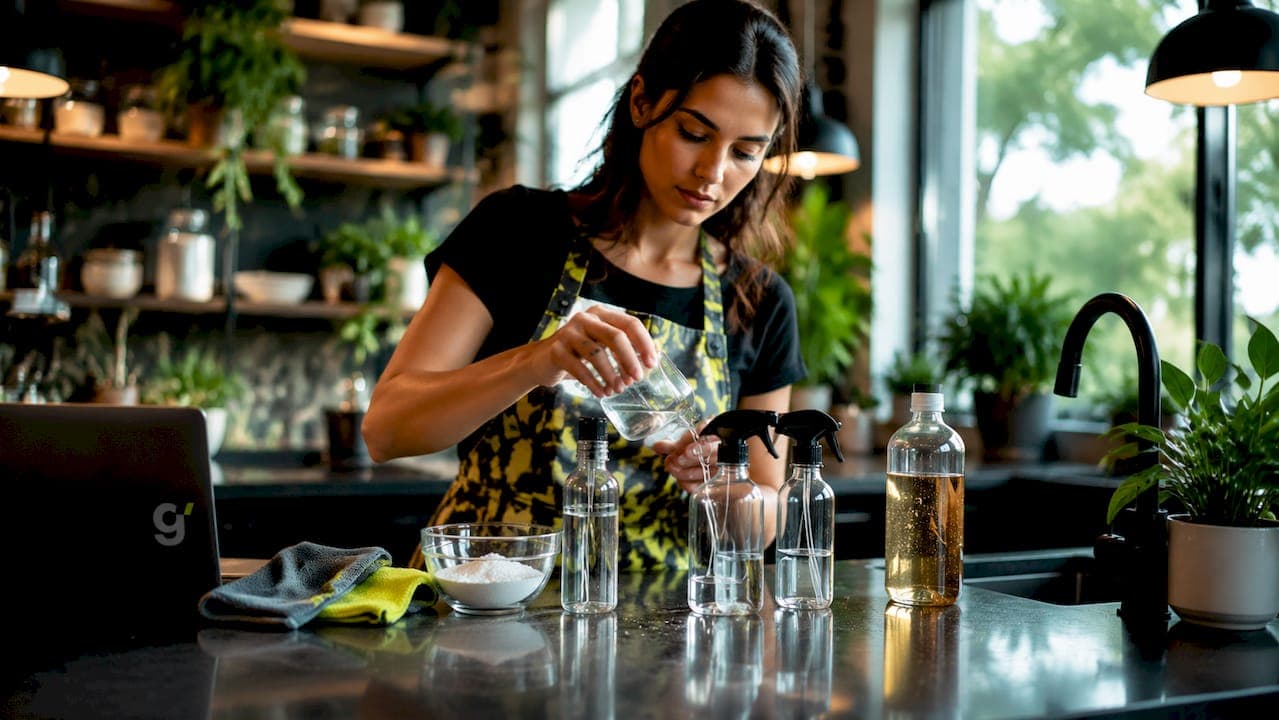
Switching to a green cleaning routine means replacing conventional chemical cleaners with natural, certified alternatives that are safer for your family, your pets, and the planet. The industry term for this practice is "green cleaning," defined as using products and methods that protect human health and environmental quality. A certified green cleaning protocol reduces global warming potential by 47.7%, cuts chemical consumption by 82.6%, and slashes textile waste by 92.4%, all while maintaining equivalent microbiological standards. That is not a marginal improvement. It is a structural shift in how a home operates. The key is knowing which products to trust, how to phase the transition, and what to expect along the way.
What tools and products do you need for green cleaning?
Most homes can be cleaned effectively with four natural ingredients: distilled white vinegar, baking soda, castile soap, and rubbing alcohol. That simplicity is the point. True sustainability in cleaning comes from basic household staples rather than complex product lines with dozens of specialised bottles.
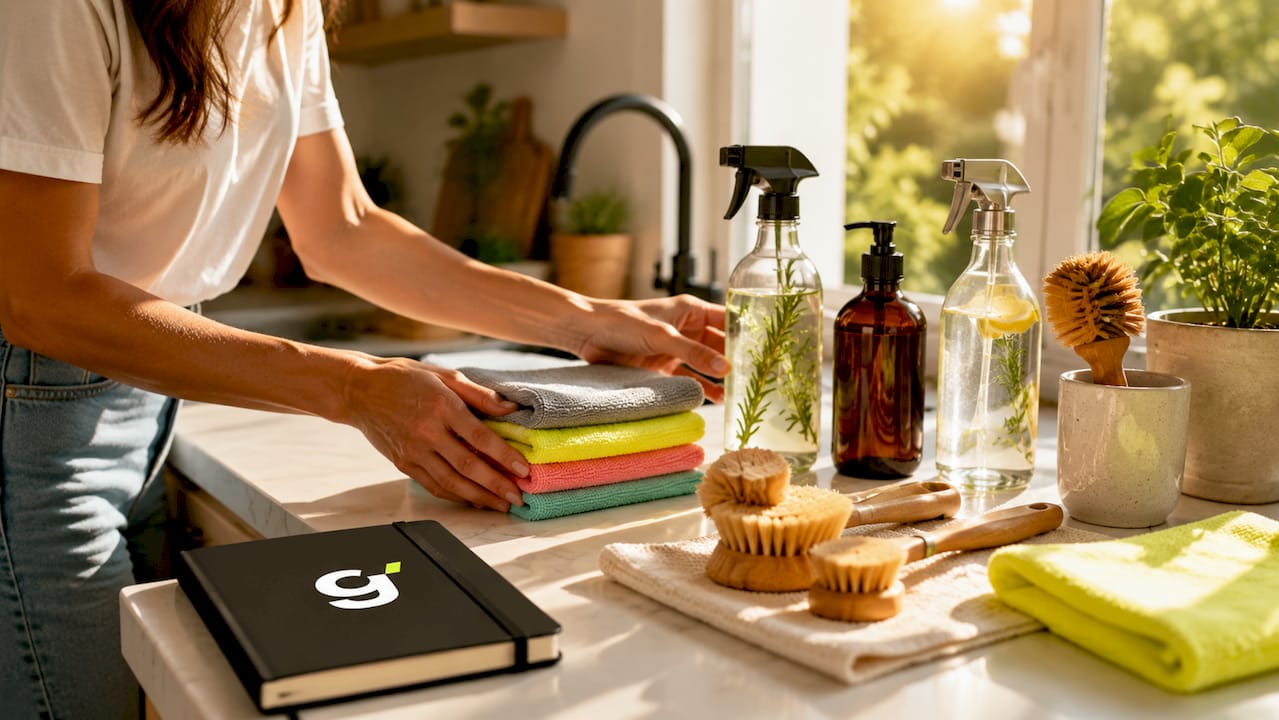
Beyond ingredients, your tools matter as much as your formulas. Swap single-use paper towels for microfiber cloths, which trap bacteria mechanically without chemicals. Add wooden or bamboo brushes, glass spray bottles, and a set of reusable containers. These tools last years and generate far less landfill waste than their plastic counterparts.
Product certification is the clearest way to cut through greenwashing. True green products biodegrade 100% within 28 days, and third-party certifications like EPA Safer Choice, Green Seal, and the EU Ecolabel verify this standard independently. If a product claims to be "natural" but carries none of these marks, treat that claim with scepticism.
| Conventional product | Green alternative |
|---|---|
| Bleach-based bathroom spray | Castile soap and water solution |
| Synthetic glass cleaner | White vinegar and water in glass bottle |
| Chemical oven degreaser | Baking soda paste with castile soap |
| Disposable paper towels | Reusable microfiber cloths |
| Plastic spray bottles | Refillable glass or stainless steel bottles |
| Synthetic air freshener | Bicarbonate soda and essential oils |
Pro Tip: Buying vinegar, castile soap, and baking soda in bulk and decanting into refillable containers can reduce plastic waste by up to 80% and lower your ongoing costs significantly.
How do you plan a room-by-room green cleaning transition?
A phased transition over 4–12 weeks is the most reliable way to switch without reverting to old habits. Trying to overhaul every room at once creates friction. A room-by-room approach builds familiarity and confidence with each new product before you move on.
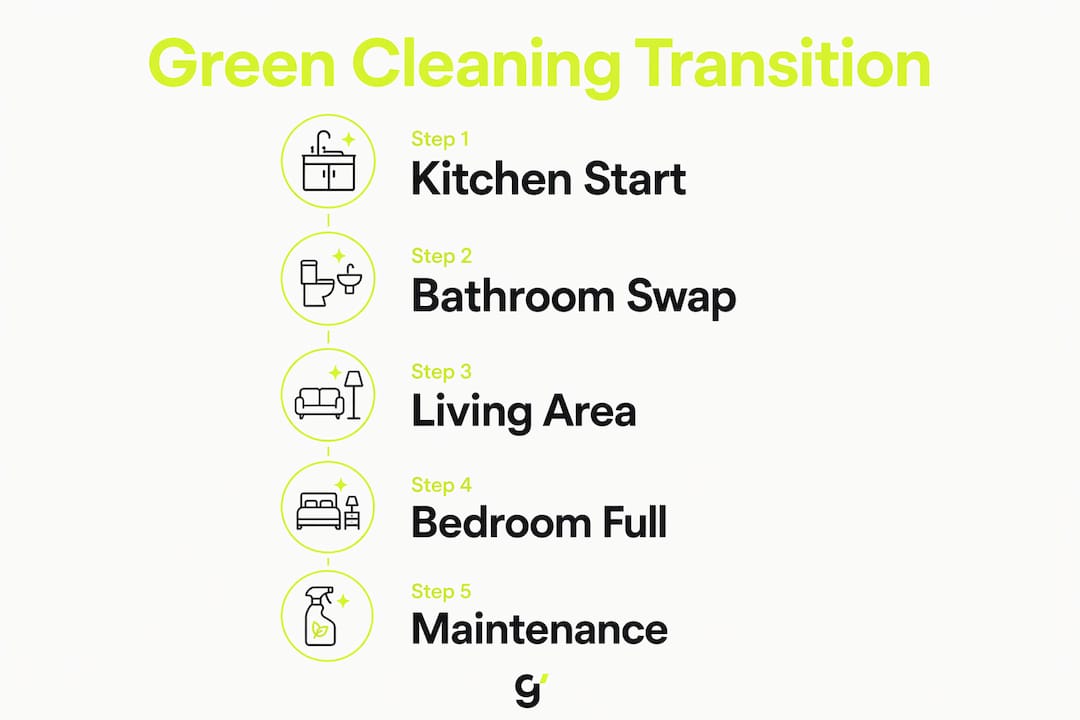
Start with the kitchen. It is the most frequently cleaned area in most homes, which means you will build experience quickly. Replace your dish soap with a castile soap concentrate first, then tackle your bench spray and degreaser. Once the kitchen feels natural, move to the bathroom, then laundry, then living areas.
Follow these steps to structure your transition:
- Audit your current products. List every cleaning product in your home and note what surface or task it covers.
- Identify your first swap. Choose one high-use product in the kitchen to replace first.
- Apply the Finish and Flip method. Use each conventional product until it runs out, then replace it with a green alternative. Never throw out a half-full bottle. That is waste, not progress.
- Set a weekly check-in. Note what worked, what did not, and what you want to adjust.
- Move room by room. Progress to the bathroom in week three or four, once the kitchen feels settled.
- Track your empties. Each empty conventional bottle replaced is a measurable win.
Pro Tip: Set up two dedicated storage zones: one for any remaining conventional products and one for your growing green supplies. Keeping them physically separate prevents mix-ups and makes your progress visible.
The green cleaning transition is fundamentally a habit change, not just a product swap. How you manage your tools, treat spills immediately, and store your supplies all shape the outcome. Treat it like learning a new skill, not flipping a switch.
How do green cleaning products work differently from conventional cleaners?
Green cleaners use acids, alkalis, and enzymes to break down soils rather than relying on synthetic solvents or chlorine compounds. White vinegar is a mild acid that dissolves mineral deposits and cuts through grease. Baking soda is a mild alkali that neutralises odours and lifts surface grime. Castile soap emulsifies oils and suspends dirt so it rinses away cleanly.
The most important technique adjustment is contact time. Green cleaners require longer surface contact than harsh conventional products to break down soils effectively. A bleach spray might work in 30 seconds. A vinegar-based spray may need two to five minutes to achieve the same result.
- Shift your habit from "spray and wipe" to "spray, wait, then wipe." Apply your green cleaner, set a timer, and come back.
- Match your product to the soil type. Acid-based cleaners (vinegar) work on mineral scale and soap scum. Alkali-based cleaners (baking soda, castile soap) work on grease and organic matter.
- Use warm water to activate enzyme-based cleaners. Cold water slows the enzymatic reaction.
- Avoid mixing vinegar and castile soap directly. They neutralise each other and reduce cleaning effectiveness.
- Microfiber cloths amplify the mechanical action of green cleaners, compensating for lower chemical aggression.
The science is clear: a certified green cleaning protocol delivers equivalent microbiological standards to conventional methods. The difference is in technique, not in hygiene outcomes.
Adjusting your technique takes a week or two. After that, the process becomes second nature and the results speak for themselves.
What mistakes should you avoid when switching to eco cleaning?
The biggest mistake is throwing out every conventional product at once. That creates waste, costs money, and often leads to a frustrated reversal when the new products feel unfamiliar. The Finish and Flip method exists precisely to prevent this.
Greenwashing is the second major trap. Many products use terms like "plant-based," "natural," or "eco-friendly" with no certification to back the claim. A product that does not carry EPA Safer Choice, Green Seal, or EU Ecolabel verification has not been independently tested for biodegradability or safety. Check the label before you buy.
- Do not expect instant results. Green cleaners work differently. Give yourself and the products time to adjust.
- Do not buy too many products at once. Four ingredients cover most household cleaning tasks. Resist the urge to fill a trolley with specialised green bottles.
- Do not skip tool upgrades. Switching to natural cleaners while still using disposable paper towels misses a significant part of the environmental benefit.
- Do not ignore storage. The EPA recommends using concentrated formulas and formal storage procedures to reduce chemical exposure, even with green products.
- Do not measure success by speed alone. Green cleaning takes slightly longer per task in the early weeks. That time cost drops as your technique improves.
"Green cleaning is often misunderstood as a marketing category. The real transition is a change in habits, including how you manage tools and treat spills."
Managing expectations is the most underrated part of this process. Progress over perfection is the right frame.
What are simple green cleaning recipes for every room?
A small set of DIY formulas covers the entire home. Each recipe uses the four core ingredients and takes under two minutes to mix.
All-purpose bench spray: Combine one part white vinegar with one part water in a glass spray bottle. Add ten drops of tea tree oil for antimicrobial action. Use on benches, sinks, and hard surfaces.
Bathroom scrub: Mix half a cup of baking soda with enough castile soap to form a paste. Apply with a damp cloth or brush, leave for three minutes, then scrub and rinse.
Glass cleaner: Mix one part white vinegar with two parts water. Apply with a microfiber cloth and buff dry. No streaks, no synthetic chemicals.
Kitchen degreaser: Add a tablespoon of castile soap to a spray bottle of warm water. Spray on stovetop or rangehood surfaces, wait two minutes, then wipe clean.
Toilet bowl cleaner: Sprinkle half a cup of baking soda into the bowl, follow with half a cup of white vinegar, and let it fizz for five minutes. Scrub with a wooden toilet brush and flush.
For tool care:
- Launder microfiber cloths in warm water without fabric softener. Softener clogs the fibres and destroys their cleaning ability.
- Air-dry wooden brushes bristle-side down to prevent water damage to the handle.
- Rinse glass spray bottles weekly and allow to dry fully before refilling.
- Replace aerosol air fresheners with a small jar of bicarbonate soda and a few drops of eucalyptus or lavender essential oil.
These recipes scale easily. Double the quantities for a larger home or a short-term rental property. The eco cleaning supplies guide for Australian homes covers additional surface-specific variations worth bookmarking.
Key takeaways
Switching to a green cleaning routine delivers measurable health and environmental benefits when you use certified products, phase the transition room by room, and adjust your technique to match how natural cleaners actually work.
| Point | Details |
|---|---|
| Start with four ingredients | Vinegar, baking soda, castile soap, and rubbing alcohol cover most household cleaning tasks. |
| Use the Finish and Flip method | Replace conventional products one at a time as they run out to avoid waste and frustration. |
| Adjust contact time | Green cleaners need 2–5 minutes on surfaces; shift from spray-and-wipe to spray, wait, then wipe. |
| Verify certifications | Look for EPA Safer Choice, Green Seal, or EU Ecolabel to confirm genuine biodegradability. |
| Phase over 4–12 weeks | Start in the kitchen, build confidence, then move room by room for lasting habit change. |
What I have learned after years of watching people make this switch
Most people who struggle with green cleaning are not using the wrong products. They are using the right products the wrong way. They spray and wipe immediately, then decide the product does not work. Contact time is the single biggest technique gap I see, and it is also the easiest to fix.
The other thing I have noticed is that simplicity wins every time. The households that stick with green cleaning long-term are the ones who settled on four or five products and stopped there. The ones who bought fifteen different "eco" bottles from three different brands tend to drift back to conventional cleaners within a month. Complexity is the enemy of consistency.
I will also say this plainly: do not let perfect be the enemy of good. If you replace your dish soap and your bench spray this week and nothing else, that is a genuine improvement. The sustainable cleaning routine you actually maintain beats the ideal one you abandon after a fortnight. Start small, build the habit, and let the rest follow naturally.
The indoor air quality improvement is real and noticeable. Within a few weeks of removing synthetic fragrances and aerosols, most households report that the air simply smells cleaner, not perfumed, just clean. That shift alone tends to motivate people to keep going.
— Lead
How Grimescene supports your green cleaning goals
Grimescene uses non-toxic agents that neutralise buildup rather than masking it, which aligns directly with what a green cleaning routine is trying to achieve at the household level.
For deep remediation tasks that go beyond a weekly routine, such as post-construction clean-ups or high-turnover rental properties, Grimescene's rapid response team handles the heavy lifting without harsh chemicals. Short-term rental hosts can book Grimescene's Scene Reset service to maintain eco standards between guests while protecting their host ratings. For routine support or a one-off deep clean, book a rapid response and let the team handle what your green routine cannot reach alone.
FAQ
What does switching to a green cleaning routine actually mean?
Switching to a green cleaning routine means replacing conventional chemical-based cleaners with natural, certified alternatives such as vinegar, baking soda, and castile soap. The goal is to reduce chemical exposure at home while lowering your environmental footprint.
How long does it take to fully transition to green cleaning?
A phased transition over 4–12 weeks is recommended, starting with the kitchen and moving room by room. This timeline builds familiarity and reduces the chance of reverting to old products.
Are green cleaning products as effective as conventional cleaners?
Yes. A certified green cleaning protocol delivers equivalent microbiological standards to conventional methods. The key difference is technique: green cleaners need longer contact time on surfaces to achieve the same result.
How do I know if a green cleaning product is genuine?
Check for third-party certification. Products certified by EPA Safer Choice, Green Seal, or the EU Ecolabel have been independently verified to biodegrade fully within 28 days and meet safety standards. Uncertified "natural" claims are not independently verified.
Do I need to throw out all my old cleaning products to start?
No. The Finish and Flip method means you use each conventional product until it runs out, then replace it with a green alternative. This avoids waste and makes the transition gradual and manageable.