
A working green office cleaning checklist needs five elements: an eco-friendly tool kit, room-by-room tasks with set dilution and contact times, a frequency schedule tied to occupancy, procurement standards that reference recognised certifications, and written SOPs with monitoring. Align the whole thing to standards like Green Seal GS-42 and EPA Safer Choice, and the room-level checklists below can be copied straight into your building's plan.
TL;DR:
- Using certified products with third-party verification is essential, as marketing claims alone do not guarantee environmental safety or cleaning performance.
- Daily, weekly, and periodic cleaning frequencies should be tailored to occupancy and risk levels, focusing on high-touch points and sanitation in high-traffic areas.
- Implementing documented standard operating procedures and staff training improves consistency, safety, and accountability compared to ad-hoc green cleaning practices.
- Equipment should include refillable, concentration-based supplies and HEPA or CRI-rated vacuums to ensure better environmental and indoor air quality.
- A professional cleaning service can help develop, implement, and monitor the checklist, ensuring ongoing compliance and efficiency in green office cleaning programs.
Table of Contents
- What tools and supplies belong in an eco-friendly cleaning kit?
- What does a room-by-room green cleaning checklist look like?
- How often should each cleaning task happen?
- What should sustainable purchasing require?
- What safety and procedural rules keep green cleaning effective?
- How do you turn the checklist into daily practice?
- How does a professional provider put this checklist into practice?
- Why documented cleaning beats ad-hoc "eco" choices
- Get help implementing your green cleaning checklist
- Where to check the standards yourself
- Sources
- FAQ
What tools and supplies belong in an eco-friendly cleaning kit?
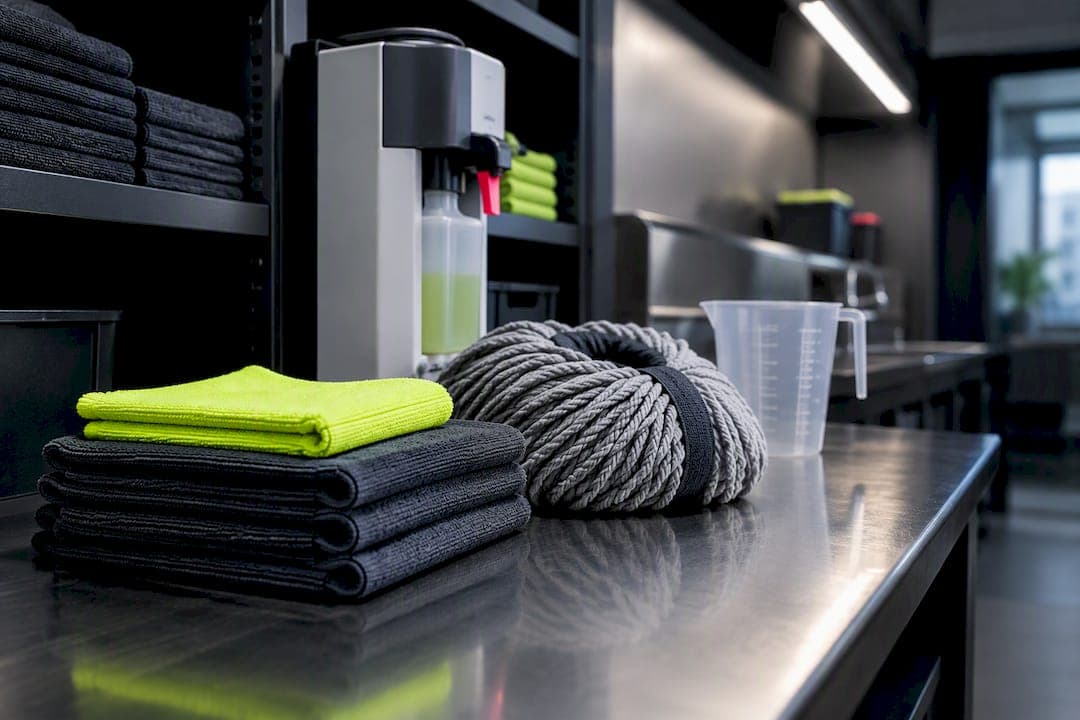
Start with reusable microfiber cloths and mop heads instead of disposable wipes. Microfiber lifts more soil per pass and cuts the volume of chemical needed to get a surface clean, which matters more than the label on the bottle.
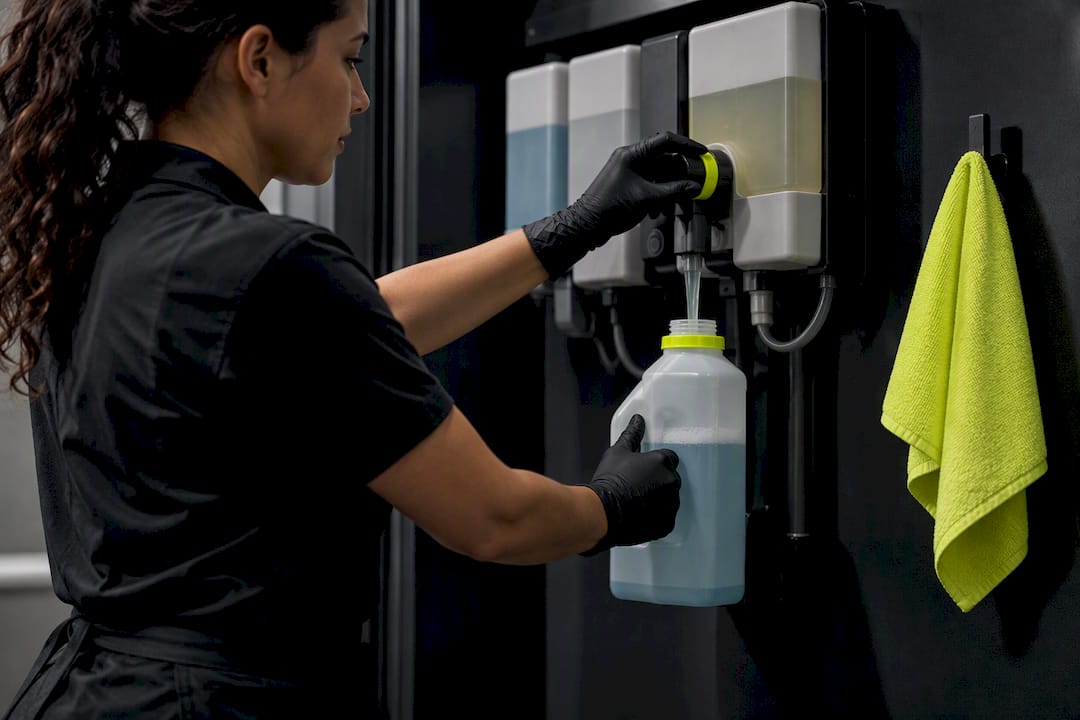
Pair that with dilution-control dispensers so staff aren't eyeballing measurements. Pre-measured dosing stops the most common failure in green programs: overuse, which wastes product and defeats the purpose of switching to a gentler formula in the first place.
For powered equipment, GS-42 recommends HEPA or CRI-rated vacuums and low-noise units where the standard applies, to limit dust re-entrainment and support indoor air quality. Battery-powered options also cut fuel use and noise during office hours.
Your kit should include:
- Colour-coded microfiber cloths and mop heads (washable, not disposable)
- Dilution-control dispensers for concentrated chemistries
- HEPA or CRI-rated vacuums with sealed filtration
- Certified general-purpose, glass, floor and bathroom cleaners in refillable containers
- Labelled waste stations with separate compost, recycling and general waste bins
Pro Tip: Buy concentrate, not ready-to-use spray bottles. A single 5-litre concentrate drum often replaces dozens of plastic trigger bottles over a year, and it's cheaper per litre once diluted correctly.
What does a room-by-room green cleaning checklist look like?
Different rooms carry different risks, so the checklist needs to change room by room rather than applying one generic routine everywhere.
- Reception. Clean entrance mats and hard floors daily to trap grit before it spreads. Wipe door handles and touchscreens with a certified disinfectant only when required, using a damp microfiber cloth rather than spray directly on screens to avoid moisture ingress.
- Workstations. Wipe keyboards, phones and desk surfaces with a certified all-purpose cleaner on a set cloth, never a shared rag across desks. Dust and organise filing and storage areas weekly, checking for damp or mould risk behind cabinets.
- Meeting rooms. Clean table tops after each major booking, not just at day's end. AV equipment gets a dry microfiber wipe only; liquid cleaners near ports and cables risk damage and safety issues. Spot-clean fabric chairs with a certified upholstery solution rather than routine wet cleaning.
- Kitchen and break rooms. Sinks and dishwasher interiors need daily attention because food residue breeds odour and pests fast. Schedule food-waste bin collection at least daily, more often in warmer months. Check fridges weekly for expired items and sanitise shelves monthly with a certified, food-safe cleaner.
- Bathrooms. Check soap and paper dispensers daily and restock before they run empty. Clean toilets and urinals in a fixed sequence, working from cleanest to dirtiest fixture to avoid cross-contamination. Ventilate during and after cleaning, and allow floors to dry fully before reopening to cut slip risk.
Reserve full disinfection for bathrooms, kitchens and confirmed illness events. Everywhere else, routine cleaning with a certified all-purpose product is enough, and over-disinfecting surfaces that don't need it just adds unnecessary chemical load. For a deeper breakdown of kitchen-specific specs, see this office kitchen cleaning standards guide.
How often should each cleaning task happen?
Frequency should track occupancy and risk, not a fixed calendar that ignores how busy a space actually is.
- Daily: high-touch points (door handles, light switches, shared equipment), bathroom restocking, kitchen bin collection, and floor maintenance in high-traffic zones — schedule during low occupancy where possible, such as early morning or after hours.
- Weekly: desk and workstation deep wipes, fridge checks, fabric spot cleaning, and detailed dusting of surfaces above desk height, generally reserved for after-hours to avoid disrupting staff.
- Periodic (monthly to quarterly): carpet extraction, high-level dusting, floor stripping and resealing, and seasonal deep cleans of upholstery and blinds.
Size staff hours or vendor visits against occupancy, not floor area alone.
What should sustainable purchasing require?
Procurement decisions are where most green cleaning programs quietly fail, because a bottle labelled "eco" without third-party verification is just marketing.
Require recognised certification for each product class before it goes on the approved list: Green Seal GS-42 for cleaning services, EPA Safer Choice for individual products, UL EcoLogo, or CRI certification for vacuums and carpet-care equipment.
Safer Choice specifically requires that products demonstrate cleaning performance at the manufacturer's recommended dilution before certification, so an environmental claim alone isn't enough evidence to standardise on a product.
Your tender documents should include:
- Mandatory third-party certification for each product category
- Manufacturer performance test data and Safety Data Sheet (SDS) disclosure
- Preference for refill systems and concentrated chemistries over ready-to-use sprays
- Storage, labelling and inventory controls, including locked custodial closets
Institutional procurement policies that mandate these controls, alongside dilution dispensers and staff training requirements, give a workable template for writing your own tender language.
What safety and procedural rules keep green cleaning effective?
Green products only work if they're used correctly, and the biggest failure point isn't the chemistry, it's the process around it.
- Record dilution ratio, contact time and required dry time for every product on the checklist, not just the general-purpose cleaner.
- Never judge cleanliness by fragrance. Practitioner guidance is clear that fragranced products mask problems rather than fix them, and over-wetting floors creates slip hazards and residue that undo the benefit of switching products.
- Keep basic PPE (gloves, eye protection) accessible and store concentrates in locked, labelled closets.
- Build a short spill-response step into the checklist rather than relying on memory during an actual spill.
- Require photo or sign-off evidence against pass/fail criteria for each room, so an inspection has something concrete to check against.
Pro Tip: Vacuum bags or canisters should be inspected roughly every two hours during heavy use and emptied at the half-full mark. It's a small habit that stops dust re-entering the air and keeps suction consistent.
How do you turn the checklist into daily practice?
A checklist means nothing if it lives in a drawer. It needs to become a written SOP and a training habit.
- Write building-specific SOPs covering what gets done, how, by whom, and how often, following GS-42's approach to cleaning plans.
- Run induction training for new staff, then monthly refreshers and competency checks, including supplier briefings when a product changes.
- Send tenant or occupant notices ahead of scheduled deep cleans, carpet extraction, or any disinfection event that affects access.
- Track simple KPIs, such as completed audit checklists, corrective-action counts, and photo evidence from spot inspections.
How does a professional provider put this checklist into practice?
Grimescene maps checklist tasks directly onto its service lines: The Routine Patrol covers the daily and weekly high-touch items, while Deep Decontamination and The Scene Reset handle the periodic restorative work. Each engagement runs on documented SOPs, product testing at manufacturer dilution, and audit reporting so managers can see exactly what was done and when. For a template you can adapt, the strata cleaning checklist shows the same audit-ready structure applied to another property type.
Why documented cleaning beats ad-hoc "eco" choices
Swapping in a greener spray without a written procedure just moves the risk somewhere else. Documented dilution and dwell times cut chemical misuse and the safety incidents that come with it. A written SOP also gives facility managers something concrete to hand an auditor or a sustainability-minded tenant, rather than a verbal assurance that "we use green products now." Over time, that discipline shows up in fewer complaints, less waste, and occupants who genuinely notice the difference.
— Lead
Get help implementing your green cleaning checklist
Building this checklist is one thing. Running it consistently across a full commercial floor, week after week, with the paperwork to prove it, is where most in-house teams run out of hours. A professional cleaning service can work as a direct extension of your facilities team, rather than a generic cleaning contractor substituting products without tailored integration.
Every engagement starts with a site assessment against the checklist categories above, then moves into SOPs written for your specific building, product testing at manufacturer-recommended dilution, and reporting you can hand straight to an auditor or a tenant. Explore the core commercial cleaning services covering routine and decontamination work, or request a rapid response site assessment if you need a starting baseline before you commit to a recurring schedule.
Where to check the standards yourself
- GS-42 commercial and institutional cleaning services: building-specific cleaning plans, SOPs, equipment and training requirements.
- Safer Choice and DfE standard: product-level performance verification at real-world dilution.
- Oberlin College's green cleaning purchasing policy: a working procurement template with certification and equipment clauses.
For safety-audit checklist structure that pairs well with cleaning SOPs, Sitechief's guide to safety inspections is a useful reference for building your own sign-off forms.
Sources
- GS-42 commercial and institutional cleaning services (Green Seal)
- Safer Choice and Design for the Environment (DfE) standard (EPA)
- Green cleaning and custodial products purchasing policy (Oberlin College)
FAQ
What is the 20/10 rule for cleaning?
Time management in cleaning focuses on scheduled SOPs and frequency tables (daily, weekly, periodic) which do the job reliably across a large floor, more so than informal timing habits found in home decluttering.
What is the 6 to 10 cleaning list?
There's no single standardised numbered list in commercial cleaning; the room-by-room and frequency structure covered above gives a more reliable framework for building a checklist for an office than seeking a specific number list.
What are the 7 stages of cleaning?
Definitions vary by industry, but a common commercial version runs: pre-clean and inspect, dust and dry-clean, apply the cleaning agent, allow dwell time, agitate or scrub, rinse or wipe, then dry and re-inspect. Recording dwell time and drying time at each stage is what separates a genuinely green clean from one that just smells different.
What are some good cleaning items for an office?
Certified general-purpose, glass, floor and bathroom cleaners, reusable microfiber cloths and mop heads, dilution-control dispensers, and HEPA or CRI-rated vacuums cover most office needs. Choose products certified under Green Seal GS-42 or EPA Safer Choice rather than anything simply labelled "natural" or "eco" without third-party backing.
Does Grimescene offer green office cleaning services?
Yes. Grimescene provides eco-friendly commercial cleaning using non-toxic, bleach-free agents, including routine patrols and deep decontamination tailored to office buildings. Current pricing for each service is available directly on the Grimescene site.