
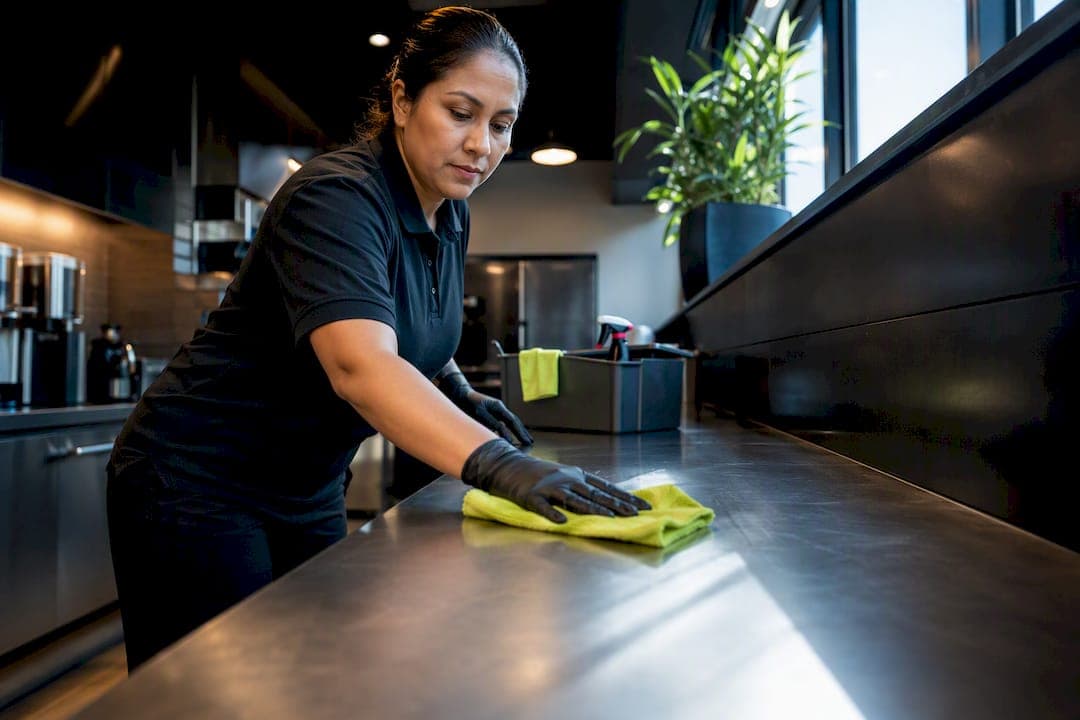
Office kitchen cleaning standards are a documented set of task, frequency and verification requirements that keep food-contact surfaces, cooking equipment and communal zones sanitised using food-safe, non-toxic methods while protecting equipment and indoor air quality. In practice that means daily sanitising of benches and appliance handles, scheduled degreasing of hoods and drains, and paperwork proving it happened. Any provider you brief should hand over service logs, product certifications and a corrective action process, not just a mop and a smile. A professional cleaning service builds its office kitchen work around exactly that structure.
TL;DR:
- Verification methods like ATP swab tests, photographic evidence, and detailed service logs are essential to ensure documented kitchen cleaning standards are met.
- Deep cleaning of hoods, drains, and appliance interiors should occur quarterly or annually, depending on usage and fire safety requirements, with specific attention to high-traffic areas.
- Use of recognized eco-friendly products with certifications such as EPA Safer Choice, Green Seal, or NSF ratings is critical for effective, non-caustic cleaning.
- Proper vendor vetting involves confirming certification, insurance, verification practices, and references to avoid providers relying on unverified or outdated methods.
- Documentation practices are more impactful than chemistry alone, providing audit-ready proof of compliance and reducing disputes over cleaning quality.
Table of Contents
- What are the core standards for office kitchen cleaning?
- How often should each zone actually be cleaned?
- What does eco-friendly cleaning actually involve?
- What should a cleaning service brief include?
- How do you choose the right provider?
- Why documentation matters more than the chemistry
- Ready to brief a provider who documents everything?
- Where to read more on eco-friendly kitchen standards
- Sources
What are the core standards for office kitchen cleaning?
A professional standard isn't a vague promise to "clean thoroughly." It's an outcome tied to a verification method. Four outcomes matter most in a shared office kitchen: sanitised food-contact surfaces, controlled grease and fat buildup (often shortened to FOG), equipment that lasts its full service life, and indoor air that isn't thick with volatile fumes by Wednesday afternoon.
The products and equipment a provider uses tell you a lot before you even see the invoice. Look for suppliers who can name their certifications rather than gesture at "green products." Recognised marks include EPA Safer Choice, Green Seal, and NSF food-safe ratings where relevant to surfaces that touch food. On the equipment side, HEPA-filtered vacuums, colour-coded microfiber systems (so a cloth used on a bin never touches a benchtop), and closed dilution dispensers all signal a team that's serious about consistency rather than guesswork with a spray bottle.
Verification is the part most offices skip and shouldn't. This is what separates a documented programme from someone's best effort:
- Safety Data Sheets (SDS) and dated service logs for every visit
- ATP swab tests or equivalent surface checks that measure microbial load, not just visible shine
- Photographic before-and-after evidence for periodic and deep-clean work
- A written corrective action record when something falls short
Businesses are increasingly folding this kind of documentation into broader ESG commitments, and ISSA's sustainability research shows performance-based, documentable sanitation is becoming the expectation rather than a nice extra. If your building is chasing LEED or WELL accreditation, this documentation isn't optional. Both standards require green cleaning programmes with certified products and verified custodial performance, which means your kitchen cleaning contract needs to speak the same language as your facility's sustainability reporting.
How often should each zone actually be cleaned?
Not every surface carries the same risk, so not every surface needs the same attention. A risk-based schedule matches cleaning frequency to how much bacterial load or grease a zone accumulates, and how expensive it is to fix if you let it slide.
- Food-contact surfaces (benches, sinks, microwave interiors, fridge handles). Wipe and sanitise daily, ideally at the end of each working day when the kitchen has had a full day's use.
- Prep stations and shared appliance exteriors (kettles, toasters, coffee machines). Daily wipe-downs, with a more detailed degrease weekly to catch splashback that daily wiping misses.
- Hoods, filters and exhaust components. Visual inspection monthly, professional deep clean quarterly to annually depending on cooking volume. This is skilled work tied to fire risk as much as hygiene, and NFPA 96 compliance generally expects it on a documented interval rather than an ad hoc basis.
- Drains and grease traps. Weekly attention for smaller office kitchens, more frequently where kitchenettes see heavier lunch traffic.
- Floors and high-touch items (door handles, bin lids, dishwasher controls). Daily disinfection given how quickly these surfaces pick up cross-contamination between staff.
- Deep clean of appliance interiors (ovens, dishwashers, under-bench units). Quarterly at minimum, sooner in kitchens running above expected volume or housing older equipment that traps residue in worn seals.
Scale these cadences to actual use, not the calendar. A 200-person office kitchen with three microwaves running through lunch needs weekly degreasing that a boutique studio with a single kettle might stretch to monthly. Bundling deep tasks, say pairing a quarterly hood service with an oven deep clean, cuts disruption because contractors are already on site with the right equipment. A risk-based frequency guide is worth building into any facilities calendar rather than reinventing the wheel every quarter.
What does eco-friendly cleaning actually involve?
"Eco-friendly" gets used loosely enough that it's worth pinning down what it means for a working kitchen. It isn't a marketing sticker. It's a specific set of chemistries and systems that clean effectively without relying on caustic soda, bleach, or ammonia-based products that off-gas into a shared air space.
Enzyme and food-grade surfactant formulas break down grease at the molecular level rather than simply stripping it with high pH. Non-caustic degreasers handle daily FOG buildup without the corrosion risk that repeated caustic exposure creates on aluminium and stainless steel. Neutral pH cleaners are the right call for daily benchtop sanitising, where anything harsher is overkill and a genuine safety risk for staff handling it without protective gear.
Operational choices matter just as much as the bottle on the shelf:
- Closed dilution and dispensing systems that stop staff eyeballing a concentrate ratio
- Reusable microfiber over single-use wipes, laundered on a documented schedule
- Low-flow pre-rinse valves that cut water use during manual scrubbing
- Closed-loop soak systems for heavy parts like range hoods and fryer baskets
For genuinely stubborn carbon and FOG buildup, a controlled heated soak tank paired with a non-caustic carbon removal powder can strip parts clean without the repeated caustic cycles that eat away at metal over time, a method that also cuts water use significantly compared to manual scrubbing with harsh chemicals. Practical green cleaning guides for commercial kitchens confirm this trade-off: switching to food-safe chemistries doesn't mean accepting worse results, it means matching the right product to the right job.
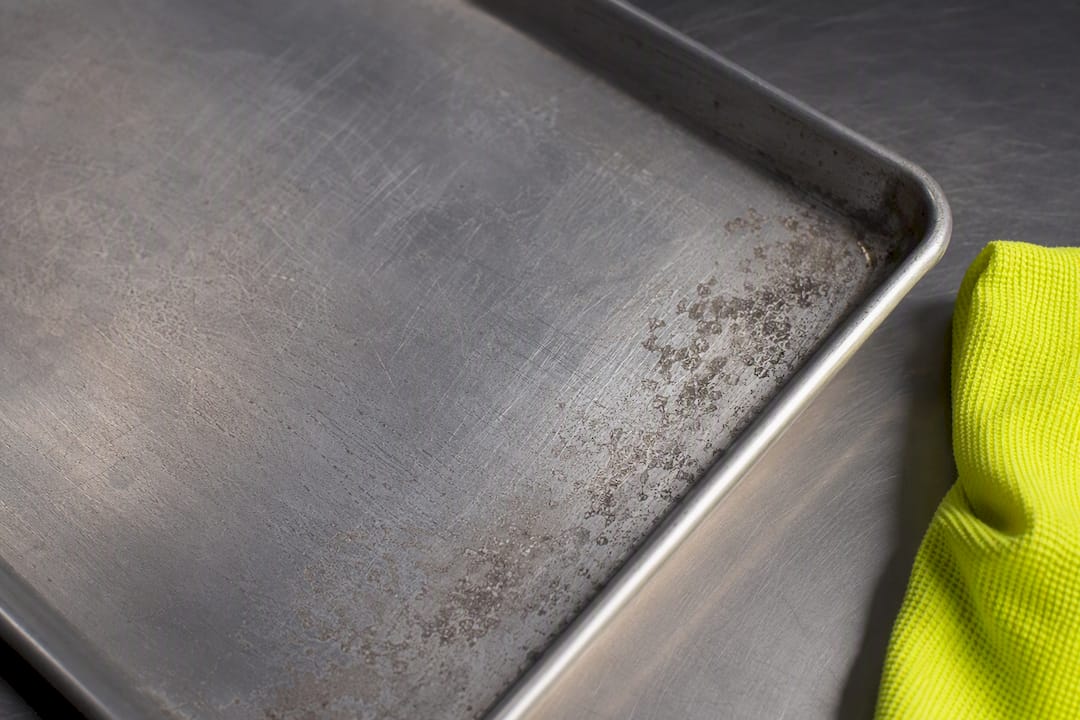
Pro Tip: Ask any provider whether they use caustic-based oven cleaner on aluminium trays. If the answer is yes, that's a red flag. Caustic soda pits aluminium over repeated use, which shortens the life of trays and shelving you've already paid for.
Sustainable materials matter beyond the chemistry too. Businesses sourcing plastic-free, reusable cleaning cloths and wipes for their own facilities teams find it cuts landfill waste from disposable wipes considerably over a year of daily use.
What should a cleaning service brief include?
A short, specific brief beats a vague one every time. Procurement teams that write clear specs get comparable quotes back; those who ask for "a good clean" get wildly different numbers with no way to judge them against each other.
Your brief should cover:
- Routine tasks (daily wipe-down, weekly degrease) listed by zone
- Periodic deep clean tasks with named frequency (quarterly hood service, for example)
- Drain and grease trap attention, scheduled separately if volume warrants it
- Waste handling, including how microfiber cloths get laundered and rotated
- Verification points: ATP testing, visual inspection sign-off, or both
Deliverables to demand in writing: SDS for every product used, a certificate list showing relevant EPA Safer Choice, Green Seal or NSF ratings, a dated service log, before-and-after photos for deep clean work, and a documented process for what happens when something fails inspection. On pricing, expect a per-visit rate for routine work and a separate bundled quote for deep cleans, scheduled outside business hours or over a weekend to avoid disrupting a working office.
How do you choose the right provider?
Vetting a cleaning supplier properly takes twenty minutes on the phone and saves months of frustration later. Run through this before signing anything:
- Check certification and training records. Ask which product certifications they hold and whether staff are trained on dilution ratios, not just told to "use less."
- Ask about verification methods directly. Do they run ATP testing or rely purely on visual inspection? Either can work, but you want a clear answer, not a shrug.
- Confirm insurance and OH&S compliance. A provider working around commercial appliances and chemicals needs current coverage.
- Request references from similar sites. An office kitchen serving 150 staff has different demands than a five-person studio kitchenette.
- Watch for red flags. Missing SDS on request, no documented service log, or an insistence that "the strong stuff works better" all point to a provider still working the old way.
Why documentation matters more than the chemistry
Most of the argument around eco-friendly kitchen cleaning gets stuck on chemistry, whether an enzyme cleaner degreases as well as bleach, whether a soft cloth beats a scourer. That's the wrong argument. The chemistry question was settled years ago: food-grade surfactants and non-caustic degreasers do the job on the surfaces they're formulated for. The real gap between offices that get consistent results and offices that don't is documentation.
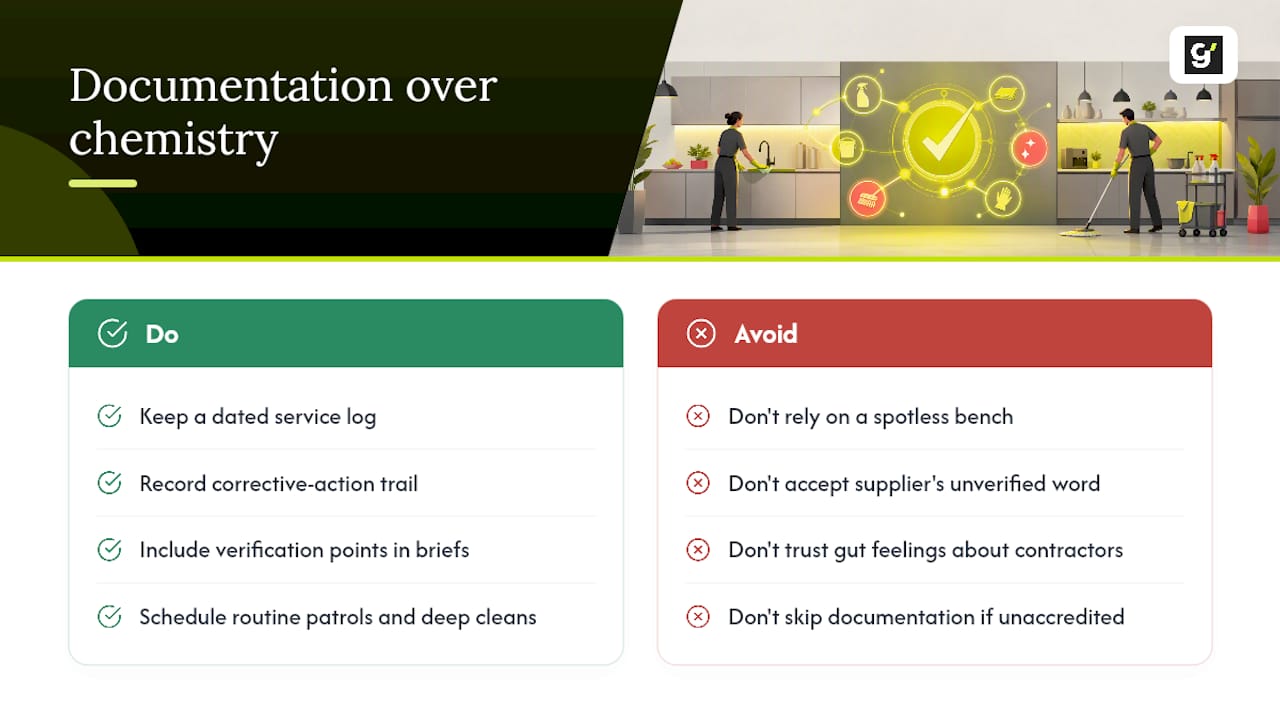
A service log with dates and a corrective action trail does something a spotless bench can't: it survives an audit, a tenant complaint, or a WHS incident review months later. Property managers chasing LEED or WELL points already understand this, because both standards demand documented verification rather than a supplier's word. The same logic should apply even if your building isn't chasing accreditation. A clear, written brief with verification points built in reduces disputes and gives you something to compare across quotes, rather than trusting a gut feeling about which contractor "seemed thorough."
A professional cleaning service approaches office kitchens with that same discipline: non-toxic chemistries backed by routine patrols, scheduled deep decontamination, and a verification trail an office manager can actually point to when someone asks whether the kitchen meets standard.
— Lead
Ready to brief a provider who documents everything?
If your office kitchen hasn't had a proper deep clean in a while, or you're tired of chasing a cleaning contractor for basic paperwork, professional eco-friendly cleaning services run programmes built around exact standards: non-toxic chemistries, documented service logs, and verification you can actually show a facilities audit.
For office kitchens needing heavy grease and buildup addressed properly, A Deep Decontamination Full Sweep service covers the periodic professional clean your hoods, drains and appliance interiors need on a quarterly or annual cycle. If something's gone wrong faster than that, a spill, a fridge failure, a sudden odour complaint, a Rapid Response two-hour tactical clean service can get someone on site fast. For offices wanting routine patrols built into a recurring schedule rather than one-off bookings, A recurring tactical unit service can be adapted to a weekly or fortnightly office kitchen visit.
Get in touch for a site assessment and a written quote scoped to your kitchen's actual volume and equipment, not a generic rate card.
Where to read more on eco-friendly kitchen standards
Property managers wanting to go deeper on any of the standards covered here have a few solid places to start. ISSA's sustainability research tracks how commercial cleaning is shifting toward ESG-aligned, documented programmes across the sector. The LEED and WELL janitorial standards guide lays out exactly what green building certification expects from a cleaning contract. For practical, kitchen-specific detail on eco-safe chemistries and dilution practices, the green cleaning guide for commercial kitchens is worth bookmarking, alongside Grimescene's own risk-based cleaning frequency guide for building out a full schedule.
Sources
- Sustainability Trends - ISSA | The Association for Cleaning & Facility Solutions
- Green Cleaning in Commercial Kitchens | Parts Town