
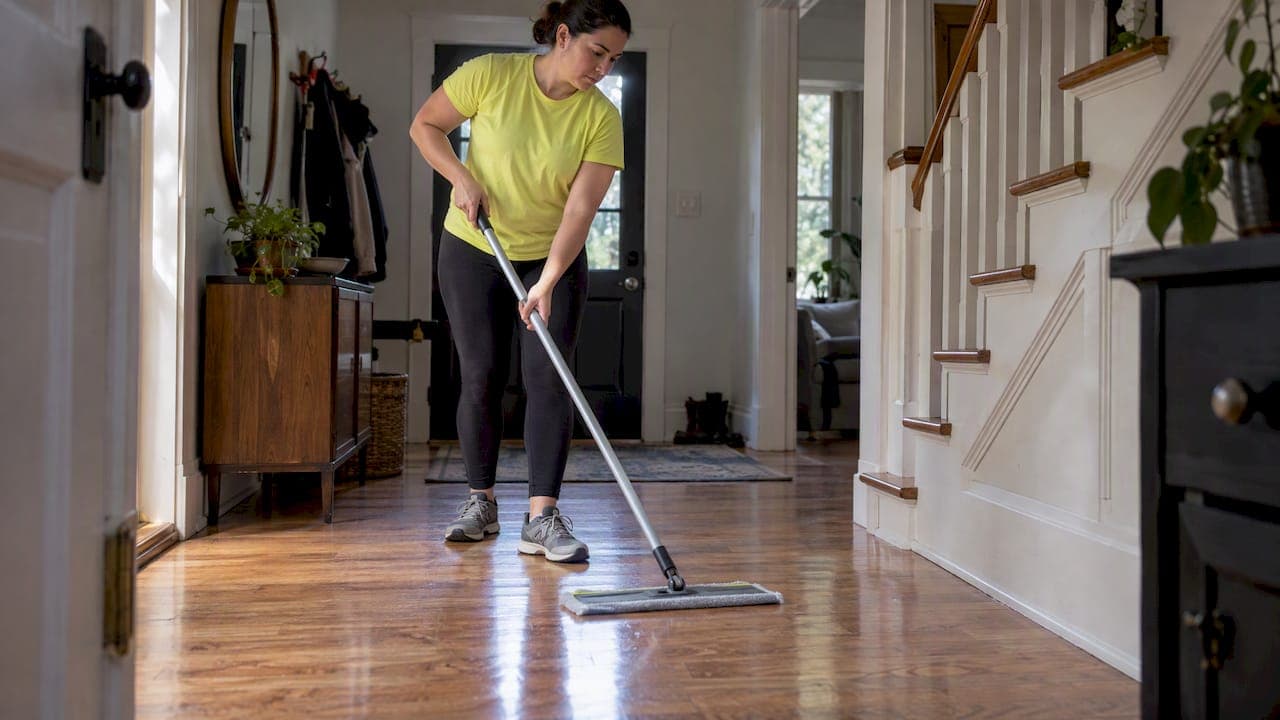
A good way to clean sealed hardwood is with a pH-balanced cleaner made for wood floors, applied with a barely damp microfibre mop. Avoid steam mops and excessive water, and dry the floor promptly. Follow the flooring manufacturer's cleaning advice if you are unsure. If you are unsure, follow the flooring manufacturer's cleaning advice, or hand the job to a professional eco-friendly cleaner.
TL;DR:
- Vacuum with the beater bar off or use a dry microfiber mop first, because trapped grit can scratch the sealed finish.
- Choose a pH balanced cleaner labeled for wood floors and approved by the flooring manufacturer; cleaners containing wax or oil can leave residue.
- Spray cleaner onto the mop pad, not the boards, then work in small sections with the grain and buff each section dry.
- Keep grit down with daily sweeping, vacuum weekly on the bare floor setting, and do a light damp clean monthly.
- If the finish is waxed or the boards are unsealed, avoid wet cleaning until the manufacturer advises you; stop if seams lift or boards cup.
Table of Contents
- Which products and tools are safe for sealed hardwood?
- What are the safest DIY non-toxic cleaner recipes?
- How much water is too much on a timber floor?
- How do you spot clean stains without harsh chemicals?
- What is a simple chemical-free maintenance schedule?
- Why do some homeowners still choose a professional eco-friendly clean?
- Need a non-toxic clean you do not have to do yourself?
- FAQ
- Sources
Which products and tools are safe for sealed hardwood?
Most sealed hardwood has a factory finish that does the real protecting. Your job is to clean the surface without wearing that finish down. "pH-neutral" means a cleaner that is neither acidic nor alkaline, so it lifts dirt without etching the coating. Look for products labelled for sealed wood floors, and check them against what your flooring or finish manufacturer recommends. The National Wood Flooring Association recommends a pH-balanced cleaner with a barely damp mop, and advises drying floors promptly.
The right tools do most of the work before any liquid touches the floor:
- A vacuum set to its bare-floor setting, with the beater bar off, so bristles do not scuff the finish.
- A soft-bristle broom for quick daily tidying.
- A dry microfibre dust mop, which traps fine grit that would otherwise scratch.
- A flat microfibre mop with a washable pad, which holds very little water.
- A low-liquid all-in-one mopping system that sprays a fine mist as you go.
Avoid steam mops and excessive water. NWFA maintenance guidance notes that wax or oil-based cleaners can leave residue that interferes with the finish and complicates future professional maintenance.
Pro Tip: Wash your microfibre pads after every clean. A pad loaded with grit works like fine sandpaper under your mop.

What are the safest DIY non-toxic cleaner recipes?
A homemade cleaner only works if it is gentle and used sparingly. These approaches suit sealed floors. Always test in a hidden corner first, and if your finish is waxed or unsealed, stop and ask the manufacturer before using anything wet.
- Cleaner: use a pH-balanced wood-floor cleaner recommended by your flooring or finish manufacturer, following its directions.
- Plain damp microfibre: for light dust and footprints, use a pad dampened with water and wrung out thoroughly. Dry the floor promptly.
- Wood-floor cleaner: choose one labelled for wood floors and follow the flooring or finish manufacturer's cleaning advice.
- Avoid unapproved cleaners: use a wood-floor cleaner recommended by your flooring or finish manufacturer.
Application matters as much as the recipe. Spray the mop pad or cloth, not the floor. Work in small sections, move with the grain, and buff dry straight away so water never sits on the boards. For background on cleaning options, see types of natural cleaning agents.
Pro Tip: Follow the product label and your flooring manufacturer's cleaning advice.
How much water is too much on a timber floor?
Moisture is the biggest long-term threat to wood floors. The US National Park Service's Preservation Brief 39 explains that excess moisture harms building interiors and recommends controlling it through inspection, maintenance and ventilation. The same principle applies at home: if the mop leaves a wet shine that lingers, there is too much water on the floor.
- Wring mop pads until they are damp, not dripping.
- Choose a low-liquid system over a bucket where you can.
- Clean in small sections and dry each one before moving on.
- Open windows or run a fan to speed drying.
- Check seams for lifting edges and look for cupping, where board edges rise higher than the centre.
If you notice changes such as cupping or opening seams, ask a flooring professional for advice before continuing to clean with liquid. For more on keeping a home in good condition between visits, our guide to maintaining a clean home between deep cleans covers the routine side.
How do you spot clean stains without harsh chemicals?
Act fast and stay gentle. Rubbing grinds particles into the finish and leaves dull patches.
- Blot liquid spills straight away with a dry cloth, working from the edge inwards.
- Lift solids with a soft plastic scraper or a spoon edge, not a knife.
- Wipe the mark with a soft cloth lightly dampened with a cleaner recommended by your flooring or finish manufacturer.
- Check with the flooring or finish manufacturer before using a spot-treatment product.
- If the mark has gone through the finish into the timber, leave it for a professional.
The NWFA's handbook for owners says to clean spills immediately with a dry or slightly damp cloth and to use only products your floor's manufacturer recommends.
What is a simple chemical-free maintenance schedule?
Consistency beats intensity. A light routine means you rarely need anything stronger.
- Daily or as needed: sweep with a soft broom or run a dry microfibre dust mop over high-traffic areas, and deal with spills the moment they happen.
- Weekly: vacuum the whole floor on the bare-floor setting, paying attention to edges and under furniture.
- Monthly: do a light damp clean with a wrung-out microfibre mop and your pH-neutral cleaner, in small sections, drying as you go.
- When the floor looks dull or heavily soiled: book a professional deep eco-clean, or ask a flooring specialist about a finish refresh.
For commercial settings, a facilities view of floor maintenance principles shows the same logic of routine over rescue.
Why do some homeowners still choose a professional eco-friendly clean?
My honest view is that DIY covers most weeks, but not every situation. Heavy soiling, fine dust after renovations, rental turnovers and bond cleans demand more time and care than a quick mop can give, and mistakes on a floor are expensive to reverse. In homes with children, pets or allergies, non-toxic protocols matter even more, because floors are where everyone lives. Weigh the convenience of doing it yourself against the thoroughness of a professional visit, and pick whichever protects the finish best for that job.
— Lead
Need a non-toxic clean you do not have to do yourself?
If you would rather hire than mop, we offer routine cleans, deep decontamination, short-term rental Scene Reset turnovers and end-of-lease cleans, all with non-toxic, bleach-free protocols that leave no harsh residue for families and pets. Browse our cleaning services, then request a quote or book an appointment on our site, and we will match the clean to your floors.

FAQ
What is the best way to clean hardwood floors without chemicals?
Dry cleaning first, then a barely damp microfibre mop. Sweep or vacuum on the bare-floor setting to remove grit, then wipe with a wrung-out pad and a gentle pH-neutral or castile soap solution. Dry each section promptly so water never sits on the boards.
What is the best non-toxic cleaner for hardwood floors?
A pH-balanced cleaner made for wood floors and recommended by your flooring manufacturer is a suitable choice. Avoid wax or oil-based cleaners, which can leave residue on the finish.
What is the best homemade cleaner for hardwood floors?
For routine cleaning, use a pH-balanced wood-floor cleaner recommended by your flooring or finish manufacturer. A pad dampened with water and wrung out thoroughly can also be used, and the floor should be dried promptly.
Is it safe to clean hardwood floors with vinegar and water?
Check with your flooring or finish manufacturer before using vinegar. A pH-balanced wood-floor cleaner recommended by the manufacturer is a suitable option.
Sources
- How to Clean and Take Care of Your Wood Floors: Essential Tips for Homeowners | National Wood Flooring Association | NWFA
- Preservation Brief 39: Holding the Line: Controlling Unwnted Moisture in Historic Buildings