
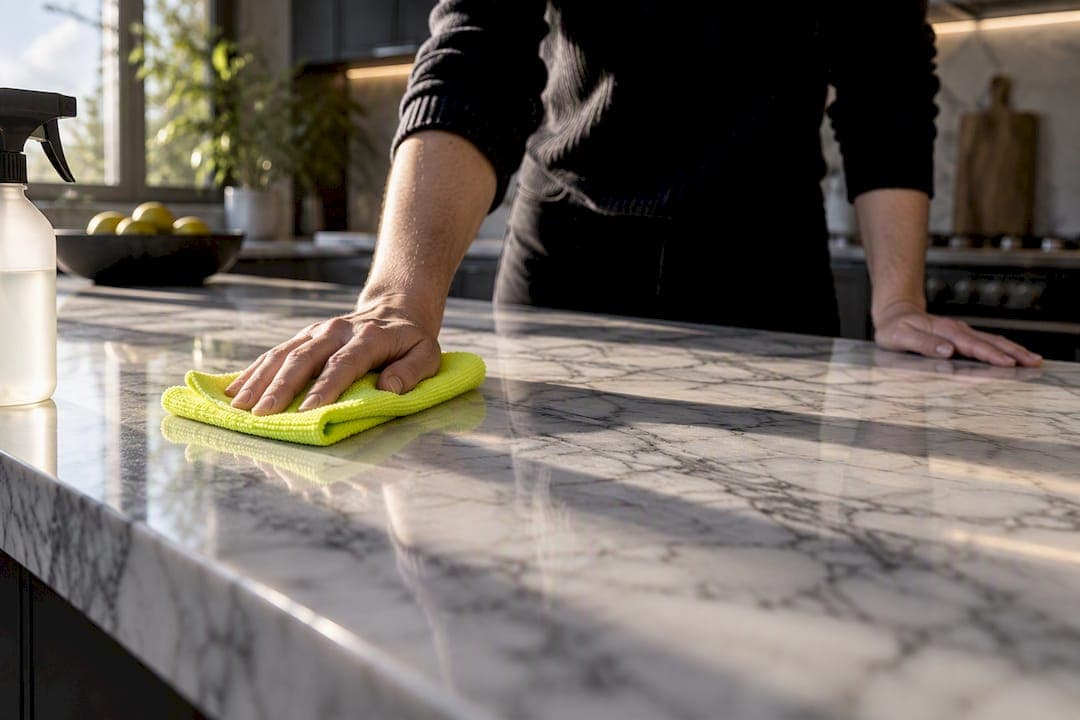
Use a pH-neutral or stone-specific cleaner, or a small measured amount of mild dishwashing liquid in warm water, and always rinse and dry the surface afterwards. Never reach for vinegar, lemon, acidic descalers, or abrasive powders. If you see a dull, cloudy patch that won't lift with gentle cleaning, that's likely an etch, and it needs a stone-care professional rather than more scrubbing.
TL;DR:
- Using a pH-neutral cleaner or mild dish soap is sufficient for regular marble cleaning, avoiding acidic substances like vinegar or lemon juice that cause etching.
- Water spots and dull patches indicate water damage or etching, which require professional polishing rather than further cleaning attempts.
- Stains from organic materials respond to poultices with hydrogen peroxide, while oil stains may need solvent-based treatments, but etches require refinning to restore the surface.
- Routine maintenance includes quick drying and sealing, but deep damage or persistent dullness signals the need for expert intervention.
- Non-toxic, bleach-free cleaning products are recommended for safety and to preserve the stone’s integrity, especially in rental or high-traffic environments.
Table of Contents
- How to clean marble without acid: a step-by-step routine
- Which cleaners and ingredients are safe on marble?
- Treating stains without acid, and knowing when it's an etch
- Protecting wet-area and high-use marble surfaces
- When to call a stone-care professional
- A professional's take on non-acid, non-toxic marble care
- A non-toxic clean without the DIY guesswork
- Where this guidance comes from
- Sources
- FAQ
How to clean marble without acid: a step-by-step routine
Marble punishes shortcuts, but the safe routine is barely more work than what most people already do.
- Clear the grit first. Dust or sweep loose sand and debris before you wipe anything. Grit dragged around under a wet cloth is what actually scratches marble, not the cleaner itself.
- Mix a mild solution. Add a small amount of pH-neutral stone cleaner or a few drops of mild dishwashing detergent to warm water. Consumer testing backs dish soap as an accessible, effective option for frequent marble cleaning, so there's no need to hunt for anything exotic.
- Wipe with a soft microfiber cloth or mop. Change the rinse water as soon as it looks dirty. Reused dirty water just redeposits grime.
- Rinse if any residue remains, then dry immediately with a clean microfiber cloth. Marble left sitting wet is asking for water spots and, over time, staining around grout lines.
- In a rental or turnover setting, photograph any existing marks before you start cleaning. This protects you if a guest or landlord later questions whether damage happened on your watch.
Pro Tip: Measure your cleaner conservatively. Overusing even a mild product leaves a thin film that reads as dullness — the fix is less product and a proper dry, not a stronger mix.
Which cleaners and ingredients are safe on marble?
Marble is calcite, which is calcium carbonate, and calcium carbonate reacts to even mild acids. That's the whole story behind every "don't use this" warning you'll read about marble care. A pH-neutral cleaner sits at or near 7 on the pH scale, meaning it's neither acidic nor alkaline enough to attack the stone's surface.
Safe options worth keeping under the sink:
- Neutral stone soap made specifically for marble, granite, or limestone.
- Stone-specific cleaning sprays labelled "safe for natural stone" or "pH-neutral."
- Plain mild dishwashing detergent diluted in warm water, for everyday wipe-downs.
Products to keep away from marble entirely:
- Vinegar, lemon juice, or anything citrus-based.
- Bathroom or limescale descalers, since these are built to dissolve calcium and marble is made of it.
- Scouring powders and abrasive creams, which scratch the polished surface even when the chemistry is fine.
A telling detail from testing on natural stone: neutral wash-and-rinse cleaning met an FDA food-contact sanitising standard, while vinegar actually failed a sanitising test on one material tested. Vinegar isn't just risky for the stone, it's not even reliably doing the sanitising job people assume it does. Always read labels before buying, and test any new product on a small, hidden patch first, whether it's marketed as "natural" or not. Products marketed as natural don't automatically mean safe for natural cleaning agents on stone.
Treating stains without acid, and knowing when it's an etch
Not every mark on marble is the same problem, and treating them the same way makes things worse.
Organic stains (coffee, wine, tea, fruit juice) usually sit on or just under the surface and respond well to a poultice: mix an absorbent powder with 12% hydrogen peroxide, spread it over the stain, cover with plastic wrap, and leave it to draw the stain out. You may need to repeat the poultice a few times, and some stains never fully disappear.
- Oil-based stains (cooking oil, cosmetics, grease) respond better to a mild solvent-based approach, but test on a hidden spot first, as solvents can affect some finishes.
- Etch marks, by contrast, aren't stains at all. They're a chemical burn where acid has actually dissolved a microscopic layer of the polished surface, leaving a dull, rough patch that no amount of cleaning will restore.
Pro Tip: Hydrogen peroxide and acetone are effective but need careful handling, especially around sealed grout or nearby wood finishes. For anything beyond a small spot on a benchtop, it's worth having a professional handle the poultice.
If the area still looks dull or feels rough after gentle cleaning, stop. Cleaning can't put material back once it's been etched away; only polishing or refinishing restores the surface.
Protecting wet-area and high-use marble surfaces
Bathrooms and kitchen benchtops take the most punishment, and most of the damage is preventable with habit changes rather than products.
- Squeegee shower marble after each use to stop soap scum building up before it needs scrubbing at all.
- Dry benchtops and vanities straight after use instead of letting water sit and evaporate slowly.
- Keep separate cloths for kitchen and bathroom marble, and swap rinse water the moment it turns cloudy.
- Ask a supplier or installer about a sealer compatible with acid-free care. Sealers vary by finish, and manufacturer guidance should override generic advice here.
- For short-term rentals, build these habits into the turnover checklist rather than leaving them to chance between guests.
When to call a stone-care professional
DIY covers most routine marble care, but a handful of signs mean it's time to stop and call someone qualified.
- A dull or rough patch that stays after gentle, repeated pH-neutral cleaning, which usually signals etching rather than a surface stain.
- Deep or large stains that a poultice hasn't shifted after a couple of attempts.
- Any spot where you can feel a difference in the surface texture, suggesting material loss rather than just discolouration.
Photograph and document the damage before any treatment, both for your own record and for the professional's assessment. Ask about non-toxic products if that matters to your household, and expect a proper visit to include an inspection, an honest read on whether polishing or full refinishing is needed, and a realistic timeline. For older stone or heritage properties, restoration best practice differs from routine polishing and is worth getting right the first time.
A professional's take on non-acid, non-toxic marble care
Every etch we've seen started with someone reaching for vinegar because it "worked on everything else." Grime Scene Services builds its cleaning protocols around non-toxic, bleach-free products for exactly this reason: it protects the stone and the people living around it. If you're not certain a mark is a stain rather than an etch, document it and get a professional opinion before you touch it with anything stronger.
— Lead
A non-toxic clean without the DIY guesswork
If the poultice didn't fully lift that stain, or you're just not keen on handling hydrogen peroxide near your benchtops, Grime Scene Services runs on the same principle this whole guide does: non-toxic, bleach-free products that get marble properly clean without the acid risk. Routine visits, deep decontamination for tougher jobs, and end-of-lease cleans are all built around agents safe enough for kids and pets to be back in the room straight after.

Short-term rental hosts get a specific edge here. The Scene Reset turnover protocol handles the cleaning between guests without the harsh chemical residue that can dull polished stone over repeated cycles, which matters when your listing photos depend on that marble looking sharp. Whether you need one deep clean to fix an overdue benchtop or an ongoing routine to keep it that way, check Grime Scene Services' service scope and get a quote for your property.
Where this guidance comes from
This guide draws on the Natural Stone Institute's care guidance and consumer testing from Wirecutter, plus Grime Scene's own posts on VOC-free cleaning and pet-safe products.
Sources
- Natural Stone Institute — Learn about cleaning products for natural stone
- Wirecutter — Cleaning marble, granite, and limestone
FAQ
Can I use vinegar to clean marble if I dilute it?
No amount of dilution makes vinegar safe for marble, because any acid can dull or etch the calcite surface with enough contact time. Stick to pH-neutral stone cleaners or mild dish soap instead.
What counts as a pH-neutral cleaner?
A pH-neutral cleaner sits at or close to 7 on the pH scale, meaning it's neither acidic nor alkaline enough to react with calcium carbonate. Most products labelled "safe for natural stone" or "stone soap" are formulated to this standard.
Can etching be cleaned off marble at home?
Generally no. Etch marks are surface damage, not dirt, so cleaning won't reverse them once the calcite has been dissolved. Minor etches sometimes respond to specialist polishing compounds, but deeper ones need professional refinishing.
Is dish soap actually good enough for marble?
Yes, plain mild dishwashing detergent diluted in warm water is a straightforward, effective option for routine marble cleaning according to consumer testing. Use it sparingly and dry the surface afterwards to avoid leaving a film.
Does Grime Scene Services offer non-toxic marble cleaning?
Non-toxic, bleach-free cleaning agents are used across residential and short-term rental services, including routine cleans and deep decontamination. Pricing depends on the property and service, so check current details on the Grime Scene Services site.