
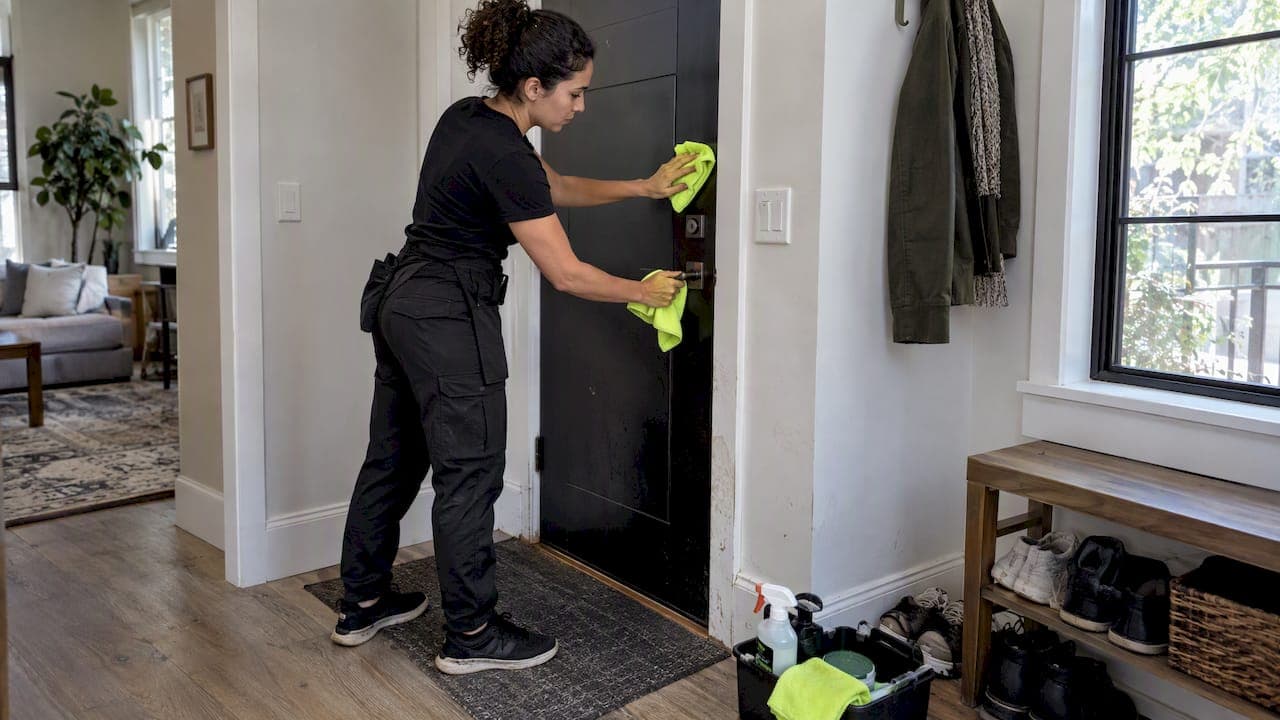
Run a timed zone reset, usually 10 to 30 minutes, that targets named high-touch surfaces in a fixed clean-then-disinfect order. Entry doors, shared kitchens and bathroom touchpoints are the three zones that reveal whether a cleaning routine works. Treat every reset as a repeatable template, not a one-off tidy-up, and the next section gives you the exact checklist to copy.
TL;DR:
- High-impact zones include door handles, switches, and shared surfaces that come into frequent contact with hands and carry more bacteria.
- A typical reset takes 10 to 30 minutes following a fixed sequence: declutter, waste removal, surface wiping, disinfection, and visual check.
- Surfaces must be cleaned with detergent before disinfecting to ensure effective removal of grime and bacteria, with multiple product options available.
- Using color-coded tools and assigning zone ownership helps prevent cross-contamination and ensures consistent, thorough cleaning.
- Daily cleaning of high-touch surfaces is essential, with more frequent cleaning in high-traffic areas, while deep cleans are scheduled separately to prevent buildup.
Table of Contents
- What counts as a high-impact zone and which surfaces matter most
- Ready-to-run 10 to 30 minute routines for high-impact zone resets
- Clean first, disinfect second: the sequence that actually works
- Tools and consumables that speed up every run
- Assigning zones and checklists that actually get used
- Scheduling, frequency and realistic time budgets
- Safety, PPE and why fogging or UV don't replace manual cleaning
- How Grime Scene Services runs a process-first zone protocol
- Why small routines beat occasional deep cleans
- Book a zone reset or a deeper clean with Grime Scene Services
- FAQ
- Sources
What counts as a high-impact zone and which surfaces matter most
A high-impact zone is any space where people touch the same surfaces repeatedly over a short period: door handles, light switches, shared counters. These are also called high-touch zones, and they carry more grime, more bacteria and more wear than the rest of a property simply because of how often hands land on them.
The zones look different depending on where you work:
- Homes: front entry, kitchen benches, bathroom taps and light switches near high-traffic doorways.
- Offices: shared kitchens, meeting room tables, lift buttons and printer or photocopier panels.
- Short-term rentals: entry keypads, remote controls, kettle and coffee machine handles, bathroom fixtures.
- Retail: counter surfaces, EFTPOS terminals, door handles and fitting room rails.
Within each of those, a shorter list of surfaces deserves priority every single visit: door handles and push plates, light switches, tap handles, shared remote controls, and any surface touched by multiple people within the same hour. The Infection Prevention and Control Expert Group defines these as frequently touched surfaces, distinct from minimally touched surfaces that only need attention when visibly dirty. Knowing that distinction is what stops a reset blowing out into a full clean.
Ready-to-run 10 to 30 minute routines for high-impact zone resets
A timed reset works because it forces a fixed order instead of wandering room to room. Two templates cover most situations: a 10-minute spot reset for a single zone between uses, and a 20 to 30 minute area reset for a cluster of zones at the end of a shift or between guests.
- Declutter (1 to 3 minutes): clear visible items, personal belongings and clutter off benches and surfaces.
- Remove waste (1 to 2 minutes): empty bins, replace liners, clear food scraps before anything else happens.
- Damp dust and wipe (3 to 10 minutes): wipe down surfaces with detergent to lift dirt and grime before disinfecting.
- Disinfect touchpoints (3 to 8 minutes): apply disinfectant to named high-touch surfaces and respect the manufacturer's contact time.
- Visual check (1 to 2 minutes): scan the zone for missed spots, streaks or leftover rubbish before moving on.
For a solo cleaner, a phone timer set to each step keeps the pace honest. For a team, assign one person per zone rather than splitting tasks by type, since switching surfaces mid-task is what causes steps to be skipped. If a zone needs more than a wipe, such as built-up grime on grout or a sticky stovetop, defer that task to a scheduled deep clean rather than letting it blow out your reset time; the Types of Rental Reset Cleaning Protocols guide breaks down which tasks belong in a quick reset versus a full protocol.
Pro Tip: Set a visible timer during team resets. Staff move faster and skip less when the countdown is in view, not just in their head.

Clean first, disinfect second: the sequence that actually works
Wiping a dirty surface with disinfectant and calling it done is the single most common shortcut that undermines a cleaning routine. Infection Prevention and Control Expert Group guidance is specific on this: surfaces need to be cleaned with detergent before disinfection, because dirt and grime reduce how well a disinfectant can work. Manual cleaning always comes first.
Frequently touched surfaces need regular cleaning and disinfection at least once every day, with more frequent cleaning necessary in busy or high-turnover areas, according to the same IPC guidance. That single rule should set your baseline frequency before anything else.
In practice, you have three product options:
- Combined detergent/disinfectant products save a step and suit fast resets, provided the surface is not heavily soiled.
- Disposable wipes are convenient for small touchpoints like switches and handles but need enough wipes to keep the surface wet for the full contact time, not a single swipe.
- Diluted disinfectant applied after a separate detergent wipe is the most reliable option for heavily used surfaces such as kitchen benches and bathroom fixtures.
Manual scrubbing is still required wherever grime is visible or caked on, since no spray or wipe lifts dried residue on contact. Use separate cloths or colour-coded sections per zone to avoid dragging contamination from a bathroom into a kitchen, and always let a disinfectant sit for its labelled contact time rather than wiping it straight back off.
Tools and consumables that speed up every run
The right kit turns a 30-minute reset into a 15-minute one without cutting any step. Colour-coded microfibre cloths (one colour per zone type, such as red for bathrooms and blue for kitchens) stop cross-contamination and remove the guesswork of which cloth goes where.
- Microfibre cloths and mop heads lift more dirt per pass than cotton rags and need less liquid.
- A stocked caddy per zone type means no mid-task trips back to a supply cupboard.
- Pump-spray bottles apply consistent amounts of detergent or disinfectant without oversaturating a surface.
- A cordless stick vacuum handles quick floor passes in entryways and high-traffic corridors between full vacuum sessions.
Replenish consumables before they run out, not after. A caddy that is missing wipes or spray mid-shift is the single biggest cause of a reset running over time. Check stock levels at the start of each shift rather than when a bottle runs dry mid-zone, and keep a small reserve of gloves, cloths and spray refills in a central location so a gap in one zone does not stall the whole run.
Assigning zones and checklists that actually get used
Ownership is what turns a routine into a habit. When one person is responsible for one zone, missed tasks drop because there is no ambiguity about who should have caught them.
- Map zones before assigning them: draw or list every high-impact zone on the property and give each one a name, not just "kitchen" but "staff kitchen bench and sink."
- Assign single-owner zones: one cleaner per zone per shift, rather than splitting a zone between two people.
- Build a short checklist per zone: five to seven items maximum, written as actions ("wipe bench, empty bin, disinfect tap") rather than vague goals.
- Use a visible sign-off: a laminated sheet with initials and time, or a QR code linking to a digital log, both work, provided someone actually checks it.
- Review misses weekly, not daily, so patterns show up without turning review into another chore.
The Audit Ready Strata Cleaning Checklist sets out a practical example of zone assignment for shared property, and the same model scales down to a single office kitchen or up to a full commercial floor.
Scheduling, frequency and realistic time budgets
Frequency depends on traffic, not the calendar. IPC guidance sets a daily minimum for frequently touched surfaces, with more frequent cleaning required wherever traffic is higher, such as shared office kitchens or short-term rental turnovers between guests.
- Daily: all named high-touch surfaces in any occupied property.
- Several times a day: entry points, shared kitchens and bathrooms in high-turnover commercial or rental settings.
- End-of-shift or end-of-stay: a fuller reset covering every zone before the next occupant arrives.
Time budgets follow the routines above: 10 minutes for a single touchpoint-heavy zone, 20 to 30 minutes for a cluster, and longer for scheduled deep tasks like grout or oven interiors. For planning labour costs, Australian market pricing puts hourly rates for many cleaners around $35 to $60, with flat prices for a maintenance clean running $120 to $200 and a full deep clean $220 to $450. Hourly rate guidance also notes that a two-hour visit suits a small home reset, while after-hours or specialist work commands a higher rate. Flat pricing suits predictable recurring resets; hourly pricing suits variable or one-off jobs where scope is harder to pin down in advance.
Safety, PPE and why fogging or UV don't replace manual cleaning
Gloves are the baseline for any disinfectant use, with eye protection and a well-ventilated space added for stronger products or enclosed bathrooms. Escalate to a respirator and dedicated waste bags only for contamination jobs beyond routine cleaning, such as bodily fluids or biohazard situations.
- Fogging and UV devices are not recommended as primary cleaning methods by CDC guidance on facility cleaning, which flags safety risks and limited effectiveness compared with manual cleaning.
- These technologies also carry real costs in staff training, required PPE and room downtime while a space clears, costs that rarely pay off compared with a well-run manual reset.
- Dispose of waste in sealed bags and store chemicals in their original, labelled containers, away from food preparation zones.
Treat any fogging or UV equipment as a supplement for specific situations, never as a substitute for the clean-then-disinfect sequence covered earlier.
How Grime Scene Services runs a process-first zone protocol
We built our service model around the same principle this guide covers: short, repeatable zone work beats occasional deep cleans for keeping high-impact areas genuinely clean. Three services map directly to the routines above.
- The Scene Reset follows a fixed sequence across entry, kitchen and bathroom zones for short-term rental turnovers, built to get a property guest-ready between bookings without skipping steps.
- Rapid Response (2-Hour Tactical Clean) is our timed intervention for urgent situations, a spill, an unexpected inspection, or a turnover with a tight window.
- Deep Decontamination | Full Sweep handles the heavier tasks a quick reset should never absorb, such as built-up grime or post-construction residue.
Every job runs on non-toxic, bleach-free products, which means a space is safe to re-enter immediately after a reset rather than needing to air out. We back each job with before-and-after reporting so property managers and hosts can see exactly what was done. Full scope details for each service sit on our service scope page, with urgent bookings available through the services store.
Why small routines beat occasional deep cleans
The biggest mistake often seen on-site is treating a weekly deep clean as insurance against daily neglect. It never works that way: grime compounds, and a once-weekly effort spends most of its time undoing a week of missed touchpoints instead of maintaining a standard. A 15-minute daily reset on three zones outperforms a two-hour weekly blitz, because it never lets buildup start.

The second mistake is skipping the clean step before disinfecting, usually under time pressure. It feels faster. It isn't, because the disinfectant never worked properly on the dirty surface underneath.
Pick three zones. Own them daily. Everything else follows from that.
— Lead
Book a zone reset or a deeper clean with Grime Scene Services
Once you've got the routine mapped, the next question is whether to run it yourself or bring in a team that already has the sequence, products and timing dialled in. Recurring zone maintenance services cover homes and offices, with a service built specifically for short-term rental turnovers where guest-ready timing matters. For contamination beyond a routine wipe-down, deeper remediation work is available, as well as urgent cleaning that can't wait for a scheduled visit.
Every job runs on non-toxic, bleach-free products, so there's no waiting around for fumes to clear before a space is back in use. Check service scope and book a time through our service store, or see the full range on our scope overview.
FAQ
How often should you clean high-touch areas?
Frequently touched surfaces like door handles, light switches and shared counters need cleaning and disinfection at least once a day, with more frequent passes in high-traffic or high-turnover settings according to IPC guidance. Minimally touched surfaces only need attention when visibly dirty.
What is the 5-5-5 rule for cleaning?
There's no official government or industry standard defining a "5-5-5 rule" for cleaning, and definitions vary depending on where you encounter the term. Some use it informally to mean five minutes spent on five tasks in five key zones, but it isn't a recognised framework in the sourcing behind this guide.
How much is a 1 hour clean?
Pricing varies by job type and region, but market guidance for Australia puts typical hourly rates for many cleaners between $35 and $60 per hour. A flat-rate maintenance clean often runs $120 to $200 depending on scope, which can work out cheaper than hourly pricing for a standard one-hour visit.
What is the 6/10 rule for cleaning houses?
This isn't a recognised cleaning standard referenced in official IPC, health department or industry guidance, and no consistent definition for it exists. If you've seen it elsewhere, treat it as informal advice rather than an established benchmark.
Does Grime Scene Services offer a fast turnaround for urgent cleans?
Yes, our Rapid Response (2-Hour Tactical Clean) service is built specifically for urgent situations that can't wait for a scheduled visit, such as a last-minute turnover or unexpected mess. Full details and booking are available on our services store.
Sources
- Infection Prevention and Control Expert Group – Cleaning and disinfection in the community
- Cleaning and Disinfecting Your Facility | CDC
- How Much to Charge for Cleaning in Australia | Hey Jodie
- Cleaner Hourly Rate Australia (2026): Going Rates | Yakka Labour