
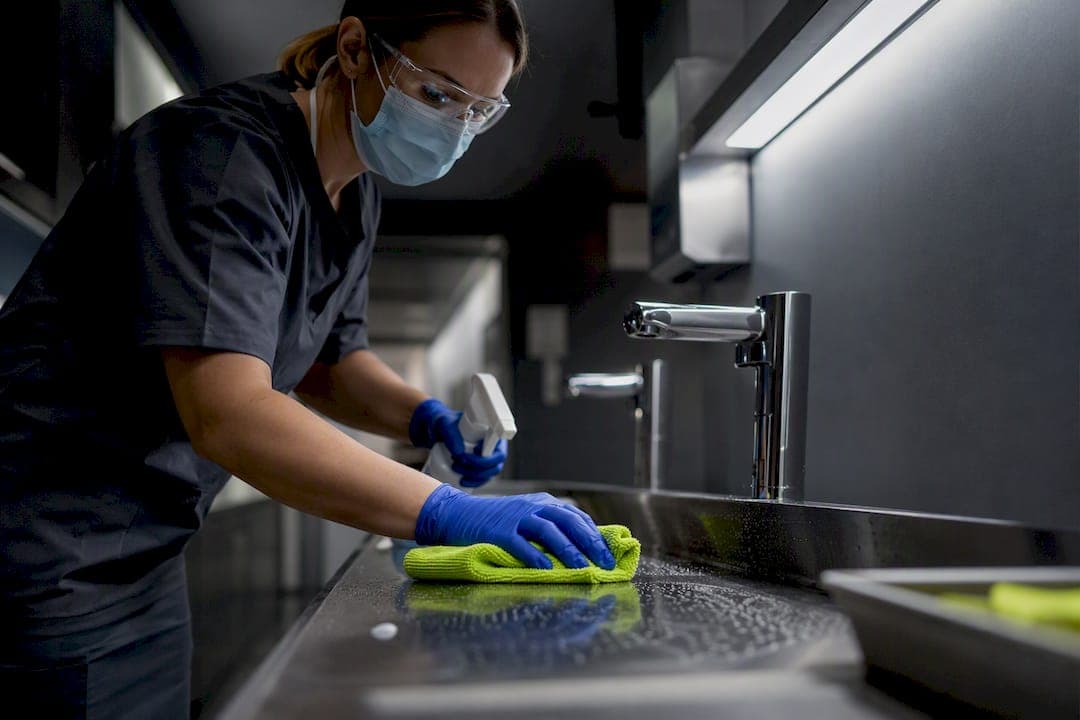
For property owners and hosts, "hospital grade" means hospital level sanitisation delivered by a professional eco friendly cleaning service: measurable microbial reduction achieved without harsh chemicals. Non toxic protocols can match that standard when they combine thorough mechanical cleaning, correct dwell time, and verification. The caveats are real, but they are about process, not about the ingredients being green.
TL;DR:
- Green cleaning protocols can achieve the same microbiological reduction as traditional hospital disinfectants when properly applied, including pre-cleaning, correct dosing, and verification.
- Hospital level sanitization is necessary only for specific high-risk situations such as confirmed infections, bodily fluid spills, outbreaks, post-construction cleanup, or vulnerable guests, not for routine cleaning.
- Proper verification methods like ATP swabs, detailed reports, and documented protocols are essential to ensure genuine results, as "hospital grade" is a marketing term without evidence.
- Maintaining adequate contact time and using non-toxic, biodegradable agents is crucial for safety and effectiveness, while ventilation and drying time further ensure surface safety post-treatment.
- Trusted providers will clearly outline their process, products, contact times, verification practices, and staff training, with red flags including vague claims or lack of documented procedures.
Table of Contents
- What hospital level sanitisation looks like in practice
- How eco friendly protocols achieve hospital level results
- When hospital level sanitisation is actually justified
- Questions to ask before booking an eco friendly hospital level clean
- Dwell time and safe re-entry after treatment
- What a genuine eco friendly hospital level protocol looks like on the ground
- How Grime Scene Services can help with your next turnover
- Sources
- FAQ
What hospital level sanitisation looks like in practice
Hospital level sanitisation is a measurable outcome, not a mood. Professionals aim for a documented drop in microbial load, sometimes checked with ATP swabs or surface sampling, rather than a visual "looks clean" standard.
Three different jobs get lumped together and shouldn't be. Routine cleaning removes visible soil with detergent and water. Sanitisation reduces germ counts to a safer level for everyday use. Hospital level decontamination, also called a terminal clean, targets high risk surfaces after an infectious event, a bodily fluid spill or a biohazard incident, and follows a stricter sequence.

A provider offering genuine hospital level work should be able to show you what happened, not just tell you. That means before and after photos, a written report of the areas treated and the products used, and, for higher risk jobs, swab or ATP verification confirming the surface met the target reduction. Without that evidence trail, "hospital grade" is a marketing phrase, not a result.
How eco friendly protocols achieve hospital level results
The idea that green protocols cannot match hospital grade outcomes doesn't hold up against current evidence. A 2025 peer reviewed trial comparing eco friendly and traditional chemical cleaning in healthcare settings found the green protocol met the same hygiene benchmarks across sampled risk zones while cutting CO2 emissions at pilot sites. Separately, probiotic based cleaning trials recorded average surface pathogen reductions of between about 70 and over 90% across an 18 month multicentre study, alongside a drop in healthcare associated infection rates during the intervention period.
The mechanics behind those results aren't mysterious:
- Pre-cleaning first: soil and biofilm are physically removed before any disinfecting step, because mechanical cleaning is what makes any disinfectant effective at all.
- Concentrated, biodegradable agents: applied at the correct dose rather than diluted for convenience.
- Microfibre and equipment settings: chosen to lift and trap microbes rather than smear them.
- Probiotic colonisation: some systems seed surfaces with benign bacteria that compete with pathogens over time.
Green cleaning protocols matched or exceeded traditional hospital cleaning on microbiological reduction while cutting CO2 emissions by roughly 49 to 53% at pilot sites. That gain came from concentrated products and equipment choices, not from a single "green ingredient."
None of this is automatic. Reviewers of probiotic cleaning caution that standardisation and larger trials are still needed before routine adoption in high risk settings, and outcomes depend on correct application rather than a product's label.
When hospital level sanitisation is actually justified
Not every clean needs this level of treatment, and overusing it wastes money without improving safety. These are the situations where it earns its place:
- Confirmed infectious illness in a property: a terminal clean targets high touch surfaces the person contacted.
- Bodily fluid or biohazard spills: blood, vomit or similar incidents call for a biohazard control response, not a standard wipe down.
- Outbreak conditions in shared or high turnover properties: multiple guests or occupants reporting illness in a short window.
- Post construction dust and residue: fine particulates and biofilm can build up during renovation work and need a full decontamination sweep before reoccupation.
- High turnover short term rentals hosting vulnerable guests: infants, elderly guests or immunocompromised travellers raise the stakes on a standard turnover.
Urgency dictates the response. A confirmed illness or spill usually calls for a rapid, same day booking, while post construction jobs and rental turnovers can be scheduled as a deep decontamination in advance.
Questions to ask before booking an eco friendly hospital level clean
A good provider will answer these without hesitation, and a vague answer is itself useful information. Run through this list before you book:
- Is there a documented protocol that names each step, from pre-cleaning through to final wipe down?
- Does the process include a dedicated pre-cleaning stage to remove soil before any disinfecting agent is applied?
- Can they name the products used and confirm they are non toxic and bleach free?
- What contact times do they maintain on each surface type, and how do they keep surfaces wet for that long?
- Do they offer verification, such as ATP swabbing or a written before and after report?
- Are staff trained and equipped with PPE appropriate to the job, and how is waste handled afterwards?
- Will surfaces be checked for compatibility before treatment, particularly on stone, timber or soft furnishings?
Pro Tip: If a provider can't explain how they maintain contact time with their products, they can't guarantee the result, no matter what the quote sheet says.
Red flags include a hard sell on the phrase "hospital grade" with no process behind it, no mention of verification, and contact times given in nonspecific or vague terms rather than precise figures tied to the product used.
Dwell time and safe re-entry after treatment
Dwell time, also called contact time, is how long a disinfecting agent needs to sit wet on a surface to achieve its microbial kill. Cut that time short and the surface only looks treated. NSW Health guidance treats neutral detergent and water as the primary method for routine cleaning, and reserves disinfection for defined high risk tasks, outbreaks, terminal cleans and toilets, provided the product used meets the required technical listing.
Meeting contact time with a low toxicity formulation takes more than a single spray and wipe. Professionals reapply in smaller volumes across the surface or use applicators built to hold moisture rather than let it evaporate early, a detail covered in more depth in this guide to disinfectant dwell time.
Once a hospital level clean is done, ventilate the space, let treated surfaces air dry fully, and keep pets and children off surfaces until they're dry to the touch. Because the agents are non toxic, re-entry is generally faster than with harsh chemical alternatives, though drying time still matters for the kill to hold.

What a genuine eco friendly hospital level protocol looks like on the ground
Their cleaning services follow a checklist including documented steps, pre-cleaning before any agent is applied, non toxic products dosed correctly, and before and after reporting to show what was done. The company's proprietary protocols are grounded in the documented science behind eco friendly disinfection, detailed further in this overview of eco friendly disinfection for homes and facilities.
Large scale jobs involving construction debris or environmental hazards sometimes call for specialised remediation beyond standard cleaning scope, which is where a partner like environmental remediation specialists can complement a decontamination job.
— Lead
How Grime Scene Services can help with your next turnover
If you manage a rental or a busy household and want hospital level results without the chemical smell or the guesswork, that's exactly the gap Grime Scene Services fills.
- The Scene Reset handles short term rental turnovers with the same documented, verified process used in higher risk jobs.
- Deep Decontamination covers full sweeps for post construction sites, outbreak conditions or properties needing a reset before reoccupation, detailed on the service scope page.
- Rapid Response delivers a two hour tactical clean for spills or urgent incidents that can't wait for a scheduled slot, bookable through the services store.
Every booking includes before and after reporting so you can see the verification you'd expect from a hospital level job, without the bleach residue that comes with conventional disinfectants. Check availability and scope out a deep decontamination clean for your next high stakes turnover.
Sources
This guide draws on NSW Health cleaning procedures, the Therapeutic Goods legislative instrument, and peer reviewed trials on probiotic cleaning and green cleaning in healthcare.
- Eco‑Friendly vs. Traditional Cleaning in Healthcare Settings: Microbial Safety and Environmental Footprint (MDPI, 2025)
- Module 3: Work procedures for cleaning (NSW Health PD2023_018)
- Probiotic‑based cleaning systems and their impact on hospital pathogens (PLOS ONE)
FAQ
What does hospital grade disinfectant actually mean?
In this context, it means a cleaning service achieves hospital level microbial reduction through documented protocols, correct contact time and verification, rather than through a specific product label. The outcome, not the ingredient list, is what defines the standard.
Is a hospital disinfectant different from regular cleaning products?
Yes. Regular cleaning with detergent and water removes visible soil, while hospital level decontamination targets a measurable reduction in pathogens on high risk surfaces, following guidance such as NSW Health's cleaning procedures. The two serve different purposes and are used in different risk scenarios.
Can eco friendly products really achieve hospital level results?
Peer reviewed research suggests they can when applied correctly. A 2025 trial found a green cleaning protocol met the same hygiene benchmarks as traditional chemical cleaning in healthcare settings while reducing environmental impact.
How do I know if my property needs a hospital level clean?
Situations like a confirmed infectious illness, a bodily fluid spill, an outbreak among multiple occupants, or post construction dust and residue generally warrant it. Routine turnovers without these risk factors typically only need standard sanitisation.
What should I ask a cleaning provider before booking?
Ask about their documented protocol, the products used, how long they maintain contact time on treated surfaces, and whether they provide verification such as swab testing or a written report. A provider offering genuine hospital level results, like the checklist covered through Grime Scene Services' Scene Reset protocol, should answer all of these without hesitation.