
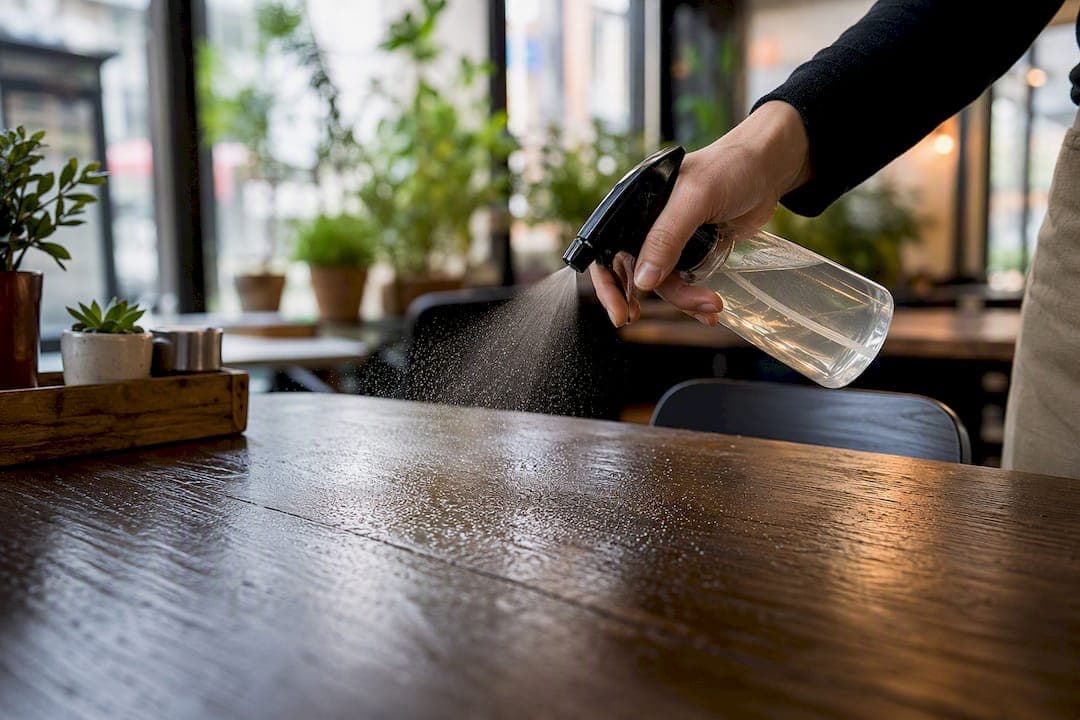
Yes, eco-friendly disinfecting works, but only when you use registered products or proven actives with the correct contact time. Start with two moves: clean and disinfect high-touch surfaces first, not every surface in the house, and check the label for a registration number or ecolabel plus a stated kill time before you buy anything marketed as "green" or "natural."
TL;DR:
- Registered eco-friendly disinfectants with validated active ingredients like hydrogen peroxide, thymol, citric acid, or hypochlorous acid require correct contact time to be effective.
- Disinfection is necessary mainly for high-touch surfaces or specific risks, while routine household cleaning generally suffices for low-risk areas.
- Proper labeling is crucial, look for active ingredient details, pathogen kill list, contact time, and registration or ecolabel to avoid marketing claims.
- Longer wet contact times are a tradeoff for greener actives, so surfaces must remain visibly wet for the required duration; improper application reduces effectiveness.
- Professional services are recommended for heavy contamination, complex materials, or post-construction cleanup to ensure validated, damage-free decontamination.
Table of Contents
- What active ingredients actually disinfect surfaces?
- When do you actually need to disinfect vs just clean?
- How do you spot a real eco-friendly disinfectant on the shelf?
- How do you apply, store, and dispose of these products safely?
- When should you call in a professional instead of DIY?
- Do eco-friendly disinfectants actually work as well as bleach?
- Is a biodegradable label enough to call a product eco-friendly?
- How do you choose the right product for your situation?
- Are eco-friendly disinfectants worth the extra cost?
- What do people get wrong about eco-friendly disinfectants?
- Prioritise people first, then the planet
- Need validated decontamination? Here's what Grime Scene Services offers
- Sources
What active ingredients actually disinfect surfaces?
Four actives carry most of the weight in genuine eco-friendly disinfecting: hydrogen peroxide, thymol, citric acid, and hypochlorous acid. Each works differently, and none of them is a straight swap for bleach or quaternary ammonium compounds without adjusting how you use it.
Hydrogen peroxide is an oxidiser. It breaks down pathogen cell walls through oxidation, then decomposes into water and oxygen, leaving no chemical residue. Household formulations are generally dilute and most need a wet contact time of several minutes depending on the pathogen claimed on the label. It's genuinely one of the more versatile green actives, but it bleaches fabric, grout, and some dyed surfaces, and it can pit certain metals with repeated exposure.
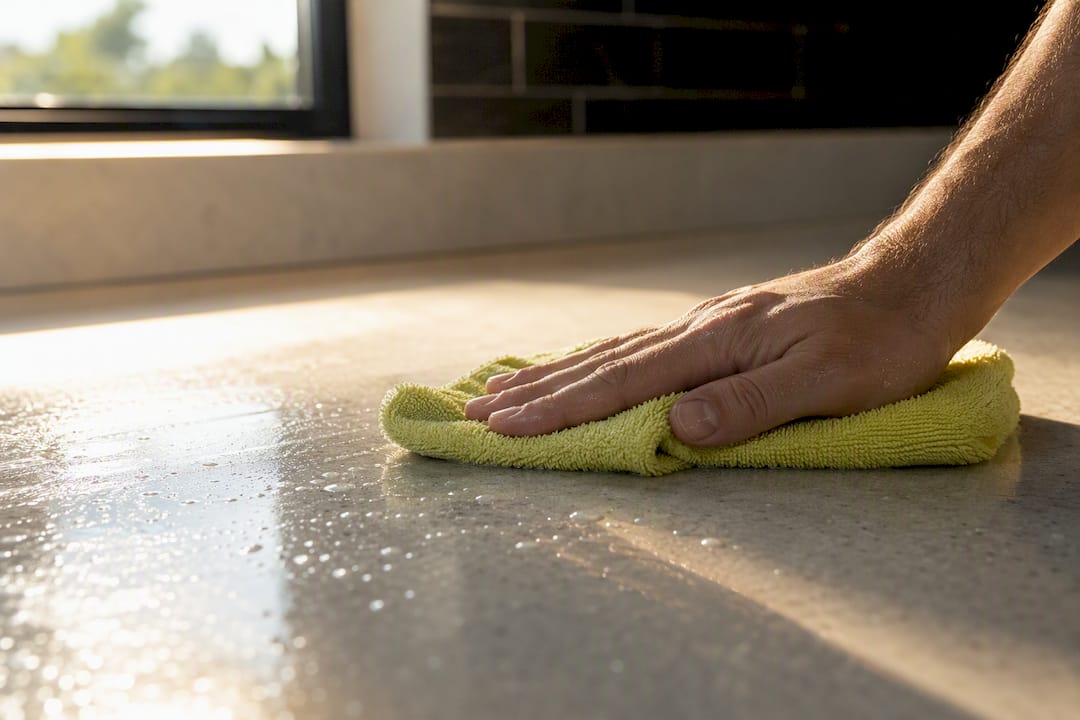
Thymol comes from thyme oil and belongs to a class of plant phenols. It disrupts microbial cell membranes and tends to work faster on many household pathogens than people expect from a "natural" ingredient, often within ten minutes at labelled dilution. Thymol offers a solid balance for high touch surfaces because it leaves minimal residue and suits homes with kids and pets, though people with sensitivities to plant oils can experience skin or respiratory irritation at higher concentrations.
Citric acid works by lowering pH to a level many bacteria and some viruses can't tolerate, and it doubles as a limescale cutter, which is handy in bathrooms and kitchens. It's cheap and biodegradable, but it can be corrosive to natural stone. Run it across marble or limestone benchtops and you'll etch the surface within minutes.
Hypochlorous acid is produced by electrolysing a saltwater solution and is chemically related to what your own white blood cells produce to fight infection. It disinfects fast, often within thirty seconds to a few minutes, and breaks down into salt and water. The tradeoff is shelf life: most hypochlorous solutions lose potency within weeks of production unless stabilised, so check the bottling date, not just the ingredient list.
The common thread across all four: green disinfectant actives generally need longer wet contact times than bleach or quats to hit the same kill claims. That's the tradeoff for lower toxicity, and it's non-negotiable if you want the product to actually work.
- Hydrogen peroxide: oxidises pathogens, residue-free, but bleaches fabric and some metals.
- Thymol: fast-acting plant phenol, low residue, occasional skin irritation risk.
- Citric acid: effective acid-based antibacterial, corrosive on natural stone.
- Hypochlorous acid: very fast kill time, short shelf life once diluted.
Registered green disinfectants can meet the same kill claims as conventional products. Commercial formulations built from citric acid, thymol, and hydrogen peroxide carry EPA registration and meet validated kill claims when applied according to the label, including in healthcare and food service settings where the standard is higher than most homes will ever need.
When do you actually need to disinfect vs just clean?
Most surfaces in your home only need cleaning, not disinfecting, and treating every bench and doorframe with a disinfectant daily is wasted product and unnecessary chemical load. EPA guidance is explicit on this point: reserve disinfection for high-touch surfaces and specific risk situations, and let soap, water, and a microfibre cloth handle the rest.
Cleaning physically removes dirt, grease, and some germs. Disinfecting kills a specific, labelled list of pathogens, but only if the surface was already clean. Disinfectant sprayed onto a greasy stovetop or a grimy remote control often can't reach the microbes underneath the residue.
Here's a practical decision sequence for household situations:
- Identify genuine high-touch zones: door handles, light switches, tap handles, remote controls, fridge handles, and toilet flush buttons see the most hand contact and the most pathogen transfer.
- Clean first, always: wipe away visible grime or residue with detergent and water before applying any disinfectant.
- Disinfect only when there's a reason to: someone in the house has been sick, you're prepping raw meat on a shared surface, a pet has had an accident, or you've had visitors during cold and flu season.
- Skip disinfectant on low-risk surfaces: floors, walls, and furniture that see minimal hand contact rarely need anything beyond regular cleaning.
- Increase frequency only during active illness: once someone recovers, you can drop back to routine cleaning within a day or two.
A sensible household rhythm looks like this: wipe high-touch points with a general cleaner daily, disinfect them two to three times a week as a baseline, and step that up to after every use if someone at home is contagious. Commercial kitchens and healthcare-adjacent settings need tighter, documented schedules, but a family home doesn't need hospital-grade discipline to stay genuinely safe.
How do you spot a real eco-friendly disinfectant on the shelf?
Read the label like you're checking a contract, because that's effectively what it is. A genuine disinfectant claim comes with specifics, not vibes.
Look for these four things before you buy:
- An active ingredient and its concentration, spelled out, not hidden behind "plant-derived formula."
- A registration number or recognised ecolabel, such as an EPA registration number or a listing under a scheme like Safer Choice or Design for the Environment (DfE). These labels help identify genuinely safer products, though the label alone doesn't tell you the contact time.
- A named list of pathogens the product kills, with the exact contact time required for each one.
- Clear surface-by-surface instructions, including any surfaces to avoid.
If a bottle says "naturally derived" or "plant-powered" with no kill list, no registration number, and no contact time, you're holding a cleaner with marketing language borrowed from disinfectant products. That's the single biggest giveaway. A cleaner is not legally or functionally a disinfectant, regardless of how the label reads at a glance.
Watch for these specific red flags:
- Vague "kills 99.9% of germs" claims with no named pathogens listed.
- No stated contact time, or a contact time buried in fine print that contradicts the front-label claim.
- Words like "sanitising wipe" used interchangeably with "disinfecting wipe" (they're not the same standard).
- Homemade recipes, such as vinegar, essential oil blends, or baking soda mixes, presented as disinfectants. These lack validated kill claims and shouldn't be relied on when disinfection genuinely matters.
Pro Tip: Third-party lab testing catches what marketing copy won't tell you. Independent product testing has found real variation in how eco cleaners perform against their claims, so a product with published test results is worth more than one with a nice-sounding ingredient list.
Weighing tradeoffs comes down to matching the active to the job. Hypochlorous acid wins on speed but loses on shelf stability. Citric acid wins on cost and biodegradability but loses on stone surfaces. There's no single best active, only the best fit for your specific surface and risk level.
How do you apply, store, and dispose of these products safely?
Contact time is the part most people skip, and it's the part that actually determines whether disinfection worked. A product rated to kill a pathogen in five minutes needs the surface visibly wet for the full five minutes, not sprayed and wiped in ten seconds. If the surface dries out before the timer's up, spray it again.
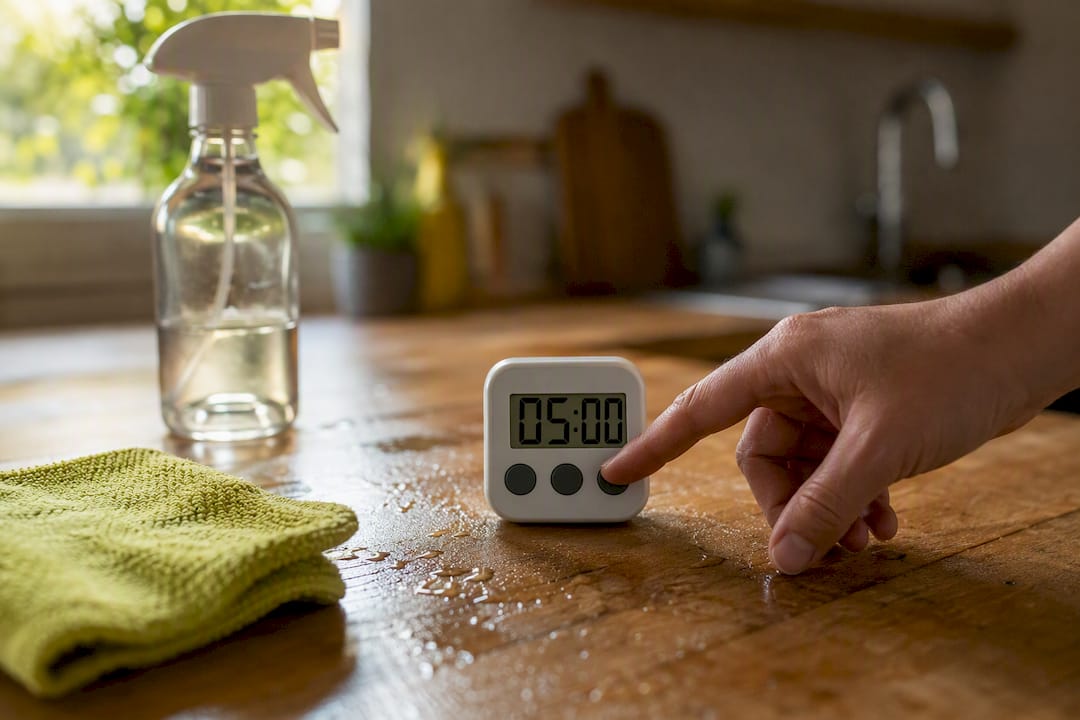
Dilution matters just as much as timing. A concentrate mixed too weak won't reach the kill claim on the label, and mixed too strong wastes product and increases material risk without improving performance. Follow the ratio printed on the bottle, not a rough guess.
Material compatibility deserves its own checklist:
- Avoid citric acid on natural stone benchtops, including marble, limestone, and travertine. The acid etches the surface on contact.
- Test hydrogen peroxide on fabric and grout in a hidden spot first, since it can bleach colour out of both.
- Check thymol-based products for sensitivity if anyone in the household has a known reaction to essential oils, particularly around children with skin conditions.
- Material-specific guidance matters more with green actives than with harsher chemicals, because the active ingredients behave differently across timber, stone, and soft furnishings.
Storage and disposal round out the safety picture. Hydrogen peroxide degrades faster in light and heat, so keep it in its original opaque bottle in a cool cupboard, not on a sunny windowsill. Most green disinfectant concentrates should never go down the drain undiluted. Follow the label's disposal instructions, and if you're clearing out a large volume of old concentrate, your local council waste facility will usually take it as household chemical waste rather than accepting it through general rubbish.
A wet-contact-time gap is the most common reason eco disinfectants "don't work." It's rarely the active ingredient failing. It's the surface drying out at minute three when the label called for six.
When should you call in a professional instead of DIY?
DIY eco-friendly disinfecting handles most everyday situations well: wiping down high-touch points, spot-disinfecting a kitchen bench after handling raw chicken, or dealing with a single sick day in the household. Where DIY genuinely runs out of road is heavy, layered grime, validated pathogen removal for compliance purposes, or complex materials where getting it wrong causes real damage.
Certain scenarios call for a specialist rather than a supermarket spray bottle:
- Post-construction sites, where dust, debris, and chemical residue from trades work sit on surfaces that need more than a wipe-down.
- Rental turnovers that need documented, repeatable results, particularly when a guest review or host rating depends on consistency.
- Heavily soiled properties after long-term neglect, tenancy disputes, or extended vacancy.
- Sensitive materials like natural stone, antique timber, or specialist flooring, where the wrong active causes permanent damage.
Grime Scene Services runs a Deep Decontamination protocol for exactly this kind of heavy remediation, using non-toxic agents that neutralise buildup rather than masking it, which matters when you're dealing with post-construction mess or long-neglected spaces. For short-term rental hosts, the Scene Reset protocol applies the same label-literacy standards this article just walked through, validated actives, correct contact time, material-safe application, to every turnover, so a booking calendar doesn't collide with a guest complaint about lingering odour or a damaged benchtop.
Pro Tip: If you're weighing whether a job is DIY-sized or professional-sized, ask one question: does getting this wrong cost you a bad review, a damaged surface, or a health risk? If yes to any of those, bringing in a professional eco cleaning service is cheaper than the mistake.
Do eco-friendly disinfectants actually work as well as bleach?
Green actives can match conventional disinfectants on kill claims, but they rarely match them on speed. Bleach and quaternary ammonium compounds often achieve a stated kill claim quickly. Registered green formulations using thymol or hydrogen peroxide generally require longer wet contact times to reach the same standard.
That gap isn't a flaw, it's a tradeoff. Natural disinfectant actives can perform comparably to conventional cleaners on validated kill claims when used at the correct dilution and contact time, but the extra minutes are the price of lower toxicity and fewer fumes. For most households, that trade is worth making. A kitchen bench that takes eight minutes to disinfect properly instead of one minute isn't a meaningful cost. For a commercial kitchen mid-service or a childcare centre running to a tight roster, the time difference is a genuine operational factor worth planning around.
The other difference is what's left behind. Bleach leaves chlorine fumes and can corrode metal fittings over repeated use. Hydrogen peroxide and hypochlorous acid leave nothing but water and oxygen. That's a meaningful difference for households with asthma, small children, or pets that spend time at nose height with freshly cleaned floors.
Is a biodegradable label enough to call a product eco-friendly?
Toxicity is only part of the environmental picture. How fast an active breaks down once it leaves the bottle, and what the bottle itself is made from, matter just as much for genuine environmental impact.
Biodegradability testing frameworks like OECD Test No. 301 measure how quickly a substance breaks down in the environment under standardised conditions. Citric acid and hydrogen peroxide both degrade rapidly into harmless byproducts, which is part of why they show up so often in green formulations. Thymol biodegrades more slowly but still clears environmental hurdles that many synthetic surfactants don't.
Packaging is the piece most shoppers skip past. A disinfectant with a biodegradable active sold in a non-recyclable plastic bottle with a plastic outer sleeve hasn't solved the environmental problem, it's shifted it downstream. Look for concentrates that reduce packaging volume relative to ready-to-use sprays, refillable bottle systems, and recyclable packaging that's actually accepted by your local council, not just labelled as technically recyclable somewhere in the world.
Water use during manufacturing and transport emissions from concentrate versus bulky ready-to-use products round out the fuller picture, though these are harder for an individual shopper to verify. The practical takeaway: a product's environmental footprint is the active ingredient, the packaging, and the concentration you're paying to ship, not just the word "biodegradable" on the front label.
How do you choose the right product for your situation?
Match the active to the job, not the marketing. A family home with young kids and a dog underfoot has different priorities than a share house managing a post-illness clean or a rental host prepping for the next guest.
For everyday high-touch surfaces in a home with children and pets, thymol-based sprays or a registered hydrogen peroxide product strike a fair balance between speed, low residue, and low irritation risk. For bathroom and kitchen surfaces where limescale is also a problem, a citric acid based product does double duty, provided you keep it off any natural stone. For situations needing very fast turnaround, like a shared bathroom between guests, hypochlorous acid's short kill time is genuinely useful, as long as you're using fresh stock.
Commercial and short-term rental settings usually need documented consistency more than any single active ingredient property. That's where a registered product with a clear, repeatable protocol, rather than a rotating cabinet of different sprays, actually serves the space better. If you're managing that documentation yourself, comparing eco cleaning against conventional turnover methods is worth doing before you lock in a routine.
Are eco-friendly disinfectants worth the extra cost?
Green disinfectants often carry a higher shelf price per bottle than a generic bleach spray, sometimes noticeably so. What that comparison misses is what you're actually paying for across the life of the product.
Bleach and harsh quats can shorten the working life of grout, metal fittings, and coloured fabric through repeated exposure, costs that show up later as replacement or repair, not on the receipt at the time of purchase. A registered green disinfectant used correctly avoids most of that slow material damage, which matters more in high-frequency-use commercial or rental settings than in an occasionally-cleaned home office.
Concentrates also change the cost math. A citric acid or hydrogen peroxide concentrate diluted at home works out cheaper per use than a pre-mixed ready-to-use spray, even though the upfront bottle price looks higher. The genuine value comparison isn't green versus conventional on a per-bottle basis, it's cost per correctly completed disinfection cycle, including what you're not spending later on damaged surfaces or health-related sick days.
What do people get wrong about eco-friendly disinfectants?
The biggest myth is that "natural" and "effective" are somehow opposites, as if a product has to be harsh to work. That's simply not supported by how these actives function chemically. Hydrogen peroxide oxidises pathogens just as thoroughly as bleach's chlorine does, it just takes longer to do it.
The second myth is that a lack of a strong chemical smell means a lack of a chemical, or a lack of effectiveness. Hypochlorous acid and thymol-based sprays can smell like almost nothing while still meeting a registered kill claim, because a strong odour was never the active ingredient doing the work in the first place.
The third, and most costly, myth is that homemade vinegar or essential oil sprays are a legitimate disinfectant substitute. They're genuinely useful for general cleaning and odour control, but they lack the validated kill claims that a registered product carries, and relying on them during an actual illness in the household is a real gap in protection, not a minor shortcut.
The fourth myth: that any product carrying an ecolabel is automatically fast-acting and broad-spectrum. Ecolabels signal lower toxicity and environmental impact, not speed. You still need to check the contact time yourself.
Prioritise people first, then the planet
Eco-friendly disinfecting isn't a compromise you make for the environment's sake at the expense of actually killing germs. It's a sequencing decision: protect the people and pets in the space first, then choose the option with the lightest environmental footprint that still meets that bar.
In practice, that means picking hydrogen peroxide over bleach for a family kitchen when both would do the job, because the health tradeoff (no chlorine fumes near kids) outweighs the extra few minutes of contact time. It means resisting the urge to disinfect every surface daily out of anxiety, because unnecessary application is waste, not caution. And it means reading labels properly rather than trusting a green-coloured bottle to have done the thinking for you.
Label literacy is the whole game here. A registered product used correctly beats a "natural" product used on faith, every time.
— Lead
Need validated decontamination? Here's what Grime Scene Services offers
Grime Scene Services is the alternative to guessing whether a supermarket spray will actually cut through heavy grime or a rushed rental turnover, using non-toxic agents validated to neutralise buildup rather than mask it. For heavy soiling, post-construction mess, or anything beyond routine high-touch wiping, the Deep Decontamination service handles full remediation without bleach-based chemicals, so surfaces, fabrics, and finishes come out intact rather than damaged.
If you're dealing with a time-sensitive mess, a burst pipe aftermath, a pre-inspection scramble, or an unexpected spill before guests arrive, the Rapid Response two-hour tactical clean gets a validated, non-toxic clean done fast without you having to source and dilute products yourself. Short-term rental hosts get a dedicated fit too: the Short Term Rental service runs the Scene Reset protocol between guests, covering the label-literacy standards this article has walked through, correct contact times, material-safe actives, documented consistency, so your listing's rating doesn't ride on whether a cleaner read the fine print correctly. Book whichever fits your situation and skip the guesswork on dilution ratios and contact times altogether.
Sources
- Identifying Greener Cleaning Products | US EPA
- Green Disinfectants for Home Cleaning: What Actually Works and When to Use Each
- OECD ready biodegradability testing (Test No. 301)