

Cleaning directly raises property ratings, protects rental income, and reduces long-term maintenance costs. Cleanliness scores are the top guest concern on short-term rental platforms, and a single missed spot can trigger a negative review that suppresses bookings for weeks. On the appraisal side, a clean, accessible property reduces perceived deferred maintenance and lowers the risk of a conservative condition rating. The evidence points to one clear priority: standardised turnover cleans, scheduled deep cleans every two to three months, and a rapid-response protocol for same-day complaints.
Key facts at a glance:
- Properties with consistently high cleanliness can see 15–20% higher revenue and occupancy compared to comparable listings with average cleanliness.
- A thorough deep clean and tidy garden contribute positively to a property's perceived value.
- Appraisers use a C1–C6 condition scale; the gap between C3 and C2 typically represents a modest value adjustment.
- Standardised checklists with photo verification are the single most reliable control for consistent ratings.
Table of Contents
- How cleaning affects property ratings: the mechanism behind the numbers
- What to measure: KPIs that connect cleaning to revenue
- Cleaning practices that reliably lift your scores
- How cleaning preserves your asset and avoids premature replacements
- How to integrate cleaning into your property operations
- What a Scene Reset looks like in practice
- Key takeaways
- The case for operational discipline over one-off fixes
- Grimescene's cleaning services for Australian property managers
How cleaning affects property ratings: the mechanism behind the numbers
Cleanliness works through perception before it works through anything else. A guest or tenant walks in and within seconds forms a view of how well the property has been maintained. That first impression drives their review score, their willingness to rebook, and whether they recommend the listing to others.
The psychology is straightforward: visible grime signals neglect, and neglect signals risk. Greasy kitchen surfaces, stained grout, or a musty smell lead buyers and tenants to assume the less visible systems — plumbing, ventilation, wiring — have been treated the same way. A spotless property removes that doubt and signals proactive care.
For appraisals, the effect is more procedural. Clutter and strong odours can physically obstruct an appraiser's inspection, preventing them from verifying condition accurately. According to Elliott Appraisals, a sparkling presentation reduces the likelihood of lower condition ratings or requests for further inspections, both of which can delay settlements or suppress valuations.
On short-term rental platforms, the algorithm compounds the effect. Cleanliness scores feed directly into search ranking and Superhost eligibility. A pattern of low cleanliness ratings pushes a listing down in results, reducing visibility at exactly the moment a host needs bookings.
Pro Tip: Before any appraisal or inspection, clear access to all rooms, remove strong odours, and wipe down every visible surface. Appraisers assess what they can see and access — make it easy for them to give you the best reading.
What to measure: KPIs that connect cleaning to revenue
Measuring the impact of cleaning on property values starts with tracking the right numbers consistently.
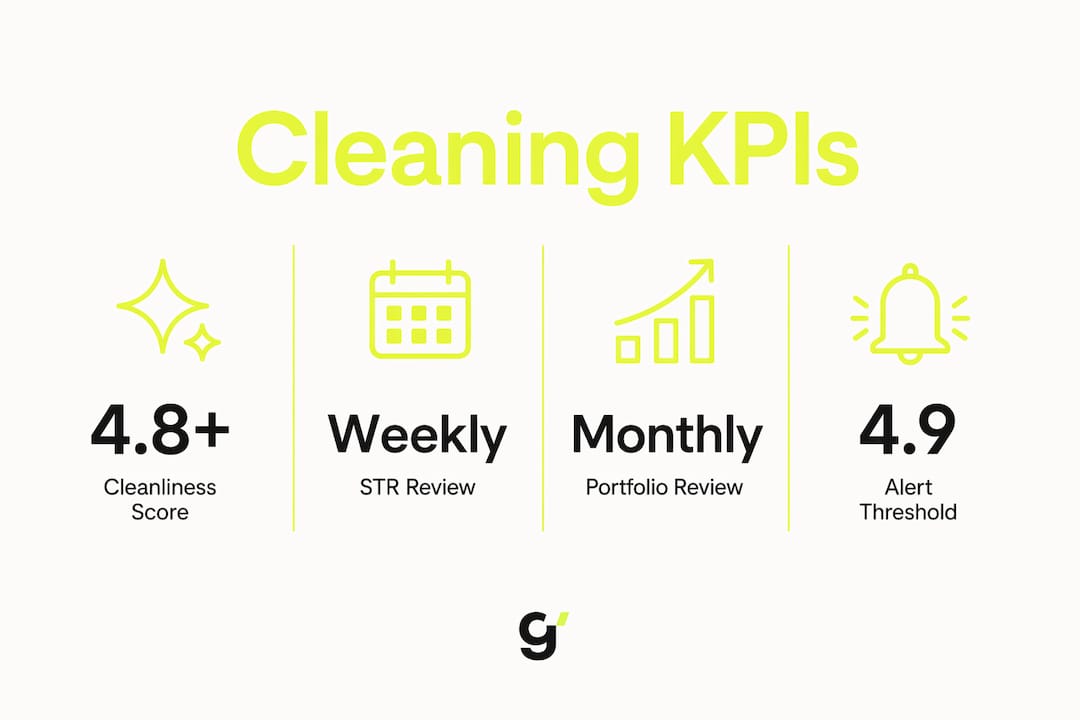
- Cleanliness score — the platform rating for cleanliness (Airbnb, Booking.com, Google Reviews). Track weekly for short-term rentals; monthly for long-term portfolios.
- Review sentiment — flag any review mentioning cleanliness, odour, or presentation. One negative cleanliness mention can suppress conversion for the following booking window.
- Occupancy rate — compare periods before and after a cleaning protocol change. A documented lift in cleanliness scores should correlate with improved occupancy.
- Average nightly rate — properties with consistently high cleanliness can command 15–20% higher rates than comparable listings with average scores.
- Refund and compensation incidents — each complaint resolved with a refund or discount is a direct, measurable cost. Track frequency and cause.
- Maintenance calls from visible neglect — grime buildup that leads to a maintenance call (blocked drain, stained grout requiring replacement) is a cleaning failure with a capital cost attached.
| KPI | Measurement method | Review cadence |
|---|---|---|
| Cleanliness score | Platform dashboard | Weekly (STR), monthly (LTR) |
| Review sentiment | Manual flag or review tool | Per review |
| Occupancy rate | Booking calendar | Monthly |
| Average nightly rate | Platform analytics | Monthly |
| Refund/compensation incidents | Property management system | Per incident |
| Maintenance calls from neglect | Maintenance log | Monthly |
For short-term rentals, review data weekly. For long-term portfolios, a monthly review cycle is sufficient, though any cleanliness complaint warrants an immediate audit.
Cleaning practices that reliably lift your scores
Standardisation drives consistency, and consistency drives ratings. A property cleaned differently by different people on different days produces unpredictable reviews. The fix is a documented checklist, executed in the same order every time, with photo verification at completion.
- Turnover checklist — every short-term rental turnover follows the same sequence: strip linen, sanitise bathrooms, clean kitchen surfaces and appliances, vacuum and mop floors, restock consumables, photograph completed zones. Documented checklists with verification photos reduce variability and protect ratings.
- Routine patrols — for multi-unit buildings, weekly common-area patrols catch visible issues before tenants photograph them. Entry lobbies, lifts, and bin areas are the highest-risk zones.
- Deep clean every 2–3 months — carpets, upholstery, behind appliances, exhaust fans, grout, and exterior soft-wash. This is where surface degradation is caught before it becomes a replacement cost. See the seasonal deep clean guide for a full task list.
- Rapid-response protocol — a same-day response to a cleanliness complaint, completed within two hours, limits the window for a negative review. Speed matters more than perfection at this stage.
- High-impact zones — bathrooms, kitchens, bed linen, high-touch surfaces (door handles, light switches, remotes), entry areas, and external curb appeal. These are what guests photograph and mention in reviews.
| Property type | Turnover clean | Routine patrol | Deep clean |
|---|---|---|---|
| Short-term rental | Every checkout | N/A | Every 2–3 months |
| Long-term rental | End of tenancy | Monthly | Every 3 months |
| Multi-unit common areas | N/A | Weekly | Quarterly |
Pro Tip: Non-toxic, bleach-free agents protect surface finishes longer than harsh chemicals. Bleach degrades grout and stainless steel over time, creating the very wear you are trying to prevent.
How cleaning preserves your asset and avoids premature replacements
Correct cleaning extends finish life and delays the replacement cycles that drain reserve funds. Poor cleaning methods — wrong chemicals on the wrong surfaces, abrasive tools on sealed floors — accelerate wear and increase capital spending. According to EliteTouch's analysis, janitorial quality acts as an equity lever: poor methods increase replacement spending, while correct cleaning preserves finishes and supports tenant retention.
Cleaning actions that prevent common premature failures:
- Gutter clearing (twice yearly) prevents water ingress that damages fascias, ceilings, and foundations.
- Soft-wash roof and exterior removes organic growth that degrades roofing materials and triggers insurer concerns. Professional exterior washing can prevent paint and roof replacement costs.
- Correct floor maintenance (pH-neutral cleaners on timber and stone) preserves seals and prevents premature refinishing.
- Exhaust fan and vent cleaning reduces moisture buildup that leads to mould remediation costs.
- Grout sealing after deep cleans extends tile life and prevents staining that requires regrouting.
Maintenance and cleaning serve different budget lines but work together. Maintenance addresses what has already failed; cleaning prevents failure from occurring. Both should be budgeted separately, and cleaning costs should be weighed against the replacement costs they defer.
How to integrate cleaning into your property operations
Add cleaning to operations with a simple onboarding and verification loop. The goal is a system that runs without constant oversight.
- Vendor procurement — ask every candidate: Are you insured? What chemicals do you use? What is your turnaround SLA? Do you provide photo sign-off? What is your liability process for damage? A commercial property cleaning guide outlines the full procurement criteria worth demanding.
- Trial clean — run one paid trial clean before committing to a recurring schedule. Inspect against your checklist and photograph the result.
- Documented checklist — provide your checklist to the vendor. Their job is to execute it; your job is to verify it.
- Photo verification — standardised photo sign-off for every turnover is the highest-leverage control available. It reduces disputes, provides evidence for platform complaints, and creates a measurable pass rate per cleaner.
- Failure remediation — define in writing what happens when a clean fails inspection: re-clean within two hours, no charge. A cleaning service contract checklist covers scope, frequency, verification, penalties, and escalation paths.
- Scheduling integration — sync cleaning schedules with your booking calendar and maintenance team. A checkout at 10 AM needs a confirmed cleaner by 9 AM, not a scramble at noon.
| Dashboard KPI | Target | Alert threshold |
|---|---|---|
| Cleanliness score | 4.8+ (STR platforms) | Below 4.9 |
| Time to response (complaints) | Under 2 hours | Over 4 hours |
| Guest complaint rate | Under 2% of stays | Over 5% |
What a Scene Reset looks like in practice
A Scene Reset is Grimescene's structured turnover protocol for short-term rentals. It goes beyond a standard clean: deep decontamination of bathrooms and kitchen, full linen rotation, consumables restock, and photo verification of every zone before the next guest checks in.
The protocol is designed for properties that have experienced a run of negative cleanliness reviews, a high-complaint period, or a long-term tenant departure. It resets the baseline rather than maintaining a declining one.
What a Scene Reset includes:
- Full deep decontamination of bathrooms, kitchen, and high-touch surfaces using non-toxic, bleach-free agents.
- Linen rotation with fresh, laundered sets.
- Consumables restock (toiletries, kitchen basics, bin liners).
- Photo sign-off for every room, submitted to the property manager on completion.
- Rapid-response follow-up available within two hours if a guest raises a concern post-arrival.
Use a Scene Reset when a property's cleanliness score has dropped, after a long-stay tenant vacates, or at the start of a peak booking season. Routine turnovers maintain a clean baseline; a Scene Reset rebuilds one.
Key takeaways
Cleaning is the single highest-return maintenance activity available to Australian property owners and managers, directly influencing platform ratings, appraisal condition scores, and long-term asset value.
| Point | Details |
|---|---|
| Ratings respond to cleanliness fast | A single negative cleanliness review suppresses bookings; consistent high scores support 15–20% revenue and occupancy lifts. |
| Appraisal condition ratings are at stake | The gap between C2 and C3 on the appraisal scale represents a 2–5% value difference — cleaning can prevent the downgrade. |
| Standardisation beats effort | A documented checklist with photo verification outperforms ad hoc intensive cleans for consistent rating outcomes. |
| Cleaning is asset preservation | Correct techniques and non-toxic products extend finish life, defer replacement costs, and protect equity over time. |
| Grimescene's Scene Reset | Grimescene's Scene Reset protocol provides deep decontamination, linen rotation, consumables restock, and photo sign-off for short-term rental turnovers. |
The case for operational discipline over one-off fixes
There is a pattern worth naming: most property managers reach for a deep clean only after a bad review appears. That reactive approach costs more and recovers less than a scheduled programme would have prevented in the first place.
The data on cleanliness and revenue is clear enough. What gets underestimated is the compounding effect of consistency. A property that maintains a 4.9 cleanliness score across 50 reviews has built a buffer. One average turnover does not destroy it. A property that fluctuates between 4.2 and 4.8 has no buffer at all — every checkout is a risk event.
The highest-impact change any manager can make today is not a better mop or a more expensive product. It is a documented checklist, executed in the same order every time, with photo sign-off before the next guest arrives. That single operational control, applied consistently, does more for ratings than any one-off intervention.
Australian rental portfolios face real pressure on occupancy and yield. Cleaning is not a soft variable in that equation. It is a measurable input with a measurable output, and it deserves a budget line and a KPI dashboard to match.
Grimescene's cleaning services for Australian property managers
Property managers running short-term rentals or multi-unit portfolios need a cleaning partner who shows up on time, follows a documented checklist, and sends photo verification before the next guest walks in. That is exactly what Grimescene delivers.
Grimescene's three most relevant services for rental properties:
- Scene Reset (Deep Decontamination) — full deep decontamination, linen rotation, consumables restock, and photo sign-off. Built for properties recovering from a ratings dip or a long-stay tenant departure. Book a Scene Reset.
- Short-Term Rental Tactical Units — recurring turnover cleans scheduled against your booking calendar, with verification built in. View the STR service.
- Rapid Response (2-Hour Tactical Clean) — same-day response for guest complaints or urgent turnovers. Book a rapid response clean.
All services use non-toxic, bleach-free agents that protect your finishes and are safe for families and pets. Grimescene operates locally in Australia with documented photo sign-off on every job. To get started, select your service and book directly online, or contact the team to discuss a recurring schedule for your portfolio.