
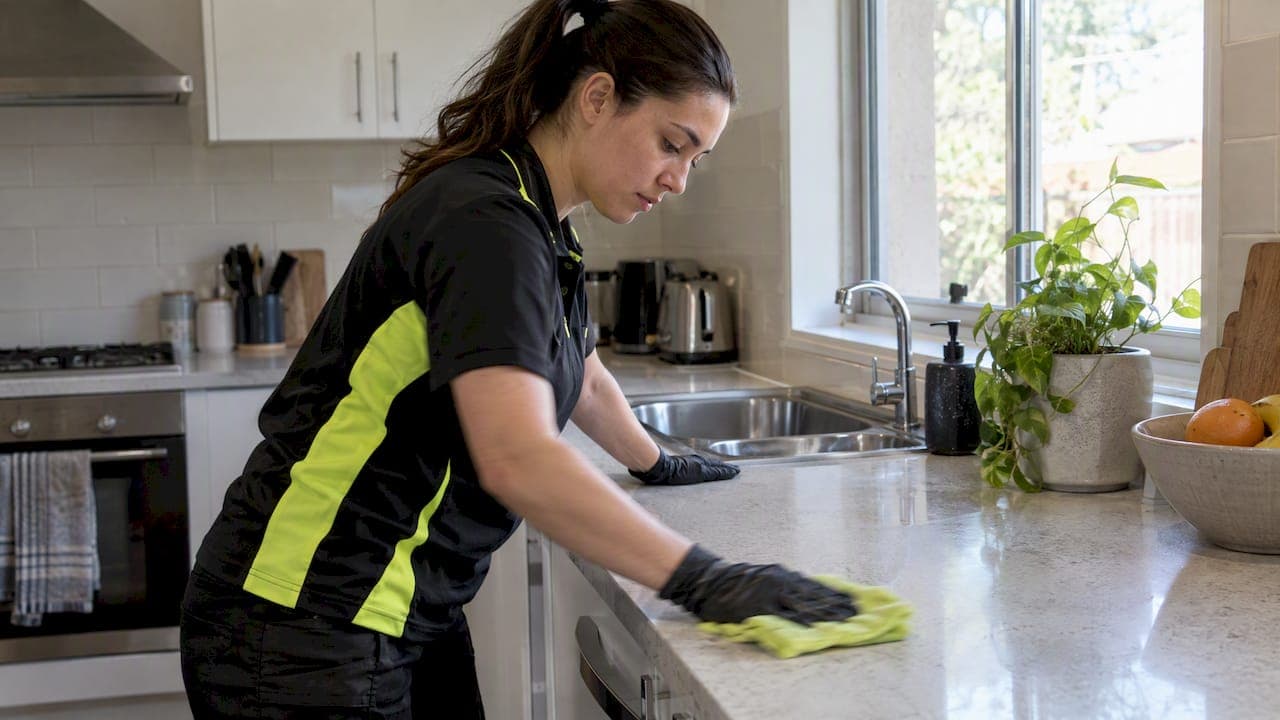
Most households can safely re-enter and begin light cleaning after a few hours once treated surfaces are dry, though the technician's instructions and the product label always override general timing. In the meantime, ventilate the property, keep children and pets out of treated zones, avoid touching sprayed surfaces, and bag any exposed food. If anyone shows signs of irritation or breathing trouble, call the Poisons Information Centre on 13 11 26.
TL;DR:
- Wash bedding, towels, pet bedding, soft toys, exposed dishes, and utensils; discard uncovered food left out during treatment, but leave treated skirtings and cracks untouched.
- Professional termiticide labels often allow reoccupation after treated areas dry, around 3 to 4 hours, while fogging or fumigation may require longer.
- Vacuum carpets only after reentry is approved, and delay steam or wet cleaning until the technician clears it to avoid lifting residues.
- Consider cleaning for heavy residue, rental turnovers, or homes with young children, pets, or respiratory sensitivities, but wait until the label’s drying period ends.
- Symptoms such as irritation or breathing difficulty may appear up to 48 hours later; call 000 for emergencies and keep product details available.
Table of Contents
- Your 0 to 24 hour aftercare checklist
- What to wash, what to throw out, what to leave alone
- Room-by-room cleaning steps that work with the treatment
- Why re-entry times vary and why the label has the final say
- What not to do after pest control?
- When an eco-friendly professional clean makes sense
- Timing your post-treatment clean for the best result
- Keeping pests from coming back after the clean
- Rental properties and short-term stays need their own approach
- Balancing safety with a treatment that actually works
- Book a clean that works with your pest treatment, not against it
- FAQ
- Sources
Your 0 to 24 hour aftercare checklist
The first day after treatment is about patience, not scrubbing. A few simple steps protect your household while letting the treatment do its job.
- Open windows and run fans or air conditioning to clear airborne residue, starting as soon as the technician confirms it's safe.
- Confirm the exact re-entry time with your technician or on the product label rather than guessing from general advice.
- Collect any exposed food, bagging or binning open ready-to-eat items that sat out during treatment.
- Keep children and pets away from treated skirtings, cupboard interiors and floors until surfaces are fully dry.
- Write down which rooms were treated and file the product label or technician's fact sheet somewhere you can find it later.
That last step matters more than people expect. If a reaction or a pest reappearance happens weeks later, having the product name on hand saves a frustrating phone call trying to remember what was used.
Pro Tip: Photograph the technician's notes or the product label with your phone before they leave; it's the fastest way to retrieve details if you need to call the Poisons Information Centre or book a follow-up clean.
What to wash, what to throw out, what to leave alone
Not everything needs washing after a pest treatment, and over-cleaning can strip away residues that are still working. A targeted approach handles the real risks without undoing the job.
- Launder bedding, towels and pet bedding on the hottest safe setting, and keep them isolated in a hamper or bag until they go through the wash.
- Seal soft toys and cushions in a bag if they were in a treated room, then launder them or leave them isolated until the label confirms surfaces are safe to use.
- Discard any exposed food that was left uncovered during treatment, and wash anything the label or technician specifically flags as needing a rinse.
- Wash utensils, chopping boards and other food prep items in hot soapy water or a dishwasher cycle once your technician confirms it's permitted.
The underlying principle is simple: anything that touches skin, mouths or food gets washed or binned, while hard surfaces and skirtings that carry a deliberate residual barrier are left alone until the label says otherwise. Mixing up the two is the most common aftercare mistake we see.
Room-by-room cleaning steps that work with the treatment
Different rooms carry different risks, so a single blanket rule rarely fits every space in the house.
- Kitchen: wipe benchtops and cupboard exteriors with soap and water once dry, but leave treated cupboard interiors and skirtings untouched until the label's timeframe has passed; wash any dishes left out during the visit.
- Bathrooms and high-touch surfaces: ventilate well, then clean taps, door handles and light switches with soap and water once the room has aired out, since these get touched constantly by everyone in the house.
- Carpets and upholstery: vacuum once re-entry is confirmed, but hold off on steam or wet cleaning until your technician clears it, since early wet cleaning can lift residues meant to keep working for days or weeks.
- Outdoor hard surfaces and lawns: check the label before hosing down paths or decking, and avoid letting any rinse water run into stormwater drains.
- Pet areas: wash bedding and bowls separately from household items, and keep animals confined away from treated zones for the full re-entry window, since pets often investigate skirtings and corners first.
Heavy residue on carpets, grout lines or behind appliances sometimes needs more than a vacuum and a wipe-down. If a property has visibly built-up grime in those hidden dirty spots behind appliances or along skirtings, professional extraction handles it without disturbing the treatment underneath.
Pro Tip: Vacuum bags or canister contents should be sealed and binned straight after use following a pest treatment, since they can hold concentrated residue picked up from floors.
Why re-entry times vary and why the label has the final say
Re-entry guidance isn't arbitrary. In Australia, APVMA labelling rules require domestic pest control products to carry clear safety directions, preparation instructions and storage and disposal statements, and these details are specific to each formulation rather than generic across all products.
Product labels, not general rules of thumb, set the real timeline for your property. Professional termiticide labels commonly advise re-occupation once treated areas are completely dry, often around 3 to 4 hours, while fogging or fumigation treatments can require a longer wait. That's why the technician's instructions for your specific job always take priority over anything general.
A practical ventilation routine helps regardless of which product was used:
- Open windows on opposite sides of the property to create cross-ventilation.
- Run ceiling fans or portable fans on low to help air move through treated rooms.
- Check that treated surfaces feel dry to the eye (not touch) before allowing normal foot traffic.
- Keep external doors open briefly if weather allows, to help clear any lingering odour.
If anyone in the household develops skin irritation, headache or breathing difficulty after treatment, call the Poisons Information Centre on 13 11 26, or 000 in an emergency; symptoms can sometimes take up to 48 hours to appear.
What not to do after pest control
A few common habits undo the treatment or create unnecessary risk, so it's worth knowing what to avoid in the first days.
- Don't deep-clean, steam-clean or scrub treated skirtings and cracks until the label or technician says it's safe, since this is often where the residual barrier sits.
- Don't wipe down surfaces specifically to "clean off" the treatment, since the residue is meant to stay in place and keep working.
- Don't let kids or pets back into treated zones early, and don't use any utensils or dishes that were exposed without washing them first.
- Don't hose treated external areas in a way that sends rinse water into stormwater drains.
Patience in the first 24 to 48 hours protects both your family and the money spent on the treatment itself.
When an eco-friendly professional clean makes sense
A professional clean after pest control earns its cost in specific situations rather than every single time. It suits households dealing with heavy residue in hard-to-reach spots, short-term rentals needing a fast, thorough turnaround, or homes with young children, pets or anyone with respiratory sensitivities who need extra reassurance that surfaces are genuinely clean.
A proper post-treatment decontamination clean should include:
- Targeted neutralising of loose residues on trafficked surfaces, without disturbing the fixed barriers left in cracks and skirtings.
- No harsh chemical residues layered on top of the pest treatment, which matters for anyone concerned about mixing products.
- Clear reporting on what was cleaned and where, so you know exactly what happened in your home.
We approach this job with residue-free cleaning methods that neutralise buildup rather than mask it, which fits naturally alongside a pest treatment that needs its own residues left intact. When you book a post-treatment clean, tell the cleaner which product was used, the areas treated, and anything from the technician's fact sheet so the clean works with the treatment rather than against it.
Pro Tip: Keep the pest technician's invoice or fact sheet handy when booking a cleaner, since product names on the e-label often specify exactly which surfaces need to stay untouched.
Timing your post-treatment clean for the best result
Scheduling matters almost as much as technique. Booking a deep clean too early risks stripping residues that are still working, while waiting too long can let dust and household grime settle back over treated surfaces.
For most residential treatments, the sensible window for a professional clean sits after the label's drying or withholding period has passed but before the household resumes full normal activity, so surfaces that aren't part of the pest barrier get attention early. For commercial kitchens and food businesses, cleaning frequency typically needs to be tighter given health and hygiene obligations, so coordinating the clean with both the pest technician's schedule and your usual sanitation routine avoids gaps.

If you're managing a rental turnover or a time-sensitive reopening, a rapid clean booked for the day after treatment, once the label's window has closed, lets you hit a tight deadline without compromising the treatment's effectiveness. Giving the cleaning team the treatment date and product details up front means they can plan around any surfaces that still need to be left alone.
Keeping pests from coming back after the clean
A good clean after treatment does more than tidy up. It removes the crumbs, grease and clutter that attract pests back into a space once the initial treatment effect fades.
Regular attention to kitchen benches, pantry seals and bin areas reduces the food sources that draw pests in the first place. Vacuuming skirtings and behind appliances on a routine basis, rather than just after a treatment, keeps new infestations from taking hold in the gaps a one-off clean might miss. Sealing obvious entry points, like gaps under doors or around pipework, complements whatever the pest technician treated and reduces the chance of needing another callout.

We cover this in more detail in our guide on the role of cleaning in pest prevention, which walks through which habits make the biggest difference for ongoing prevention. A recurring maintenance clean scheduled every few weeks tends to catch early signs of activity before they become a full treatment again.
Rental properties and short-term stays need their own approach
Rentals and short-term accommodation carry extra pressure after a pest treatment, since turnaround time is often tighter and more people are relying on the space being ready on schedule.
For long-term rentals, tenants should confirm with the property manager or landlord exactly what was treated and when, since end-of-lease cleaning obligations can be affected if treated areas can't be touched yet. A 7 to 14 day building and pest checklist aligned to AS 4349 is a useful reference for anyone coordinating inspection timing around a treatment.
Short-term rentals face a different problem: a guest turnover might be booked within a day of treatment, leaving little room for error. In these cases, the clean needs to restock consumables, reset linen and present a spotless space while still respecting the treatment's drying and residue requirements. That's a tighter balancing act than a standard residential clean, and it's exactly the kind of job a dedicated turnover service is built to handle without compromising either the guest experience or the pest treatment underneath.
Balancing safety with a treatment that actually works
The single most important habit after any pest treatment is restraint: ventilate, wait for the label's timeframe, and clean around the treatment rather than over it. Most problems we hear about come from someone scrubbing too soon, not from waiting too long.
Our approach leans on non-toxic, residue-neutralising cleaning precisely because it lets us tidy a home without undoing a pest technician's work. For readers who want a hand with the trickier parts, our service pages outline exactly which clean fits a post-treatment job.
— Lead
Book a clean that works with your pest treatment, not against it
Once the label's drying time has passed, a professional clean clears away loose residue, dust and grime without touching the barriers still doing their job in cracks and skirtings. Deep Decontamination | Full Sweep suits heavier post-treatment jobs, while Rapid Response (2-Hour Tactical Clean) covers tight turnarounds for rentals or households on a deadline, and The Scene Reset handles a full rental turnover around a treatment schedule.
When you reach out for a quote, it helps to have on hand:
- The type of pest treatment carried out and the date it happened.
- The product name or label details, if your technician provided them.
- Which rooms or zones were treated, so we clean around them correctly.
Every job runs on cleaning methods that leave no harsh chemical residue and includes before-and-after reporting, so you know exactly what was done. Get in touch through our full scope of services to request a quote.
This article is general information, not a substitute for advice from a qualified doctor. Consult a qualified healthcare professional about your own circumstances before acting on anything here.
FAQ
How long after pest control can I clean your house?
Most professional treatments allow light cleaning once surfaces are dry after a few hours, but this depends entirely on the product label and technician's instructions. Fogging or fumigation treatments can require a longer wait, so always confirm the exact timeframe with whoever carried out the treatment.
Do I need to wash everything after pest control?
No, only items that touch skin, mouths or food need washing, such as bedding, towels, soft toys and exposed dishes or utensils. Hard surfaces and skirtings carrying a deliberate residual barrier should be left alone until the product label confirms it's safe to clean them.
Can I deep clean after pest control?
Deep cleaning is best delayed until the label's drying or withholding period has passed, since early scrubbing can remove residues still meant to be working. Once that window closes, a targeted deep clean, including professional deep decontamination, can safely address dust, grime and lingering odour without disturbing the treatment.
What not to do after pest control?
Avoid scrubbing or wiping treated skirtings and cracks, letting children or pets back into treated zones early, or using exposed dishes without washing them first. Also avoid rinsing treated outdoor areas in a way that sends water into stormwater drains.
What should I do if someone shows signs of pesticide exposure?
Call the Poisons Information Centre on 13 11 26 for guidance, or 000 in an emergency, since symptoms like skin irritation or breathing difficulty can sometimes take up to 48 hours to appear. Keep the product label or technician's notes on hand, as the exact active ingredient helps with any advice given.
Sources
- Approval of pesticides in Australia — crop protection facts
- Pesticide poisoning — Healthdirect
- Home garden and domestic pest-control products — APVMA labelling codes