
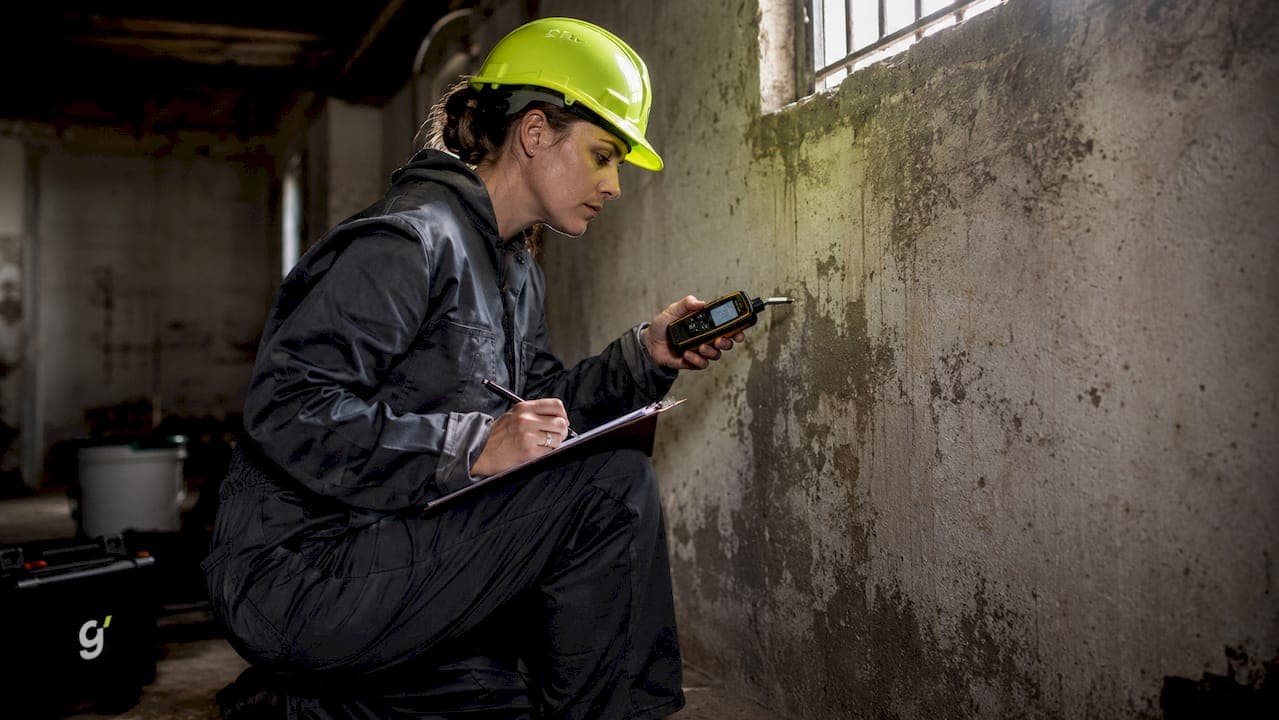
Eco remediation is defined as the process of safely removing environmental hazards, such as mould, biohazards, and chemical contamination, in a way that minimises ecological impact. This is fundamentally different from regular cleaning, which targets visible dirt and maintains general surface hygiene. Understanding what is eco remediation vs regular cleaning matters because choosing the wrong approach can worsen contamination, create health risks, and damage property. Standards like the IICRC (Institute of Inspection, Cleaning and Restoration Certification) govern professional remediation, while everyday cleaning follows no such regulatory framework. Grimescene applies both disciplines with non-toxic agents and certified protocols, serving homes and businesses across Australia.
What is eco remediation and how does it work?
Eco remediation is the structured removal of deep environmental hazards using methods that protect both human health and the surrounding ecosystem. It goes well beyond scrubbing surfaces. The goal is to neutralise the source of contamination, not just its visible signs.
The process typically involves several distinct stages:
- Hazard assessment: A certified professional identifies the type, extent, and source of contamination before any work begins.
- Containment: Negative air pressure and physical barriers isolate the affected area, preventing spores or particles from spreading through HVAC systems or onto clean surfaces.
- Removal and treatment: Non-toxic antimicrobial agents, biochar treatments, or microbial bioremediation techniques break down or neutralise contaminants at the source.
- Verification: Air quality testing or surface sampling confirms the hazard has been fully addressed before containment is removed.
- Restoration: The space is returned to a safe, usable condition.
Microbial bioremediation uses naturally occurring bacteria to degrade pollutants, offering a cost-effective and ecologically sound alternative to chemical oxidation or physical excavation. This technique is slower than aggressive chemical methods but causes far less secondary environmental damage. It represents the science behind many modern eco remediation protocols.
Common applications include mould remediation, post-flood biohazard cleaning, post-construction decontamination, and short-term rental property resets after problematic tenancies. Mould remediation is a clear example where eco remediation methods differ sharply from a standard clean. A regular cleaner wiping visible mould with bleach does not remove the root colony or prevent regrowth. A certified remediator contains the zone, removes the source, and verifies the result.
Pro Tip: If you can smell mould but cannot see it, that is a strong signal that remediation, not regular cleaning, is required. Visible mould covering more than 10 square feet also crosses the threshold where professional containment becomes necessary.
How does regular cleaning differ in purpose and method?
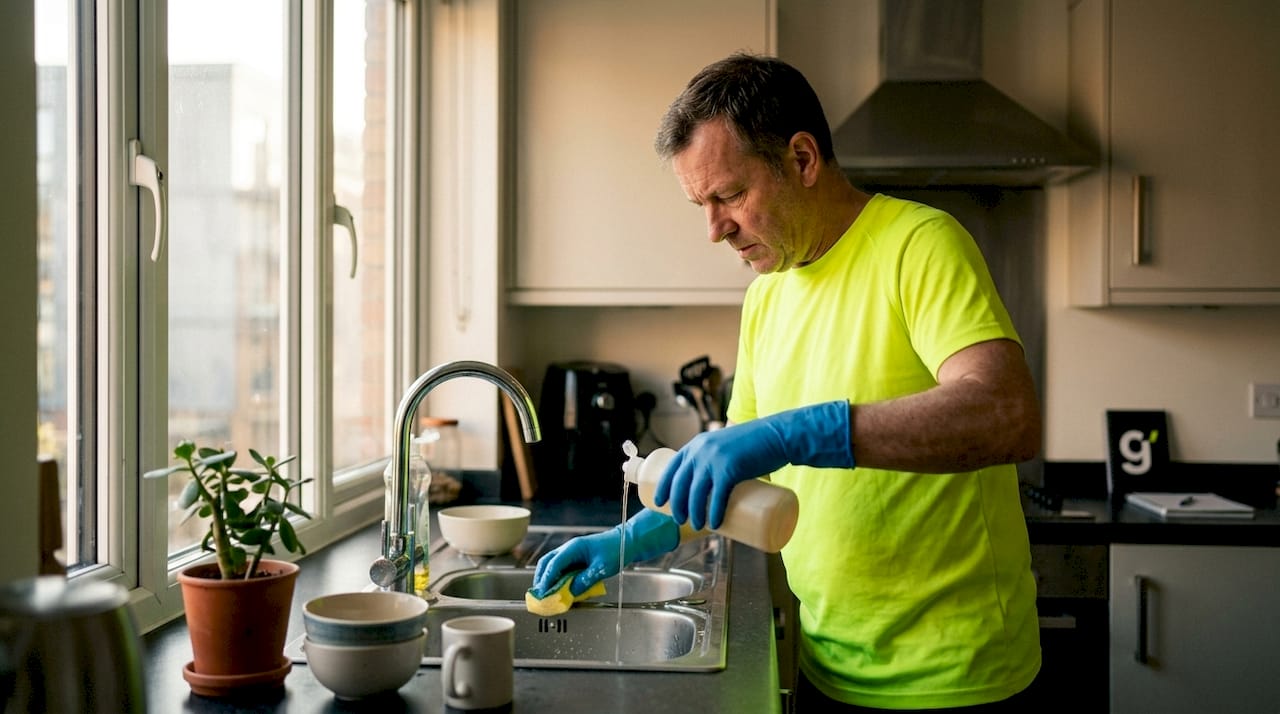
Regular cleaning is defined as the removal of visible dirt, dust, and surface debris to maintain general hygiene. It is the routine maintenance most homes and offices perform daily or weekly. Its purpose is cosmetic and hygienic, not remedial.
Standard cleaning methods include:
- Physical removal: Vacuuming, mopping, wiping, and sweeping to clear surface-level debris.
- Chemical disinfection: Spray-and-wipe products using conventional chemical disinfectants to reduce surface bacteria and viruses.
- Deodorising: Masking or neutralising odours at the surface level without addressing underlying causes.
- Periodic deep cleaning: More thorough scrubbing of grout, appliances, and fixtures, still limited to accessible surfaces.
Regular cleaning performs well for its intended purpose. A well-maintained home or office that receives consistent cleaning rarely develops the conditions that require remediation. The problem arises when regular cleaning is applied to a situation that demands remediation. Untrained individuals cleaning mould often spread spores across surfaces and through air systems, significantly worsening contamination. That outcome is not a failure of effort. It is a failure of method.
The environmental impact of conventional cleaning products is also a growing concern. Traditional chemical cleaners contribute to waterway contamination, indoor air pollution, and antimicrobial resistance. Eco-friendly cleaning methods incorporating green-certified products address these concerns without sacrificing hygiene performance. For everyday maintenance, switching to plant-based or biodegradable products is a practical first step that reduces environmental load without requiring professional intervention.
Comparing eco remediation and regular cleaning: benefits and drawbacks
The core difference between eco remediation and regular cleaning is scope. Regular cleaning maintains a clean environment. Eco remediation restores a safe one.
| Factor | Eco remediation | Regular cleaning |
|---|---|---|
| Scope | Deep hazard removal at source | Surface-level debris and hygiene |
| Duration | Days to weeks depending on severity | Hours per session |
| Regulation | Governed by standards like IICRC | No regulatory requirement |
| Equipment | HEPA filtration, PPE, containment barriers | Mops, cloths, standard products |
| Environmental impact | Low with eco protocols; significant reduction in emissions | Variable; conventional products carry high chemical load |
| Cost | Higher upfront; lower long-term risk | Lower per session; ongoing if hazard persists |
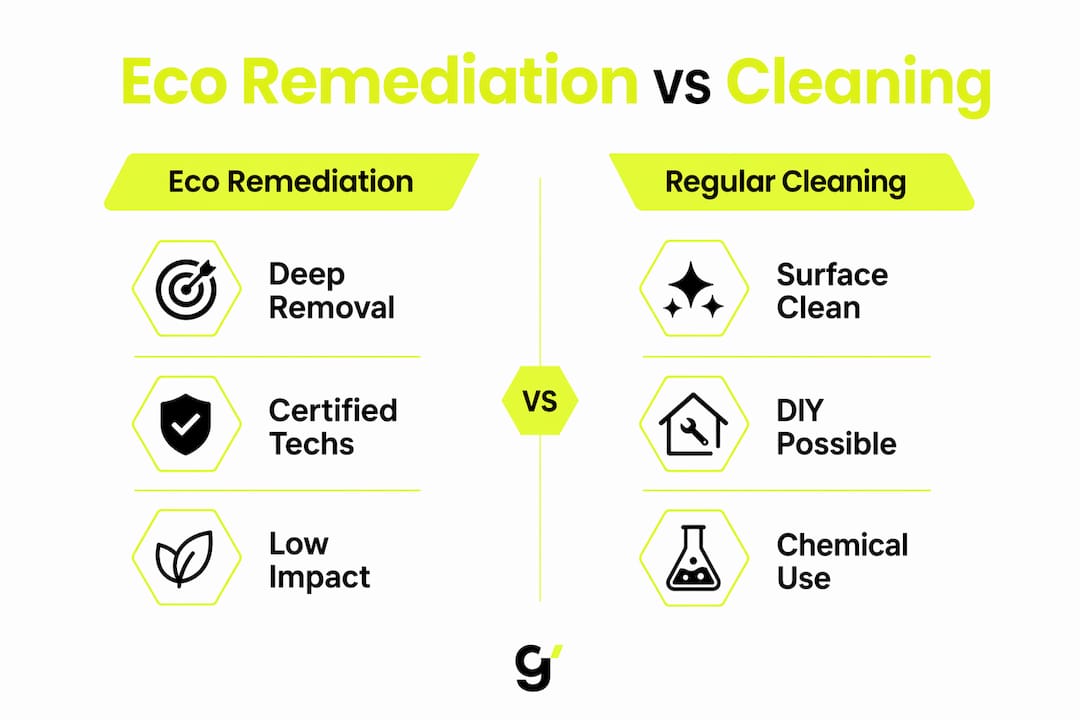
Environmental remediation is longer-term, site-wide, and heavily regulated, focusing on risk reduction. Regular clean-up is short-term, surface-level, and focused on immediate restoration. That distinction matters when you are deciding which service your situation actually requires.
The environmental case for eco remediation protocols is strong. Green sanitising protocols reduce CO2 emissions by approximately 49.6% to 53.3% compared to traditional cleaning methods, while maintaining or exceeding microbial performance in high-risk zones. That figure comes from a 2025 hospital study, which is one of the most demanding hygiene environments possible. If eco protocols hold up in a hospital, they hold up in a home or office.
Pro Tip: Never attempt DIY mould or biohazard removal in a space larger than a small bathroom. Without containment barriers and negative air pressure, you risk spreading contamination through your HVAC system to every room in the building.
The drawback of eco remediation is cost and time. Professional remediation requires certified technicians, specialist equipment, and post-treatment verification. For a homeowner dealing with a small patch of surface mould on a bathroom tile, regular cleaning with a green-certified product is the proportionate response. For anything involving structural penetration, recurring growth, or biohazard material, remediation is the only appropriate choice.
How can you apply eco remediation alongside regular cleaning?
Integrating both approaches creates a maintenance system that handles everyday hygiene and serious hazards without overlap or gaps. The key is knowing which tool applies to which situation.
- Assess the contamination first. Before reaching for any product, determine whether you are dealing with surface dirt or a deeper hazard. Recurring mould, persistent odours after cleaning, or visible water damage all indicate a remediation-level problem.
- Use certified eco products for daily cleaning. For routine maintenance, eco cleaning supplies certified to Australian standards reduce chemical load without sacrificing hygiene. Plant-based disinfectants and microfibre cloths replace most conventional spray-and-wipe products effectively.
- Schedule professional remediation for threshold events. Post-flood, post-construction, or post-tenancy scenarios in short-term rentals often require professional decontamination before regular cleaning resumes. Trying to skip this step costs more in the long run.
- Maintain conditions that prevent hazard recurrence. Adequate ventilation, humidity control below 60%, and prompt repair of water leaks are the most effective prevention tools available. Sustainable cleaning practices for businesses include regular inspections of high-moisture areas like kitchens, bathrooms, and plant rooms.
- Engage certified professionals for remediation work. Remediation requires certified professionals following IICRC standards, using PPE and HEPA filtration. Verifying a provider's certification before engaging them protects you legally and practically.
- Adopt an integrated approach for commercial properties. Integrated remediation strategies combine eco-led, low-input techniques for routine cases with more intensive methods for emergencies. This hybrid model is the current best practice for facility managers and commercial property owners.
For short-term rental hosts, the stakes are particularly high. A single contamination event, whether mould, biohazard, or post-party damage, can destroy a property's review rating overnight. Grimescene's Scene Reset protocol addresses this with a structured decontamination and reset process designed specifically for rental turnovers.
Key takeaways
Eco remediation removes deep environmental hazards using certified, low-impact methods, while regular cleaning maintains surface hygiene. These two approaches serve different purposes and should never be substituted for one another.
| Point | Details |
|---|---|
| Eco remediation targets hazards | It removes contamination at the source using containment, HEPA filtration, and non-toxic agents. |
| Regular cleaning maintains hygiene | It addresses visible dirt and surface bacteria but cannot resolve deep or structural contamination. |
| Eco protocols cut emissions significantly | Green sanitising methods reduce CO2 emissions by approximately 49.6% to 53.3% versus conventional cleaning. |
| IICRC certification matters | Always verify that a remediation provider holds recognised certification before engaging their services. |
| Prevention reduces remediation need | Humidity control, ventilation, and prompt leak repair are the most cost-effective hazard prevention tools. |
Why I think most people underestimate the gap between these two approaches
The single biggest misconception I encounter is that a thorough clean is the same as remediation. It is not. They share equipment and vocabulary but serve entirely different purposes. A mop and a containment barrier are not interchangeable, any more than a bandage and surgery are.
What surprises most people is how quickly a regular cleaning response to a remediation-level problem makes things worse. Scrubbing mould without containment does not remove it. It aerosolises it. The spores travel through air currents, settle on new surfaces, and establish new colonies within days. The original problem doubles in scope, and the cost of professional remediation increases accordingly.
The market is moving in a clear direction. Demand for eco-certified cleaning and remediation services has grown steadily as awareness of indoor air quality and chemical exposure has increased. Clients now ask specifically about non-toxic agents, certification, and post-treatment verification. That shift reflects a genuine change in how people think about their homes and workplaces, not just a trend.
My advice is straightforward. Use eco-certified products for your daily routine. Call a certified professional the moment you suspect a hazard that goes beyond the surface. Do not wait for visible damage to confirm what your nose or your humidity meter is already telling you. The cost of acting early is always lower than the cost of acting late.
— Lead
Grimescene's eco remediation and cleaning services
Grimescene delivers professional eco remediation and cleaning for homes and businesses across Australia, using non-toxic agents that neutralise buildup rather than masking it.
For short-term rental hosts, the Scene Reset service provides a structured decontamination and turnover clean that protects your property rating and meets the hygiene expectations of every new guest. Grimescene's certified team handles post-construction mess, biohazard decontamination, and routine deep cleaning under a single service model. Every job follows IICRC-aligned protocols, so you get verified results, not just a clean-looking space.
FAQ
What is the main difference between eco remediation and regular cleaning?
Eco remediation removes deep environmental hazards like mould and biohazards using containment and certified techniques. Regular cleaning addresses visible surface dirt and general hygiene without targeting contamination at its source.
When does regular cleaning become insufficient?
Regular cleaning is insufficient when contamination is structural, recurring, or involves biohazards. Mould covering more than 10 square feet, post-flood damage, or persistent odours after cleaning all indicate that professional remediation is required.
Are eco remediation methods as effective as conventional ones?
Green sanitising protocols reduce CO2 emissions by approximately 49.6% to 53.3% compared to traditional methods while maintaining or exceeding microbial performance, including in healthcare settings where hygiene standards are highest.
Do I need a certified professional for eco remediation?
Remediation requires certified professionals following standards like the IICRC, using PPE and HEPA filtration. DIY attempts without containment equipment frequently spread contamination rather than removing it.
Can eco remediation and regular cleaning be used together?
The two approaches work best as a combined system. Eco-certified products handle daily maintenance, while professional remediation addresses threshold events like post-flood damage, mould outbreaks, or post-tenancy decontamination.