
Rental turnover sanitising resets a property to guest-ready by cleaning first to lift dirt and grime, then disinfecting high-touch surfaces, replacing linen and running a final inspection. Done in the right order, a same-day turnover is realistic if laundry starts immediately and cleaners prioritise touchpoints before cosmetic tasks. Hosts who want this handled without the logistics can book a professional reset through a cleaning service.
TL;DR:
- Cleaning must precede disinfection to ensure that disinfectants are effective, especially on high-touch surfaces, and cleaning residue can neutralize disinfectants.
- Starting laundry immediately after linen removal keeps the process efficient and prevents bottlenecks, especially when linen is the rate-limiting step in a same-day turnover.
- Using a fixed room-by-room sequence and documenting every step with photos helps avoid missed tasks and protects against disputes or liability issues.
- Employing separate tools and laundering reusable equipment daily prevents cross-contamination and maintains hygiene standards across rooms.
- Professional resets are recommended when time is limited, property is heavily soiled, or when bio-contamination risks are high, as they include deep cleaning, linen rental, and documented proof of work.
Table of Contents
- The room-by-room checklist every turnover should follow
- Clean first, then disinfect: why the order matters
- Building an efficient turnover workflow with the right roles
- Getting linen turned around without bottlenecks
- Working fast without skipping anything that matters
- Keeping reusable tools from spreading contamination
- Proving the job was done: photos, logs and handover checks
- When a professional reset makes more sense than DIY
- What a decade of turnovers teaches you about cutting corners
- A rushed turnover costs you a bad review; a professional one protects your rating every time. Some cleaning services offer a range of cleaning packages for routine resets, full rental turnovers with linen and restocking, and rapid response tactical cleans when time is limited.
- Where to check the detail on cleaning and disinfecting standards
- Sources
- FAQ
The room-by-room checklist every turnover should follow
A repeatable sequence stops cleaners missing steps when the clock is running. Work room by room, but strip all beds and start laundry before touching anything else, since delayed linen is the most common cause of overruns.
- Bedrooms: strip linen, dust surfaces top to bottom, wipe and disinfect light switches and remotes, vacuum under furniture, remake with fresh linen.
- Bathrooms: descale taps and showerheads, disinfect toilets, basins and door handles, scrub grout, flush drains, replace towels and consumables.
- Kitchen: empty the fridge and bins, clean and sanitise benchtops and appliance exteriors, wash or dishwasher-run any utensils to food-safety standard, wipe taps and handles.
- Living areas: dust, wipe hard surfaces, vacuum and mop floors, check soft furnishings for stains or odours.
- Outdoor or entry areas: sweep, wipe door handles and buzzer panels, check bins and outdoor furniture.
- Final pass: restock consumables, confirm linen is fresh throughout, then walk the property as a guest would and photograph each room with a timestamp.
A room-by-room photo checklist built around this same logic is worth adapting for your own handover sign-off, particularly where bond disputes are common. For appliance-specific steps, including oven and fridge detailing, a dedicated appliance cleaning guide covers the detail this checklist only summarises.
Clean first, then disinfect: why the order matters
Cleaning removes dirt, oils and organic matter from a surface. Disinfecting kills the pathogens left behind, but it only works properly once the surface is actually clean. Australian government guidance is explicit that cleaning must precede disinfection, because grime and residue physically block disinfectants from reaching germs.
-
Wipe with detergent and warm water before applying any disinfectant.
-
Choose a TGA-listed or manufacturer-approved disinfectant and leave it on the surface for the full contact time stated on the label.
-
Ventilate the room while the product works, and never mix chemicals.
-
Reserve a full disinfection pass for high-touch surfaces; routine turnovers generally need thorough cleaning plus targeted disinfecting rather than a whole-property chemical soak.
Cleaning before disinfecting is the single biggest factor in whether a disinfectant actually works, according to Australian health department guidance on shared accommodation settings. A surface that looks shiny can still carry enough residue to neutralise a disinfectant before it has a chance to act.
Building an efficient turnover workflow with the right roles
Sequencing beats hustle. Strip every bed and start all laundry loads first, then work through rooms in a fixed order so nobody backtracks.
- Strip beds and launch laundry across every load before cleaning starts.
- Clean bathrooms and kitchens before bedrooms and living areas, since these need the longest disinfectant contact time.
- Remove gloves and wash hands between dirty and clean zones, never wiping a clean surface with a glove that touched a toilet.
- Use colour-coded cloths and separate equipment for bathrooms and kitchens to stop cross-contamination.
- Run a final quality check against the checklist, sign off, and photograph the finished rooms.
Pro Tip: Assign one person to laundry and consumables while the other cleans; parallel tasks cut turnover time more than working faster ever will.
Getting linen turned around without bottlenecks
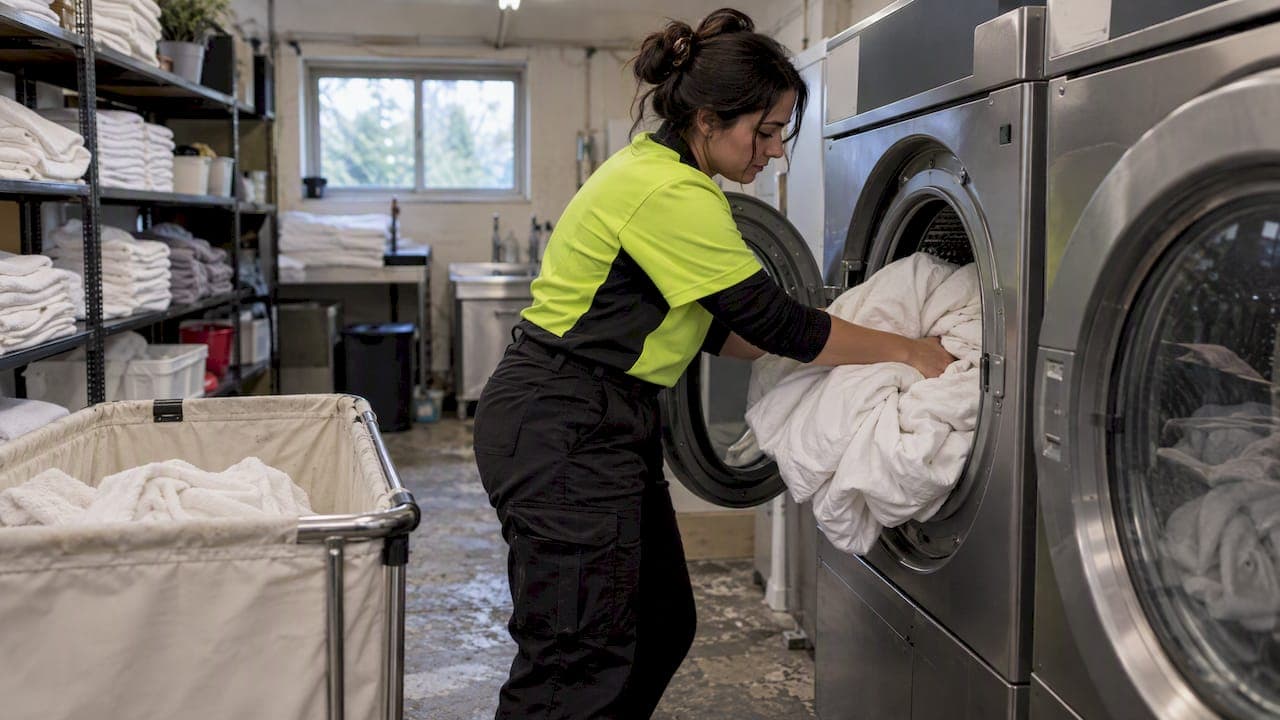
Linen is usually the rate-limiting step in a same-day turnover, so it needs to move first and fastest.
- Start washing the moment beds are stripped, using the hottest cycle the fabric allows and drying fully before folding.
- Bag linen rather than shaking it out, to avoid spreading dust and allergens through the room.
- Launder cleaning cloths daily rather than reusing them across properties.
- Reserve steam cleaning or professional carpet cleaning for stains or odours, since carpets rarely dry fully within a same-day window.
- For multi-property operations, linen rental through a service such as The Softest Logistics removes the laundry bottleneck entirely.
Working fast without skipping anything that matters
Speed comes from sequencing and prioritising, not from rushing every task equally.
- Clean and disinfect high-touch points first: door handles, light switches, taps, remotes and the thermostat.
- Batch identical tasks across rooms, stripping all beds, then wiping all surfaces, then vacuuming, rather than finishing one room completely before starting the next.
- Use a photo checklist as you go so nothing needs revisiting once the team has moved on.
- Keep a small buffer of spare linen and consumables on hand so a missing item never stalls the whole job.
A typical full turnover usually takes several hours depending on property size and the number of cleaners, and that window shrinks fast once linen handling is organised in advance. When a booking leaves less time than that, a rapid-response professional clean is the more reliable option than cutting steps.
Keeping reusable tools from spreading contamination
Mops, cloths and vacuums carry whatever they last touched into the next room, so they need their own hygiene routine.
- Launder mop heads and cloths daily rather than letting them air-dry and get reused.
- Disinfect tool handles and storage boxes at the end of each shift, and store everything dry.
- Check vacuum filters regularly, since a clogged filter spreads dust rather than capturing it.
- Follow state infection-control guidance on laundering reusable textiles and wear gloves when handling soiled equipment.
Proving the job was done: photos, logs and handover checks
Documentation is what protects you when a guest or tenant disputes the state of a property.
- Photograph the bed, bathroom, kitchen and entry at minimum, timestamped and labelled with the cleaner's initials.
- Log which chemicals were used, how long laundry took and any issues found, such as stains or damage.
- Keep this record for every turnover, not just the ones where something went wrong.
This kind of record is what cleaning compliance documentation is built around, and it matters because tenancy law in most states ties landlord obligations to the condition of the property at handover. Good photo proof also protects your rating on short-term rental platforms when a guest claims otherwise.
When a professional reset makes more sense than DIY
Some cleaning providers run a Scene Reset protocol specifically for rental turnovers, involving deep decontamination, consumable restocking, linen rental services, and a documented before-and-after photo pack. It suits hosts facing a tight same-day window, a lingering odour or stain, or any turnover following illness or bio-soiling where DIY cleaning carries more risk than reward.

What a decade of turnovers teaches you about cutting corners
Speed always narrows your margin for error, so fix your priorities before you fix your pace. Document every job, stock spare linen and consumables, and hand the risky ones to a verified professional rather than gambling on a guest review.
— Lead
A rushed turnover costs you a bad review; a professional one protects your rating every time. Some cleaning services offer a range of cleaning packages for routine resets, full rental turnovers with linen and restocking, and rapid response tactical cleans when time is limited.

Request a quote through the service scope page or book a Rapid Response clean directly when the next guest is already on their way.
Where to check the detail on cleaning and disinfecting standards

For commercial kitchen sanitising rules, check Food Standards Australia New Zealand, and always confirm product label and TGA disinfectant claims before use.
Sources
FAQ
What does turnover cleaning mean?
Turnover cleaning is the full reset of a rental between guests or tenants: stripping and replacing linen, cleaning then disinfecting surfaces, restocking consumables and checking the property is guest-ready. It differs from routine cleaning in that every surface and item gets attention, not just the obviously dirty ones.
Do landlords have to professionally clean between tenants?
Requirements vary by state, but tenancy legislation generally requires landlords to hand over a property that is fit for habitation, which ties into cleanliness standards at the start of a new tenancy. A professional clean is not always mandated, but it is the most reliable way to meet that standard and avoid disputes.
What are the two main ways to sanitise a commercial kitchen?
Food safety guidance identifies chemical sanitising, using an approved product per its label instructions, and heat sanitising, using specified temperatures and exposure times for equipment. Cleaning must happen first in either method, since grime stops both approaches from working properly.
Do carpets need to be professionally cleaned at the end of tenancy?
It depends on the carpet's condition and any lease terms, but stained or odorous carpets generally need professional steam cleaning rather than a quick vacuum. Same-day turnovers rarely allow carpets to dry fully, so schedule professional cleaning with buffer time where possible.