
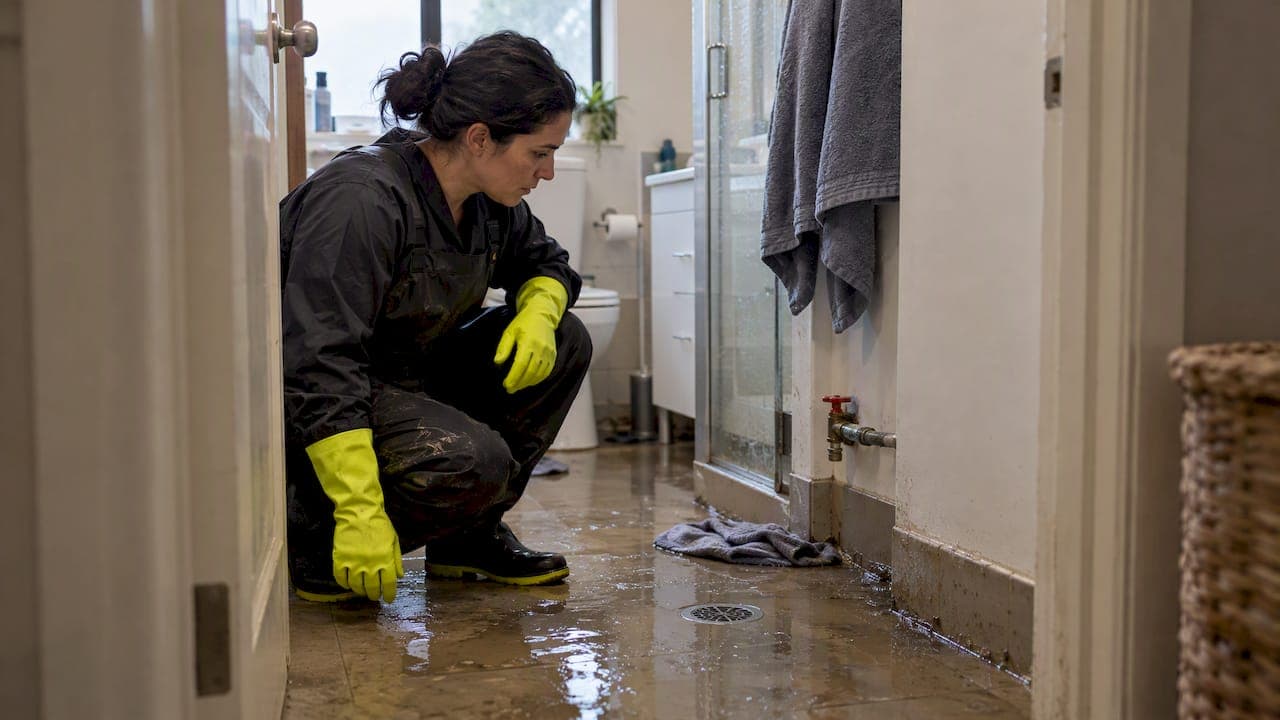
If sewage has backed up into your home, keep everyone and every pet out of the affected area immediately and avoid any contact with the water. Contain the space by closing doors, and call an emergency plumber if the backup is active or a remediation specialist if blackwater is standing in a living area. Acting fast limits health risks and stops damage spreading to floors, walls and ducts.
TL;DR:
- Most sewage backups require professional remediation if blackwater has contaminated large areas or porous materials like carpet or drywall.
- Proper PPE, containment, and immediate water shutoff are essential to prevent health risks and cross-contamination during cleanup.
- Small, contained spills on non-porous surfaces can usually be cleaned by homeowners with appropriate equipment and disinfectants.
- Regular maintenance and installing backflow valves help prevent sewer backups caused by blockages, tree roots, or heavy rainfall.
- Deep cleaning involves targeted extraction, verified disinfection, and professional documentation to support insurance claims and ensure safety.
Table of Contents
- First actions to take in the first 15 to 60 minutes
- PPE and containment steps that stop cross-contamination
- When a small spill is safe to clean up yourself
- When to call a remediation company or emergency plumber
- Which materials usually need to be thrown out
- Common causes of sewer backups and how to prevent them
- How we handle sewage remediation without harsh chemicals
- Why safety and containment matter more than speed
- Get help fast: rapid response and deep decontamination
- FAQ
- Sources
First actions to take in the first 15 to 60 minutes
Once you've confirmed sewage has backed up, the first hour matters more than anything you do afterward. Moving quickly and in the right order protects your health and strengthens any insurance claim you lodge later.
- Move people and pets out of the affected room and close the door to stop the spread.
- Turn off electricity to the area only if you can do so without stepping in water; otherwise leave it to a licensed electrician or plumber.
- Stop using taps, toilets and washing machines in the house so you don't add pressure to a blocked sewer line.
- Photograph the damage from multiple angles before you touch anything, then notify your insurer once you and your family are safe.
- Call an emergency plumber if the backup is still flowing, or a remediation company if sewage is already standing in a living space.
A practical emergency cleaning checklist can help you work through these steps methodically if you're managing the situation alone while waiting for help.
PPE and containment steps that stop cross-contamination
Sewage carries bacteria, viruses and parasites, so what you wear before stepping near it matters as much as what you do once you're there. The Australian Government Department of Health advises wearing long pants, long sleeves, fully covered shoes, gloves, eye protection and an N95 mask before any cleanup, and warns against walking through suspected contaminated water or mud at all.
- Wear nitrile or heavy-duty gloves, not household dishwashing gloves, which tear easily.
- Use covered boots or shoes you can disinfect or discard afterward.
- Wear eye protection and an N95 or P2 respirator to avoid inhaling aerosolised pathogens.
- Set up a simple containment zone with plastic sheeting and tape, and close vents in the affected room to stop contaminants travelling through the HVAC system.
Household fans and domestic vacuums are not built for this job: they can aerosolise bacteria and spread it through the rest of the house rather than remove it. Wash your hands thoroughly, cover and treat any cuts, and launder any clothing worn during cleanup separately from the rest of the household wash.
Pro Tip: Keep a dedicated pair of rubber boots and a sealed bag of PPE near your laundry so you're never tempted to improvise with household gloves or a bath towel during an emergency.

When a small spill is safe to clean up yourself
Not every sewage incident needs a callout. A small, contained spill on a hard floor, with no porous materials soaked through, no vulnerable household members and no standing blackwater, is usually within reach of a careful homeowner.
- Contain any solids first, scooping them into a sealed bag rather than flushing or rinsing them away.
- Remove surface waste with a shovel or dustpan dedicated to the task, never one used for food or general cleaning.
- Use a wet vacuum rated for contaminated water, not a standard household vacuum, to lift remaining liquid.
- Wash the surface with detergent to remove organic matter before disinfecting.
- Disinfect hard surfaces following public-health guidance; Healthdirect recommends a detergent wash followed by a bleach-based disinfectant for surfaces exposed to gastrointestinal pathogens, with contaminated bedding or clothing laundered in hot water.
Stop and call a professional the moment any porous material has soaked up sewage, if the water has reached inside walls, ceilings or ducts, if the volume is large, or if the backup keeps recurring. Our guide on what remediation cleaning actually involves explains why containment and verification distinguish a genuine clean from one that only looks finished.
When to call a remediation company or emergency plumber
Some situations are beyond a DIY clean, no matter how carefully you work. Sewage is often classified as Category 3, or blackwater, which means extraction alone doesn't make a space safe again.
- Standing blackwater anywhere in the home, rather than a small surface puddle.
- Sewage affecting a large area of flooring, multiple rooms or shared walls.
- Porous materials like carpet, underlay or plasterboard already soaked through.
- Contamination reaching HVAC ducts, wall cavities or electrical systems.
- Vulnerable occupants in the home, including infants, elderly residents or anyone immunocompromised.
Professional remediation typically includes setting up containment with negative pressure to stop contaminants migrating to unaffected rooms, extraction and structural drying with commercial-grade equipment, measured disinfection rather than a single surface wipe, and documented disposal that supports your insurance claim. When comparing quotes, ask providers to confirm their scope in writing, how they verify the space is clean afterward, and whether they provide a disposal record for contaminated materials.
Which materials usually need to be thrown out
Porous materials hold onto bacteria in a way hard surfaces don't, which is why so much of sewage cleanup comes down to deciding what stays and what goes.
- Carpet and underlay exposed to blackwater are almost always discarded rather than cleaned.
- Upholstered furniture that has absorbed sewage typically can't be fully decontaminated.
- Insulation and plasterboard that have been wet for any length of time usually need replacing.
- Double-bag contaminated items, label them clearly, and arrange licensed waste removal where your local council requires it.
Watch for warning signs that damage runs deeper than it looks: a persistent odour days after cleaning, mould appearing within 48 hours, or walls and floors that feel soft, swollen or warped. Any of these point to moisture trapped behind a surface, which calls for a trade inspection rather than another round of cleaning.
Common causes of sewer backups and how to prevent them
Most backups trace back to a handful of recurring causes, and most of those causes are preventable with routine maintenance. Blocked drains, tree roots intruding into ageing pipework, heavy rain overwhelming the municipal sewer system, and failing septic tanks account for the bulk of residential incidents.
- Schedule regular drain maintenance rather than waiting for a blockage to appear.
- Arrange a CCTV pipe inspection if your home's plumbing is older or you've had repeat issues.
- Install a backflow valve if your property is in a low-lying area prone to sewer surcharge.
- Keep septic systems serviced on the schedule your installer or local authority recommends.
Keep a simple record of inspections and servicing dates. If you're due for a preventative check and haven't had one in a few years, that's a reasonable trigger to book one now.
How we handle sewage remediation without harsh chemicals
We use non-toxic, bleach-free protocols built for deep remediation rather than a surface-only wipe-down, so a space is safe for families and pets again without leaving chemical residue behind.
- Containment is set up first to stop contaminants spreading to unaffected rooms during the job.
- Measured disinfection targets the areas sewage has actually reached, not just visible surfaces.
- Targeted extraction removes contaminated material from floors, cavities and hard-to-reach spots.
- Verification reporting documents the result, which is useful for your own records and your insurer.
Our Deep Decontamination | Full Sweep service covers this process end to end for homes and businesses that need more than a DIY clean.
Why safety and containment matter more than speed
A clean-looking floor doesn't mean the job is done: contamination can sit in wall cavities and ducts long after the visible mess is gone. Professionally managed containment costs more upfront but tends to prevent the hidden recontamination that turns a one-day job into a month of repairs. It also leaves you with documentation that speeds up an insurance claim rather than leaving you arguing over what actually happened.
— Lead
Get help fast: rapid response and deep decontamination
When sewage is already standing in your home, waiting for a convenient time isn't really an option. Our Rapid Response (2-Hour Tactical Clean) is built for exactly this kind of urgency, while Deep Decontamination | Full Sweep handles the containment, extraction and verification a larger incident needs.

Have your address, the approximate area affected and any photos ready when you get in touch, and we'll talk you through next steps. You can request a quote through our service scope or browse the full range of services we offer to find the right fit for your situation.
This article is general information, not a substitute for advice from a qualified doctor. Consult a qualified healthcare professional about your own circumstances before acting on anything here.
FAQ
What is the best way to clean up after a sewer backup?
Contain the area, wear full protective gear, remove standing waste with a wet vacuum rated for contaminated water, then wash with detergent before disinfecting hard surfaces. For anything beyond a small, contained spill, a remediation professional with containment and extraction equipment gives a more reliable result.
Can I clean my carpet after a sewer backup?
Carpet and underlay that have absorbed sewage are generally discarded rather than cleaned, because the padding holds bacteria that's very hard to fully remove. If only a small, isolated section has had brief surface contact, a professional carpet cleaner can assess whether it's salvageable.
What to do if your sewage is backed up?
Keep people and pets out of the area, avoid using household water so you don't add pressure to the line, and call an emergency plumber if the backup is active. If sewage is already standing in a living space, Healthdirect advises avoiding contact with the water altogether and seeking professional help.
What to clean floors with after sewer backup?
Wash hard flooring with detergent first to lift organic matter, then disinfect with a bleach-based product following the dilution and contact time on the label, consistent with Healthdirect's guidance for surfaces exposed to gastrointestinal pathogens. Porous flooring like carpet usually needs replacing rather than disinfecting.
Is sewage water dangerous to be around?
Yes, sewage water can carry bacteria, viruses and parasites, including the organisms behind leptospirosis and salmonella, so direct contact and inhalation of aerosols are both risks. Healthdirect recommends covering cuts, wearing waterproof protective clothing and seeking medical advice if symptoms like fever or stomach upset develop after exposure.
Sources
These sources informed the safety and disinfection guidance above, and are worth reading directly if you want more detail on protective steps or infection risks.
- Look after yourself as floodwaters recede | Australian Government Department of Health
- Salmonella | healthdirect