
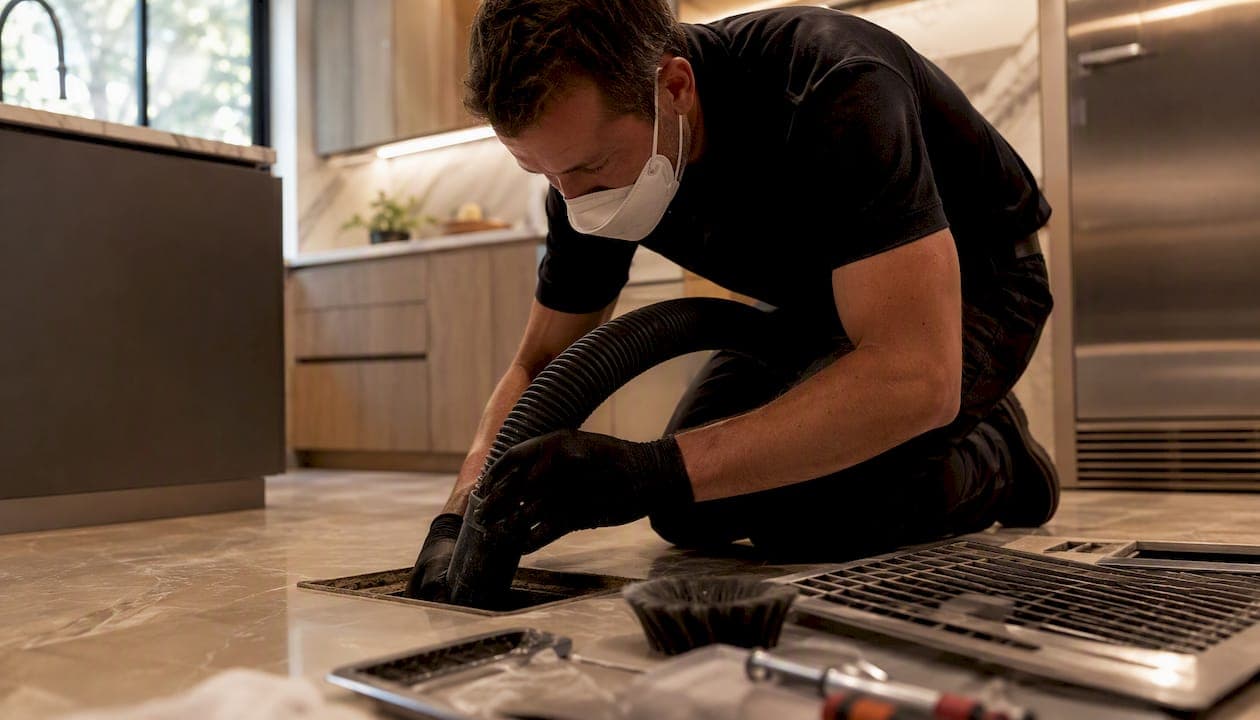
Air vent cleaning can genuinely help in specific situations, but it is not a universal health cure. Before you book anything, do three things: vacuum your vent covers yourself this week, photograph any visible dust, mould, or debris inside the duct opening, and call a professional only if you spot mould growth, pest activity, or heavy debris blowing from registers. If you are unsure where to start, Grimescene's deep decontamination service covers the full system.
Key takeaways
Professional duct cleaning delivers real benefits when specific contamination triggers exist, but routine cleaning without those triggers is not supported by the available evidence.
| Point | Details |
|---|---|
| Clean only when triggers exist | Mould, pests, post-renovation debris, or heavy buildup blowing from registers justify a professional clean. |
| Evidence is limited for routine cleans | The 2010 systematic review found mixed results; the EPA does not recommend routine cleaning for every home. |
| Method determines the outcome | Continuous negative-pressure vacuuming with agitation tools is the standard; anything less risks spreading contaminants. |
| Filter changes are the highest-impact DIY step | Replace filters every 60–90 days and match the MERV rating to your system's specification. |
| Grimescene for whole-system jobs | Grimescene's deep decontamination service covers the full system with non-toxic agents and photo documentation. |
Table of Contents
- What does 'air vent cleaning' actually include?
- ## 1. Improved indoor air quality — situational, not guaranteed
- 2. Fewer allergy and asthma triggers — likely only in specific cases
- 3. Reduced musty odours
- 4. Better airflow from registers
- 5. Potential energy savings — situational
- 6. Extended HVAC system life
- 7. Post-renovation dust removal
- What the research and authorities actually say
- Clear signs that duct cleaning is likely to help
- What a proper professional clean involves
- How to choose a reputable duct cleaner in Australia
- Practical maintenance between professional cleans
- Grimescene's measured view on duct and vent cleaning
- Grimescene's eco-friendly cleaning for your home's air system
- Sources
What does 'air vent cleaning' actually include?
The phrase gets used loosely, and that ambiguity costs homeowners money. There are three distinct levels of service, and knowing the difference is the first thing to sort out before you accept any quote.
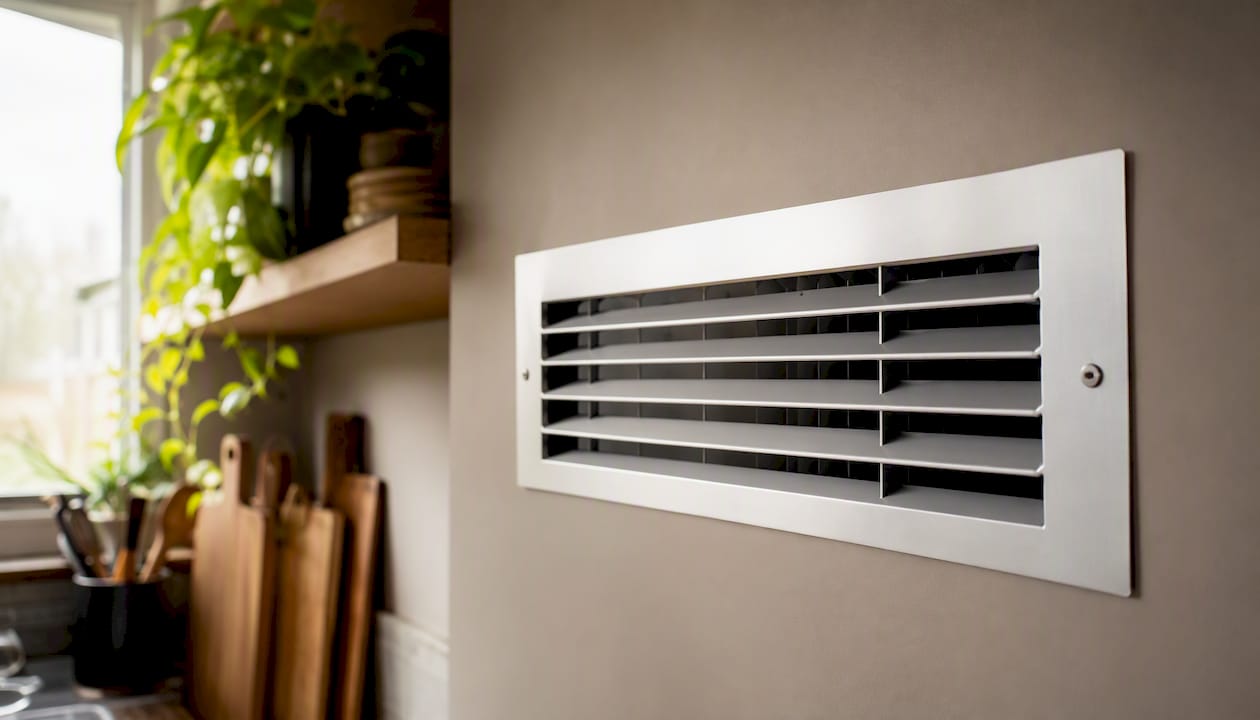
Vent cover cleaning means removing and washing the grilles or registers — the metal or plastic covers over your supply and return openings. This is DIY territory and takes twenty minutes with warm soapy water.
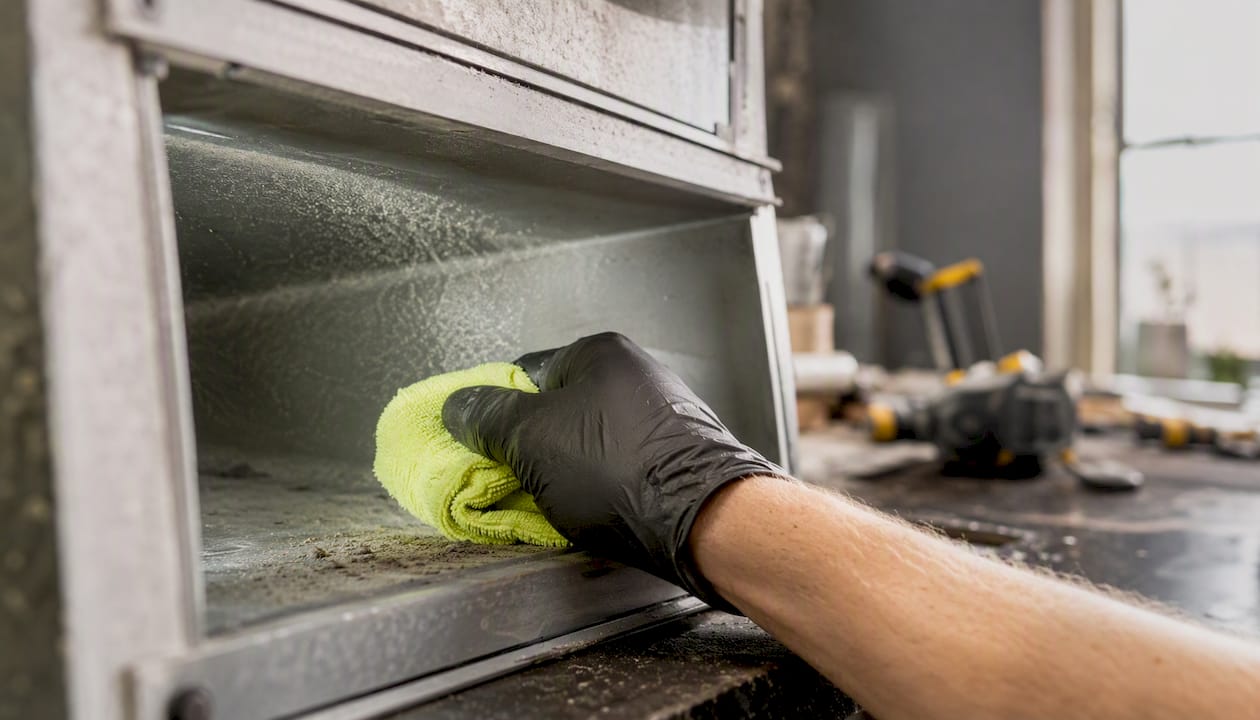
Duct cleaning goes further: it addresses the internal ductwork, the supply runs carrying conditioned air to each room, and the return ducts pulling air back to the air handler. A proper job also covers the plenum (the box connecting the air handler to the duct network) and, ideally, the air handler cabinet itself.
Whole-system HVAC maintenance is the most thorough level. It adds the evaporator coil, condenser coil, blower fan, and heat exchanger to the scope. Cleaning these components is where most efficiency gains actually come from, not the duct runs alone.
Components a professional duct clean should typically include:
- Supply and return duct runs
- Grilles, registers, and diffusers
- Air handler cabinet interior
- Drain pan and condensate line
- Blower fan and motor housing
- Evaporator coil (if accessible)
Components often excluded unless you ask:
- Condenser coil (usually outside)
- Heat exchanger (requires specialist access)
- Flexible duct connections at registers
- Insulated ductwork with damaged lining
If a quote covers only the vent covers and a quick vacuum of the first 30 cm of duct, that is cosmetic cleaning, not a whole-system service. Ask the provider to specify every component in writing.
## 1. Improved indoor air quality — situational, not guaranteed
Ducts can accumulate dust, pollen, pet dander, and construction debris. Removing that buildup can reduce the amount recirculating through your home, particularly after a renovation or pest infestation. A 2010 systematic review found that while ducts are often contaminated, evidence that cleaning improves indoor air quality or occupant health is limited and mixed. Results varied widely across studies. The benefit is real in high-contamination scenarios; it is much less clear for a well-maintained home with no specific trigger.
2. Fewer allergy and asthma triggers — likely only in specific cases
If your ducts contain mould, rodent droppings, or heavy dander accumulation, a thorough clean can reduce the allergen load circulating through the home. For households managing severe allergies, deep cleaning for allergy relief alongside duct work is worth considering. That said, the same systematic review noted that particle counts can temporarily spike during cleaning if negative-pressure collection is not used correctly, which means a poor-quality clean can make things worse before they get better.
3. Reduced musty odours
Mould, pest debris, and years of accumulated organic material inside ductwork can produce persistent odours that no amount of air freshener will fix. Cleaning the source directly is the only lasting solution. This is one of the more reliable benefits of vent cleaning, provided the odour is actually coming from the duct system and not from a drain, wall cavity, or roof space.
4. Better airflow from registers
Heavily clogged supply ducts and blocked registers can restrict airflow noticeably. Cleaning them out restores the designed airflow rate. The same systematic review reported airflow improvements ranging from small to moderate, depending on how contaminated the system was to begin with. A lightly dusty system in a newer home is unlikely to show measurable change.
5. Potential energy savings — situational
This claim is frequently overstated. Energy Star focuses on routine maintenance such as regular filter changes and coil cleaning for efficiency gains, rather than duct cleaning alone. Dirty coils and a clogged blower fan genuinely reduce efficiency; dirty duct walls generally do not, unless the restriction is severe. If your energy bills have crept up, check the filter and coil first.
6. Extended HVAC system life
Keeping the blower, coil, and drain pan clean reduces mechanical strain and the risk of mould-driven corrosion. This benefit belongs more to whole-system HVAC maintenance than to duct cleaning specifically. Regular professional cleaning that protects home systems is a reasonable investment for any system over five years old.
7. Post-renovation dust removal
After any renovation involving sanding, cutting, or demolition, fine particulate debris enters the duct system and recirculates for months. This is one of the clearest cases where duct cleaning pays off. For a full picture of what post-construction cleaning involves, how to deep clean your home after renovation covers the broader scope beyond just the ducts.
What the research and authorities actually say
The US EPA's guidance is clear: routine duct cleaning is not universally recommended. The EPA advises cleaning only when specific problems exist, such as visible mould, confirmed pest infestation, or heavy debris, and stresses that improper procedures can cause recontamination. This is not a fringe position. It reflects the weight of available evidence.
The 2010 systematic review published in Indoor Air examined multiple field and laboratory studies. Reported airflow improvements ranged from negligible to moderate. No study demonstrated consistent, clinically meaningful health improvements from duct cleaning alone in homes without a specific contamination problem.
Key finding: Controlled experiments show that disturbing duct deposits can temporarily spike airborne particle counts during cleaning. Proper continuous negative-pressure collection is not optional — it is what separates a safe clean from one that makes air quality worse.
Pro Tip: Watch for these red flags that signal overstated claims or risky practice: a company that promises guaranteed health benefits, claims "EPA certification" (the EPA does not certify duct cleaners), uses fogging or biocides without a confirmed mould diagnosis, or completes a whole-house job in under two hours with no inspection photos.
Clear signs that duct cleaning is likely to help
Not every home needs professional duct cleaning. These triggers give you a reliable diagnostic framework.
Act within weeks:
- Visible mould growth inside the duct or on the air handler
- Evidence of rodent or insect infestation inside the duct system (droppings, nesting material, carcasses)
- Chunks of debris or heavy dust blowing from registers when the system runs
- Persistent musty or animal odour that returns after filter changes
- Recent renovation involving sanding, cutting, or demolition with ducts unprotected
Situational — cleaning is more likely to help:
- Three or more pets with heavy shedding, especially if returns are near floor level
- Household members with severe, uncontrolled allergies or asthma and no other identified trigger
- A home that has been vacant and unventilated for more than twelve months
- Visible heavy dust accumulation on supply registers within days of cleaning them
Routine inspection window:
If none of the above apply, a visual inspection every two to three years is a reasonable baseline. You do not need to book a full clean on a fixed calendar schedule if the system shows no signs of contamination.
What a proper professional clean involves
A reputable duct cleaning service follows a specific process. NADCA recommends whole-system cleaning using agitation devices and continuous negative-pressure vacuum collection, so dislodged particles are captured rather than redistributed into the home.
Here is what a proper job looks like from start to finish:
- Pre-inspection: technician photographs the interior of supply and return ducts before work begins
- System isolation: the air handler is sealed and the whole system placed under continuous negative pressure using a high-efficiency vacuum unit (truck-mounted or portable industrial grade)
- Agitation: rotating brushes, air whips, or compressed-air tools dislodge debris from duct walls while the vacuum runs continuously
- Component cleaning: blower fan, evaporator coil, drain pan, and air handler cabinet are cleaned separately
- Mould remediation: if mould is confirmed by lab testing, contaminated flexible duct lining or insulation is physically removed, not just sprayed
- Post-inspection: technician photographs the same duct sections after cleaning so you can compare
- Filter replacement: a fresh filter is fitted at the end of the job
Red flags to reject on the spot:
- Quote under $150 for a whole house (a legitimate job takes 3–6 hours)
- No inspection photos offered before or after
- Pressure-only cleaning that pushes debris toward the air handler rather than away
- Insistence on applying a biocide, sealant, or encapsulant without a confirmed mould diagnosis
- Technician cannot name the vacuum equipment or explain negative-pressure method
How to choose a reputable duct cleaner in Australia
Australia does not have a mandatory licensing scheme specifically for duct cleaning, which makes vetting more important, not less. Ask every provider these questions before you accept a quote.
Questions to ask:
- What agitation method do you use, and what vacuum equipment?
- Will you place the system under continuous negative pressure throughout the job?
- Do you provide before-and-after inspection photos as part of the service?
- Are you insured for property damage and public liability?
- If you find mould, will you provide lab confirmation before recommending treatment?
- Can you provide references from jobs of similar scope?
Red flags checklist:
- Claims the company holds "EPA certification" (the US EPA does not issue this; Filtrete's consumer guidance flags this as a warning sign)
- Guarantees specific health outcomes ("your allergies will improve")
- Recommends fogging or chemical treatment before inspecting the system
- Cannot explain the scope of work in writing
- Pushes a same-day booking with no site inspection
Contract items to request in writing:
- Full scope of components to be cleaned, listed by name
- Confirmation that no ozone-generating equipment or undefined chemical residues will be used
- Photo evidence before and after each major component
- Disposal method for any contaminated insulation removed
- Guarantee period and what it covers
Practical maintenance between professional cleans
The single highest-impact thing you can do for your home's air quality costs almost nothing: change the filter on schedule. Everything else builds on that.
-
Replace your filter every 60–90 days for a standard household, or every 30–45 days if you have pets or a household member with respiratory conditions. In Australia, look for filters rated to AS 4260 or equivalent; the MERV scale used in the US maps roughly as follows: MERV 8 covers standard dust and pollen, MERV 11 adds fine particles and pet dander, MERV 13 captures most bacteria-sized particles. Higher ratings increase airflow resistance, so check your system's manual before going above MERV 11.
-
Clean vent covers every two to three months. Remove the grille, wash it in warm soapy water, rinse, and let it dry completely before reattaching. The Spruce's vent cover guide recommends a deeper clean a few times a year and stresses full drying to prevent rust or mould on the cover itself.
-
Vacuum registers carefully. Use a brush attachment on low suction to clean the visible duct opening without pushing debris deeper into the run. Stop at the point where the duct bends out of sight.
-
Control indoor humidity. Mould in ductwork almost always follows a moisture problem. Keep indoor humidity below 60% using exhaust fans in bathrooms and kitchens, and fix any leaks near the air handler promptly.
-
Reduce dust entering the system. Door mats, a no-shoes-indoors policy, and regular vacuuming of floors near return vents all reduce the load entering the duct system. Reducing dust from hidden spots around the home cuts what the system has to process.
-
Schedule a visual inspection every two to three years. A torch and a phone camera are enough to check the first metre of each supply and return duct for visible mould, debris, or pest activity.
Pro Tip: A higher-MERV filter is not always better. A MERV 13 filter in a system designed for MERV 8 can restrict airflow enough to strain the blower motor and reduce efficiency. Match the filter rating to your system's specification, not to the marketing on the packaging.
Grimescene's measured view on duct and vent cleaning
Professional duct cleaning is worth doing when the triggers are real: mould, pests, post-renovation debris, or persistent contamination that filter changes alone cannot address. For everything else, consistent filter maintenance and regular vent cover cleaning will carry most homes a long way.
When a full clean is warranted, the method matters more than the price. Whole-system negative-pressure cleaning with agitation tools, photographic evidence, and eco-friendly agents is the standard Grimescene holds its work to. For post-renovation jobs or rental turnovers, the Scene Reset and deep decontamination protocols address the full scope, not just the visible surfaces. Transparent quotes, before-and-after photos, and non-toxic agents are not extras here — they are the baseline.
Grimescene's eco-friendly cleaning for your home's air system

Grimescene uses non-toxic, bleach-free agents across every service, which matters when you are cleaning a system that circulates air through every room your family breathes in. The deep decontamination full sweep covers the whole system, including the air handler and high-impact zones, with before-and-after photo documentation included as standard. For short-term rental hosts, the Scene Reset turnover service handles post-guest contamination before the next booking.
Before you book, ask for a written scope of work, confirmation that no undefined chemicals will be applied, and photo evidence of the duct interior. Grimescene provides all three. Request a quote at Grimescene or book a deep decontamination directly to get a clear picture of what your system actually needs.
Sources
- Should You Have the Air Ducts in Your Home Cleaned? | US EPA
- Is ventilation duct cleaning useful? A review of the scientific evidence
- Proper cleaning methods | NADCA
- ENERGY STAR
- How to clean air vent covers | The Spruce
- Home air duct cleaning: Fact vs. fiction | Filtrete (3M)