
Professional decontamination cleaning removes hazardous residues that ordinary cleaning cannot touch, and you should arrange a site assessment as soon as contamination involves chemicals, biological matter, body fluids or suspected drug-lab residues. A legitimate provider will give you a written scope and documented waste disposal before work starts. One option that follows this process uses non-toxic cleaning agents.
TL;DR:
- Visible blood, suspected drug laboratory residue, chemical spills larger than household quantities, or disturbed asbestos require a specialist, not a cleaner using extra supplies.
- Manual detergent cleaning must come before disinfection; fogging and ultraviolet treatment only supplement it, while HEPA vacuuming captures fine particles.
- Require a site visit and written scope before work begins, including the waste plan, timeline, removal steps, and how the provider will verify clearance.
- Costs and timelines depend on contaminant type, property size, testing, disposal needs, furnishings, and access, so phone estimates cannot reliably price the job.
- Ask for licensed disposal records and staff training in protective equipment use; high risk work may require air or laboratory clearance testing.
Table of Contents
- What decontamination cleaning covers and when you need it
- How a professional decontamination job runs from assessment to clearance
- Decontamination methods and technologies: what they do and don't do
- Waste handling, PPE and compliance you should expect from a provider
- Choosing a decontamination provider: checklist and cost drivers
- What drives the timeline and cost of a decontamination job
- Tailored protocols for residential, commercial and short-term rental properties
- Why routine patrols reduce the need for emergency decontamination
- How to confirm a decontamination job is actually finished
- Why non-toxic protocols matter more than they get credit for
- How to get help now from Grime Scene Services
- FAQ
- Sources
What decontamination cleaning covers and when you need it
Decontamination services split into a few distinct categories, and matching the right one to your situation avoids paying for the wrong job. Methamphetamine residue remediation deals with chemical films that soak into porous surfaces and can linger for years. Trauma and biohazard cleaning handles blood, bodily fluids and other infectious material, where bloodborne pathogen controls are non-negotiable. Mould and contamination remediation targets fungal growth and the moisture sources feeding it, sometimes alongside asbestos-adjacent material that needs separate handling. Post-construction decontamination clears fine dust, resin and chemical residue left after a build or renovation. Hoarder clean-outs combine heavy waste removal with biological and odour contamination. Short-term rental turnovers, covered by The Scene Reset, need fast, documented cleaning between guests.
Some situations always call for a specialist rather than a cleaner with extra supplies:
- Visible body fluids or blood at the property.
- Suspected clandestine drug lab residue.
- Any chemical spill beyond a small household quantity.
- Disturbed asbestos-containing material of any kind.
How a professional decontamination job runs from assessment to clearance
A compliant job follows a sequence, and knowing the stages helps you judge whether a quote is thorough or rushed.
- Site assessment. A technician inspects the property, scopes the contamination type and, where needed, takes samples or runs field tests to confirm what they're dealing with.
- Written quote. This should set out the scope of work, staging, how hazardous waste will be handled, and a realistic timeline, not just a flat price.
- Pre-clean preparation. Waste and damaged furnishings are removed before any cleaning starts.
- Manual cleaning. Surfaces are physically cleaned with detergent to lift grime, because dirt left behind reduces how well any disinfectant works, a principle the Department of Health's community cleaning guidance sets out clearly.
- Targeted extraction and disinfection. HEPA vacuuming, steam and specialised treatments follow, matched to the contaminant.
- Drying and venting. Spaces are ventilated and dried before reoccupation.
- Final inspection. Photographic before-and-after records and, for higher-risk jobs, lab clearance testing confirm the result, with waste disposal documented.
Pro Tip: Ask for the written quote before any work begins; a provider that skips straight to cleaning without scoping the job is a warning sign.
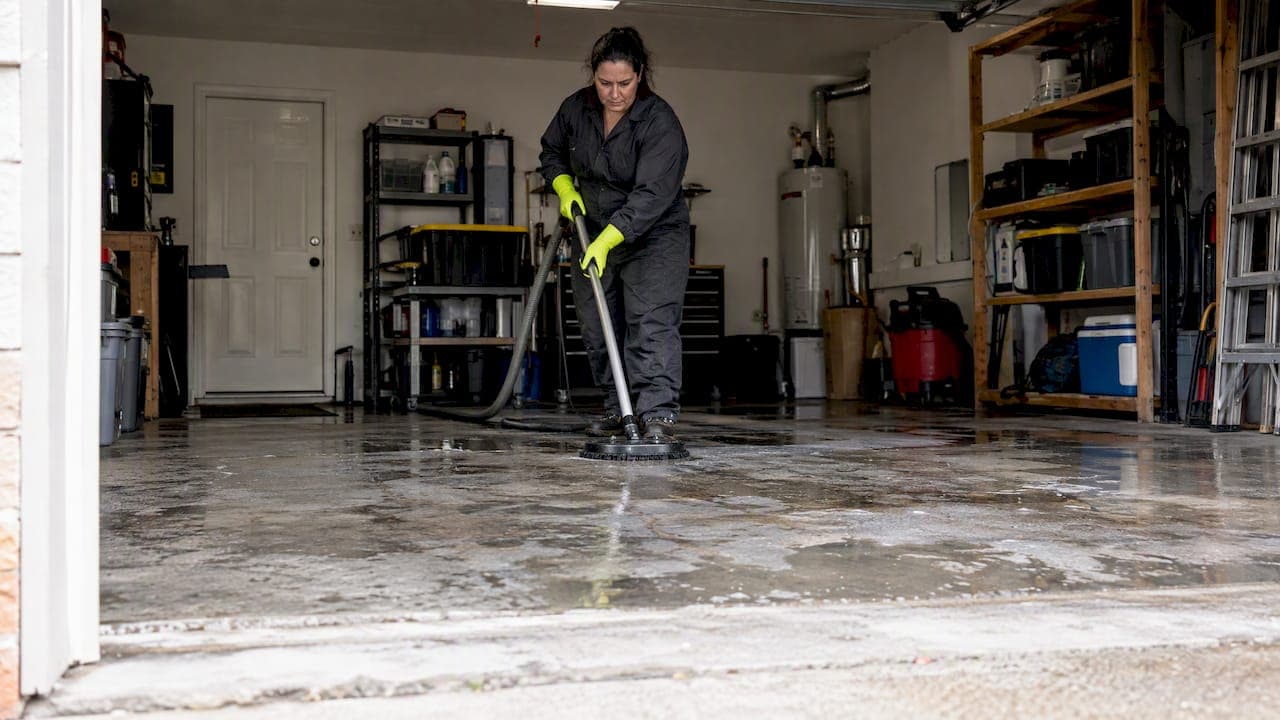
For a worked example of this sequence applied to a confined space, our garage decontamination walkthrough steps through each stage for hosts and property managers.
Decontamination methods and technologies: what they do and don't do
Every credible decontamination process rests on one rule: clean first, disinfect second. Manual cleaning with detergent and warm water removes the organic matter that otherwise blocks a disinfectant from working, and this sequence is standard guidance from the Department of Health.
- Detergent and hand-cleaning removes visible grime and is the essential first pass on any surface.
- TGA-listed disinfectants kill pathogens on an already-clean surface, applied at the correct dilution and contact time.
- Hydrogen peroxide fogging treats hard-to-reach areas but needs a trained operator and PPE, and it supplements manual cleaning rather than replacing it.
- UVC treatment disinfects exposed surfaces but cannot reach shadowed or obstructed areas.
- HEPA vacuuming captures fine particles and residues that a standard vacuum would recirculate into the air.
- Steam cleaning lifts grime from fabric and grout without chemical residue.
Fogging and UVC are adjuncts, not stand-alone fixes. Government guidance is explicit that these technologies cannot substitute for manual cleaning, a distinction worth remembering when a quote leans heavily on one technique.
Waste handling, PPE and compliance you should expect from a provider
Compliant waste handling is where low-cost providers most often cut corners, and it's the detail that protects you from inherited liability. Safe Work Australia's model code treats decontamination as risk-based work, with ventilation, routine cleaning, waste management and PPE training as baseline controls, and the asbestos code of practice describes the same discipline through dirty and clean zone separation.
- Hazardous waste is contained, labelled and transported to a licensed disposal facility, never bagged and left kerbside.
- Staff don and doff PPE through a formal routine, with contaminated items laundered or disposed of rather than reused casually.
- Dirty and clean zones are kept physically separate on-site to stop cross-contamination.
- Higher-risk jobs may require air monitoring or clearance testing before the space is cleared for reoccupation.
- Documented waste disposal records are kept and provided to you, so liability doesn't pass back to the property owner.
Supervisors managing these risks in-house can find more detail in our bloodborne pathogen cleanup guidance.
Choosing a decontamination provider: checklist and cost drivers
A short vetting process separates a compliant operator from one cutting corners.
- Insist on a site visit before any quote is finalised.
- Request a written scope that includes the waste disposal plan.
- Ask for evidence of staff PPE training and WHS compliance.
- Confirm public liability insurance is current.
- Ask how they verify the job is clear before handover, whether that's photographic reporting or lab testing.
- Request references or examples of comparable past jobs.
Pro Tip: A quote that skips the site visit and promises a single fogging treatment as the whole fix is a red flag, not a shortcut.
Cost and timeline depend on the contaminant type, property size, whether testing or specialist disposal is required, and how much furniture needs removing or reinstating. For background on distinguishing routine cleaning from remediation work before you book, see our guide on janitorial versus remediation cleaning.
What drives the timeline and cost of a decontamination job
Timelines for decontamination jobs vary widely because the variables stack. A single contaminated room with straightforward biohazard cleanup might be cleared within a day, while a property with suspected drug-lab residue across multiple rooms can take several days once sampling, specialist treatment and clearance testing are factored in.
The biggest cost driver is contaminant type. Biological matter and chemical residue need different products, contact times and disposal routes, and some require licensed disposal contractors rather than general waste collection. Property size is the second factor: a two-bedroom unit costs less to decontaminate than a multi-room commercial space, simply on labour and materials.
Testing adds both time and cost when it's required, whether that's air monitoring during the job or clearance testing afterwards to confirm the space is safe. Furniture and furnishings add another variable. Removing, cleaning or disposing of contaminated soft furnishings, carpet or damaged fixtures, then reinstating or replacing them, can shift a quote considerably from a bare walls-and-floors job.
Access and location play a smaller but real role. A property that's hard to reach, lacks power or water on-site, or needs after-hours access for a commercial tenant adds logistics on top of the core clean. Because every one of these variables is specific to the property, a reliable quote only comes after a site assessment, not a phone estimate.

Tailored protocols for residential, commercial and short-term rental properties
A decontamination protocol built for a family home doesn't transfer cleanly to a commercial office or a rental turnaround, because the risk profile and the timeline pressure are different in each setting.
Residential jobs, covered under services like DEEP DECONTAMINATION | Full Sweep, prioritise making the home safe for the people who live there, including children and pets, which is where non-toxic, bleach-free agents matter most since residents are reoccupying spaces almost immediately after the job finishes.
Commercial properties often need work scheduled around business hours or done overnight to avoid disrupting operations, with documentation suited to a workplace health and safety file rather than a household record.
Short-term rentals face the tightest timeline of all: a guest checkout and the next check-in might be only hours apart. A specific protocol for this gap pairs rapid, non-toxic cleaning with the restocking and linen logistics a turnover needs, so a host isn't juggling a cleaning crew, a linen supplier and a consumables run separately.
Why routine patrols reduce the need for emergency decontamination
Most decontamination emergencies start as small, missed problems. A slow leak behind a wall, an unnoticed spill in a plant room, or a gradual build-up of grime in a high-traffic commercial kitchen can all escalate into a job requiring full remediation if nobody catches them early.
A routine patrol service is built around that gap. Rather than waiting for a contamination event to trigger an emergency call, scheduled patrols check high-risk zones on a recurring basis, catching issues while they're still a routine clean rather than a decontamination job.
For property managers running multiple sites or short-term rentals, this matters for a simple reason: a recurring patrol schedule costs far less over a year than a single emergency decontamination, and it protects tenants or guests from ever encountering a hazard in the first place. It's a preventative layer sitting alongside the reactive services like Deep Decontamination and Bio-Hazard Control, rather than a replacement for them.
How to confirm a decontamination job is actually finished
Finishing the physical clean isn't the same as proving the space is safe to reoccupy, and the verification step is what separates a documented job from a guess.
The baseline form of verification is photographic before-and-after reporting, showing the condition of the site at each stage so you have a record of what was treated and how it looked afterwards. For higher-risk jobs, that's backed by a clearance inspection, where a technician physically checks treated surfaces and zones before signing off on reoccupation.
The most rigorous form is lab-based clearance testing, used where the contaminant type calls for it, such as suspected drug-lab residue or certain biohazard scenes. Rather than a fixed checklist applied to every job, government infection-control guidance frames this as risk-based: the level of verification should match the contaminant and the exposure risk, not follow one standard protocol regardless of the job.
Documented waste disposal records complete the picture. Without them, you have no proof the hazardous material actually left the property through a compliant channel, which matters if a dispute or inspection comes up later.

Why non-toxic protocols matter more than they get credit for
Most decontamination marketing focuses on kill rates and speed, and both matter, but the bigger blind spot is what's left behind after the job. A space can be technically decontaminated and still carry a harsh chemical residue that makes reoccupation uncomfortable for families, pets or sensitive tenants. We think the industry underrates this trade-off.
Grime Scene Services' non-toxic, bleach-free protocols, including The Scene Reset for rental turnovers, aim at that gap directly: a clean result without a chemical hangover, backed by before-and-after reporting so the outcome isn't just claimed, it's shown.
— Lead
How to get help now from Grime Scene Services
If you're facing a contamination issue right now, we offer a direct path through it. DEEP DECONTAMINATION | Full Sweep covers the full remediation process from assessment through to clearance, and our Rapid Response (2-Hour Tactical Clean) is built for situations that can't wait for a standard booking slot.
To get a fast, accurate assessment, have the following ready when you contact us:
- The property address and access details.
- A description of the contamination type, including when it happened.
- Photos of the affected area if it's safe to take them.
Once a job is booked, we provide a written scope before work starts, document waste disposal through licensed channels, and hand over before-and-after photographic reporting so you have proof of the result. Arrange a site assessment through our appointments page and we'll scope the job properly before anyone picks up a cleaning cloth.
This article is general information, not a substitute for advice from a qualified doctor. Consult a qualified healthcare professional about your own circumstances before acting on anything here.
FAQ
What are the stages of decontamination in a professional job?
A professional decontamination job runs through site assessment, a written quote, pre-clean waste removal, manual cleaning, targeted disinfection or extraction, drying and ventilation, then a final inspection with documentation. Higher-risk jobs add clearance testing before the space is handed back for reoccupation.
What is a decontamination agent?
A decontamination agent is a product, typically a detergent or a disinfectant, used to physically remove or neutralise hazardous residue from a surface. Government cleaning guidance stresses that the cleaning agent used to remove grime and the disinfectant used afterwards serve different purposes and neither replaces the other.
What is the difference between disinfectant and decontamination?
Disinfection is one step within decontamination, specifically the step that kills or inactivates pathogens on an already-clean surface. Decontamination is the broader process, covering manual cleaning, waste removal, disinfection and, for serious contamination, clearance verification before a space is considered safe.
What is the definition of decontamination?
Decontamination is the process of removing or neutralising hazardous chemical, biological or physical contaminants from a surface, item or space to make it safe for people to use again. It typically combines manual cleaning, targeted treatment and, for higher-risk jobs, documented verification that the hazard has been removed.
Sources
- Cleaning and disinfection for COVID-19: information for community settings (ICEG / Department of Health)
- Model Code of Practice: Managing the risks of biological hazards in the workplace (Safe Work Australia)