
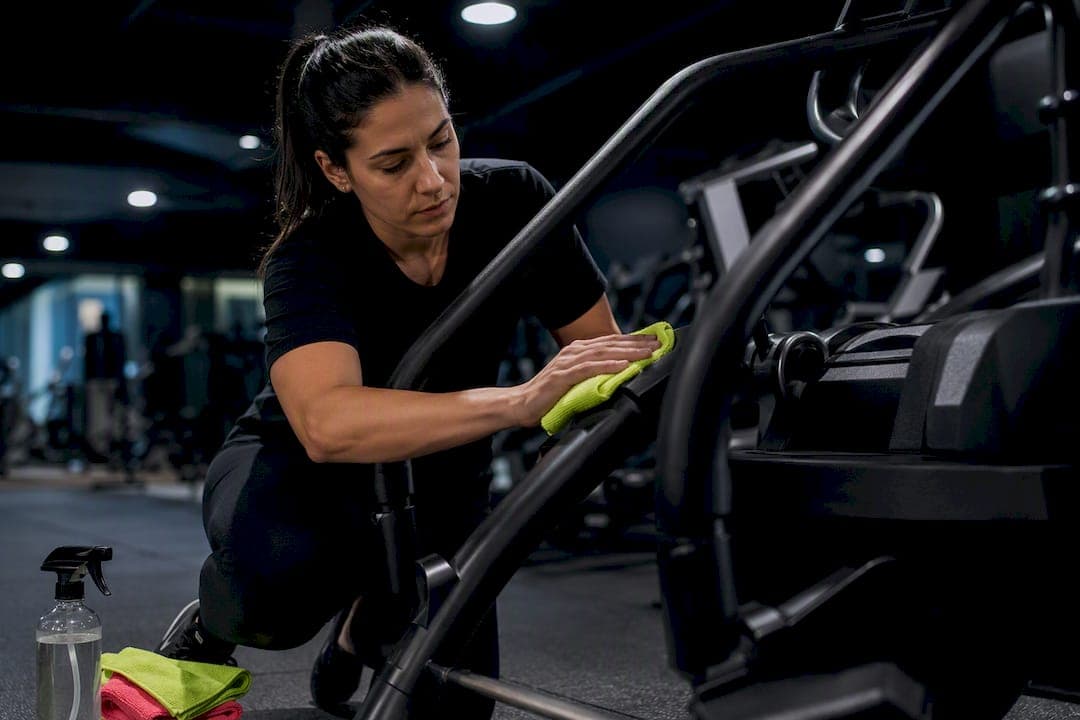
Meeting gym cleaning standards in Australia means aligning your facility with the AUSactive National Code of Practice and general work health and safety (WHS) law, both of which demand a documented risk assessment, routine high-touch cleaning during operating hours, and intensified controls in wet areas. Cleaning logs and staff training aren't optional extras. They're what an inspector or a complaints investigation will ask for first, and without them, even a spotless gym can fail an audit.
TL;DR:
- Gyms must maintain documented risk assessments and cleaning logs, including staff training records, to meet inspection and compliance standards.
- A zone-based cleaning protocol prioritizes high-touch surfaces and wet areas, with specific frequencies: hourly wipes for cardio equipment, multiple daily cleanings for change rooms, and nightly deep cleans.
- Proper disinfectant dwell times, correct product use on different surfaces, and thorough staff training are essential to ensure equipment safety and prevent contamination.
- Wet areas require frequent cleaning during operating hours, with special attention to grout, drains, and ventilation to prevent mould and bacterial growth.
- Using non-toxic, bleach-free cleaning agents with verified contact times can achieve hygiene goals while protecting equipment and staff health.
Table of Contents
- What the national code and WHS actually require
- How should a zone-based cleaning framework work?
- Which products and contact times keep equipment safe?
- Why wet areas need tighter cleaning controls
- How do you choose safer cleaning chemicals and PPE?
- What does audit-ready staff training look like?
- What's the response protocol for a suspected infectious case?
- What records and signage keep you audit-ready?
- Eco-friendly cleaning that still meets the standard
- Get audit-ready with a professional deep clean
- Sources
- FAQ
What the national code and WHS actually require
The AUSactive National Code of Practice for the Health and Fitness Industry sets the industry benchmark for Australian gyms, and it's more specific than most operators expect. It requires suppliers to provide a safe, clean environment, to conduct and document risk assessments, to keep wet areas cleaned frequently, and to maintain first aid and emergency procedures on site at all times.
That last point trips up a lot of smaller studios. A risk assessment isn't a one-off form you file after opening day. It's a living document that should reflect your actual equipment, foot traffic, and any incidents you've had, and it needs to be revisited whenever something changes, whether that's a new sauna, a busier class schedule, or a run of member complaints about smell in the change rooms.
Beyond the industry code, general WHS legislation imposes a duty of care on facility operators to provide a workplace free from foreseeable risks, cleanliness included. That duty extends to staff as much as members. A cleaner who's never been shown the correct dilution rate for a disinfectant, or who's mopping a shower floor without non-slip footwear, is a WHS exposure regardless of how clean the tiles end up.
Here's what an inspector, insurer, or auditor typically wants to see on the day:
- A current, dated risk assessment covering equipment, wet areas, and emergency procedures
- Staff training records showing who's been trained on chemical use and infection control
- Cleaning logs with times, scope, and the name of the staff member responsible
- Visible signage covering hygiene expectations and emergency information
- A supervisor or qualified staff member rostered whenever the facility is open
Facilities that can't produce these on request tend to get treated as non-compliant even when the floors are genuinely clean, because the code is as much about demonstrable process as it is about visible cleanliness. Framing cleaning as a documented risk management activity, rather than an ad hoc chore list, is what separates gyms that pass audits from those that scramble before one.
How should a zone-based cleaning framework work?
Not every square metre of your gym carries the same contamination risk, so treating the whole floor with one blanket cleaning schedule wastes labour where it isn't needed and under-cleans where it matters most. A cardio bank generates sweat and skin contact on a handful of touchpoints. A studio floor picks up shed fibres, mat residue, and barefoot contact. A change room combines moisture, warmth, and shared surfaces, which is exactly the environment where fungal and bacterial growth thrives.
A practical zone model looks like this:
- Reception and entry — wipe down eftpos terminals, door handles, and check-in kiosks every one to two hours during open hours; full clean nightly.
- Cardio and strength floor — high-touch surfaces (handles, consoles, seat pads) wiped down hourly or after each rush period; full equipment wipe and floor mop nightly.
- Free weights and racks — spot-wipe bars, dumbbells, and bench pads through the day; degrease and disinfect grips and knurling weekly.
- Group fitness studios — mats, resistance bands, and floor surfaces cleaned between every class; deep clean and airing out nightly.
- Change rooms and showers — cleaned multiple times daily during opening hours, with a deeper scrub overnight.
- Pools, spas, and saunas — chemical balance checked per session; surfaces and seating wiped between sessions; deep clean daily.
This tiered structure matches what commercial cleaning specialists recommend: a zone-based approach where high-touch surfaces and equipment get cleaned frequently during open hours, with bathrooms and wet areas cleaned even more often and deeper cleaning scheduled daily or weekly depending on the zone.
Scaling this by facility size is mostly about throughput, not square metreage. A 24-hour gym with 2,000 active members needs hourly high-touch wipes on its busiest ten pieces of cardio equipment, while a boutique studio with 150 members might only need that same rigour around its two most-booked machines. Track which equipment gets booked most and weight your cleaning roster toward it, rather than applying the same frequency evenly across a floor where usage is wildly uneven.
Pro Tip: Log peak usage hours from your booking software or turnstile data for a fortnight, then build your high-touch wipe schedule around those actual peaks rather than a generic "every hour" rule. You'll often find most contact happens in a few peak windows each day.
Which products and contact times keep equipment safe?
The wipe-down between sets that most gym-goers do themselves isn't a substitute for a staff-led deeper clean. Members using a provided spray bottle and paper towel handle the surface sweat; staff need to run a proper disinfectant pass on high-contact zones at set intervals through the day, and a full equipment wipe with the correct dwell time overnight.
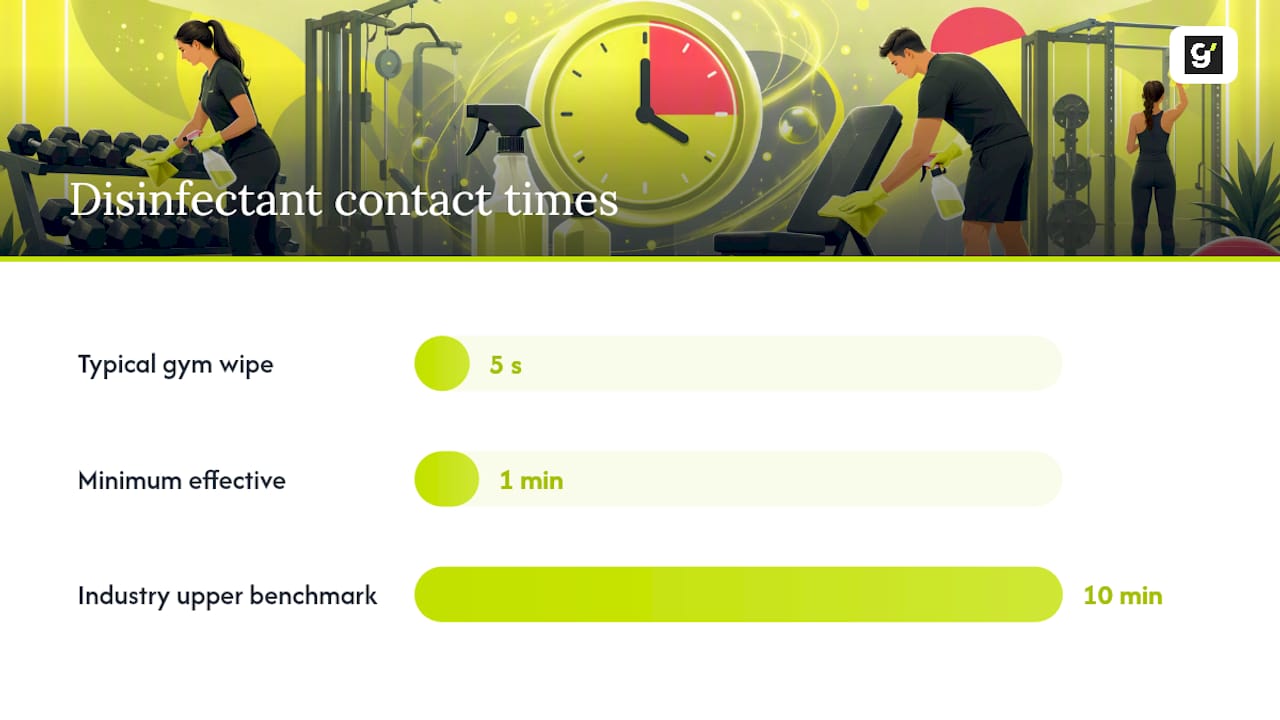
Contact time matters more than most managers realise. A disinfectant that needs 60 seconds of wet contact to actually kill pathogens does nothing useful if it's wiped dry after five seconds, which is the single most common cleaning mistake on a gym floor. Read the label, not the marketing copy, and train staff to time it rather than guess.
Product selection also needs to match the surface. Guidance from equipment manufacturers is blunt on this: equipment should be sanitised between users, but harsh chlorine or bleach should be avoided on rubber, vinyl, and console screens because these agents degrade the materials over time, cracking upholstery and clouding touchscreens.
A quick reference for common equipment:
- Cardio consoles and touchscreens — alcohol-based wipe at manufacturer-approved concentration, never a soaked cloth
- Vinyl and rubber upholstery — non-toxic, pH-neutral disinfectant to avoid drying and cracking
- Barbells and knurled surfaces — degreaser followed by a light oil wipe to prevent rust
- Mats, foam rollers, straps — wipe after every use; soak weekly in a non-toxic sanitising solution
- Free weight plates — daily wipe down; avoid submerging in liquid
Industry benchmarks put realistic dwell time for most commercial-grade disinfectants at one to ten minutes depending on the pathogen target, a range far longer than the quick five-second wipe most gyms actually give equipment. That gap between labelled contact time and practised contact time is where most compliance failures on paper actually happen, even in gyms that look immaculate.
Why wet areas need tighter cleaning controls
Change rooms and showers carry the highest contamination risk in any gym, and the code treats them that way. Wet, warm surfaces are exactly what fungal organisms like tinea and bacteria thrive on, and a single missed cleaning cycle on a Saturday afternoon can undo a week of good practice.
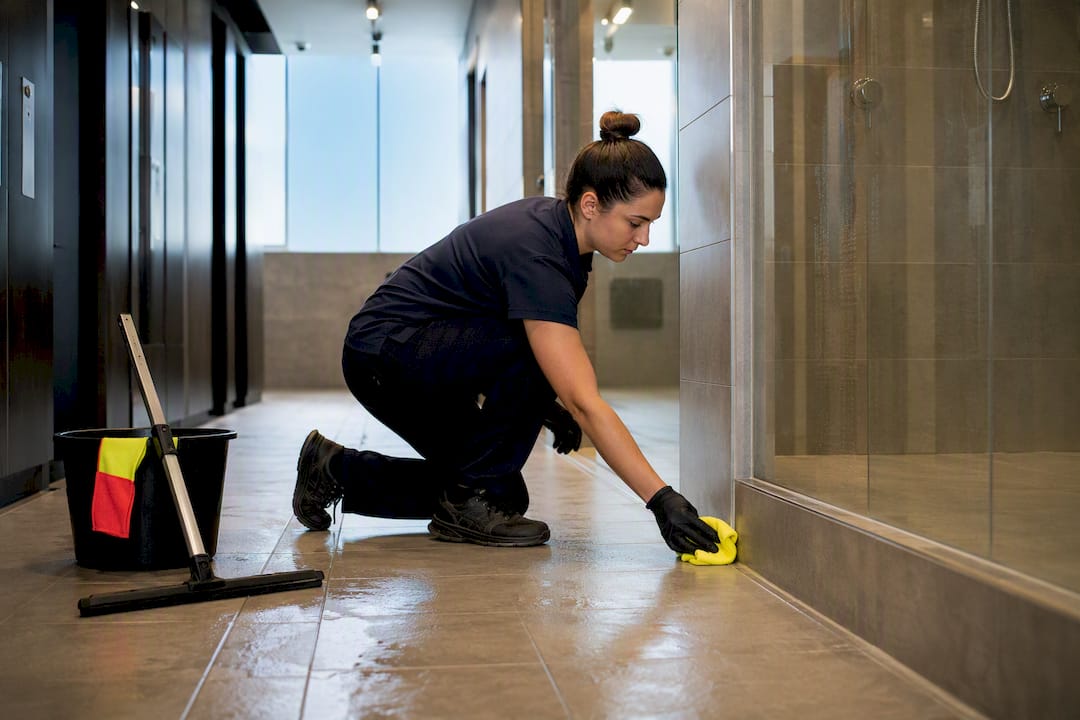
Showers, lockers, and floors in wet areas should be cleaned multiple times daily during operating hours, not just once at closing. Peak-hour cleans matter as much as the overnight deep clean, because that's when moisture, hair, and skin cells accumulate fastest.
Beyond the wipe-down itself, a few maintenance tasks get overlooked:
- Grout and tile joints need scrubbing weekly, not just surface mopping, since mould takes hold in the porous grout line long before it's visible on the tile face
- Floor drains should be cleared and treated regularly to stop odour build-up and standing water
- Extraction fans and ventilation need checking monthly; poor airflow is one of the biggest drivers of mould in change rooms
- Mops and cloths used in wet areas must be colour-coded and never crossed over into the main gym floor, or you're just relocating the contamination
Single-occupancy change rooms, increasingly common in newer facilities, bring their own consideration under the national code: panic alarms and clear signage for emergency assistance are expected wherever a member could be alone and unable to call for help. It's an easy detail to miss when you're focused purely on hygiene, but the code treats safety and cleanliness as the same duty.
How do you choose safer cleaning chemicals and PPE?
Reading a Safety Data Sheet properly takes about five minutes and tells you almost everything you need to know before a product goes anywhere near your gym floor. Look for the signal word (Danger versus Warning indicates severity), the GHS pictograms for hazards like skin corrosion or respiratory irritation, and the recommended PPE section, which tells you exactly what your staff should be wearing before you buy the product, not after an incident.
Bleach and alcohol-based sanitisers still have a place. High-touch surfaces during a suspected illness spike, or a spa/pool surround needing rapid disinfection, are legitimate cases for them. But for daily equipment cleaning, non-toxic alternatives paired with correct contact times and application methods can meet the same hygiene goals while reducing equipment damage and staff chemical exposure, which matters when you're cleaning the same console screens and vinyl surfaces multiple times a day, every day, for years.
- Gloves for all chemical handling, no exceptions for "quick" jobs
- Eye protection when diluting concentrates or spraying overhead surfaces
- Closed storage away from members, ventilated and away from heat sources
- Clear labelling on every diluted spray bottle, never a repurposed unlabelled container
Pro Tip: Keep a laminated SDS binder at the cleaning station, not in a filing cabinet in the office. If a staff member gets a chemical in their eye at 6am, nobody has time to go looking for it. For a deeper walk-through of label claims and hazard wording, see this guide to toxic cleaning ingredient warning labels.
What does audit-ready staff training look like?
A cleaning schedule is only as good as the person following it, and most compliance gaps trace back to training, not equipment or product choice. A properly trained cleaning team should be able to explain why they're using a particular product on a particular surface, not just follow a checklist by rote.
Core training should cover:
- Correct product use and dilution — including which chemicals never get mixed together
- Infection control basics — how pathogens spread on shared equipment and why contact time matters
- Equipment-specific care — what damages consoles, upholstery, and rubber flooring
- Emergency procedures — spill response, chemical exposure, and who to notify
On staffing, the code expects a qualified person on duty whenever the facility is open, and where that's genuinely not possible, documented risk mitigation steps need to be in place instead. A cleaning log entry that just says "cleaned" tells an auditor nothing. A useful entry records the time, the zone, the product used, and the initials of the staff member responsible, which turns a vague chore list into evidence.
Running a simple internal audit monthly, spot-checking five logged entries against what was actually done, catches drift before an external inspector does. Childcare centres in Australia run comparable audit-ready routines under similarly strict frameworks, and the recordkeeping structure used there translates cleanly to a gym floor.
What's the response protocol for a suspected infectious case?
Speed matters more than perfection here. The moment staff suspect norovirus, a skin infection, or another transmissible illness has come through the facility, the affected zone should be closed to members immediately and clearly signed off, not just quietly avoided.
- Isolate and rope off the affected equipment or area straight away
- Notify the duty manager and log the time, symptoms reported, and zone affected
- Where guidance allows a waiting period before disinfection, some protocols suggest up to 24 hours depending on the pathogen suspected, followed by a deep clean using full PPE and manufacturer-directed contact times
- Reopen only once the deep clean is logged and verified by a second staff member
- Communicate briefly and factually with members if the incident is visible or asked about, without overstating or understating the risk
Document everything, including the closure window and reopening decision. That record is what protects the business if a member later raises a formal complaint.
What records and signage keep you audit-ready?
Three record types cover most of what an inspector or insurer will ask for: cleaning logs (time, zone, product, staff initials), current risk assessments, and a chemical inventory listing every product on site with its SDS reference. Training records for each staff member round out the set.
Beyond compliance, a handful of KPIs actually help you run a tighter operation: average time between high-touch wipes during peak hours, number of member hygiene complaints per month, and audit pass rate on internal spot checks. Track them monthly and you'll spot drift before it becomes a pattern.
- Cleaning logs, updated in real time, not retrospectively at shift end
- Risk assessments reviewed at least annually or after any incident
- Chemical inventory cross-referenced against current SDS documents
- Hygiene signage placed at entry, change rooms, and equipment banks, stating expectations plainly rather than generically
Templates built for other regulated environments, like the strata cleaning checklist used by property managers, adapt easily to a gym's logging needs if you're starting from scratch.
Eco-friendly cleaning that still meets the standard
An effective cleaning approach cares about outcomes, documented risk assessment, frequent wet-area cleaning, and a genuinely safe environment, not about which chemical family delivers them. Non-toxic, bleach-free agents can meet those outcomes when applied correctly and may offer advantages on equipment longevity and staff exposure compared to harsh chemicals.
We've built comparably audit-ready routines for childcare centres and detailed non-toxic hazardous waste protocols for other regulated sectors. When a gym has had an outbreak, a post-construction handover, or simply hasn't had a proper deep clean in years, that's the point to bring in a specialist rather than push it onto an already stretched cleaning roster.
— Lead
Get audit-ready with a professional deep clean
Everything above is achievable with a well-trained in-house team and the right products, but a lot of gyms reach out to us precisely when the gap between their paper compliance and their actual floor is wider than they'd like an inspector to see. Professional cleaning companies may offer deep decontamination services using commercial-grade, non-toxic, bleach-free agents that help protect vinyl upholstery and console screens, often providing documented logs as evidence for compliance files.

That's the practical difference versus running the deep clean internally with stretched staff: you get a verified, dated record of the work done, not just an assurance it happened, which is exactly what an AUSactive audit or a WHS review wants to see. It also fits the reality of most facility budgets, since commercial cleaning costs vary by scope and frequency, and a one-off deep decontamination often makes more financial sense than expanding permanent headcount just to hit a periodic deep-clean target.
If your gym is overdue for a genuine reset, or you want a baseline audit before your next inspection, request a site assessment for the Full Sweep service and get a clear scope and quote before you commit to anything.
Sources
- National Code of Practice for Health and Fitness Industry
- A Guide To Gym Cleaning
- Gyms and Fitness Clubs (CCOHS guidance)
FAQ
How often should a gym be cleaned?
High-touch equipment needs wiping down hourly during open hours, wet areas need cleaning multiple times daily, and every zone needs a full deep clean at least nightly or weekly depending on usage.
Are gyms breeding grounds for germs?
Shared equipment, warm wet areas, and high skin contact make gyms higher-risk environments than most workplaces, which is exactly why the AUSactive code mandates frequent cleaning and documented risk assessments rather than leaving hygiene to member goodwill.
What are the basic gym etiquette rules for hygiene?
Wiping equipment down after use, bringing a towel, using provided sanitiser, and reporting spills or damaged equipment to staff are the core member-facing habits that support a facility's broader cleaning standard.
What counts as a high-touch surface in a gym?
Door handles, eftpos terminals, cardio consoles, machine handles and seat pads, free weights, and locker handles are the surfaces that need the most frequent attention under a zone-based cleaning schedule.