
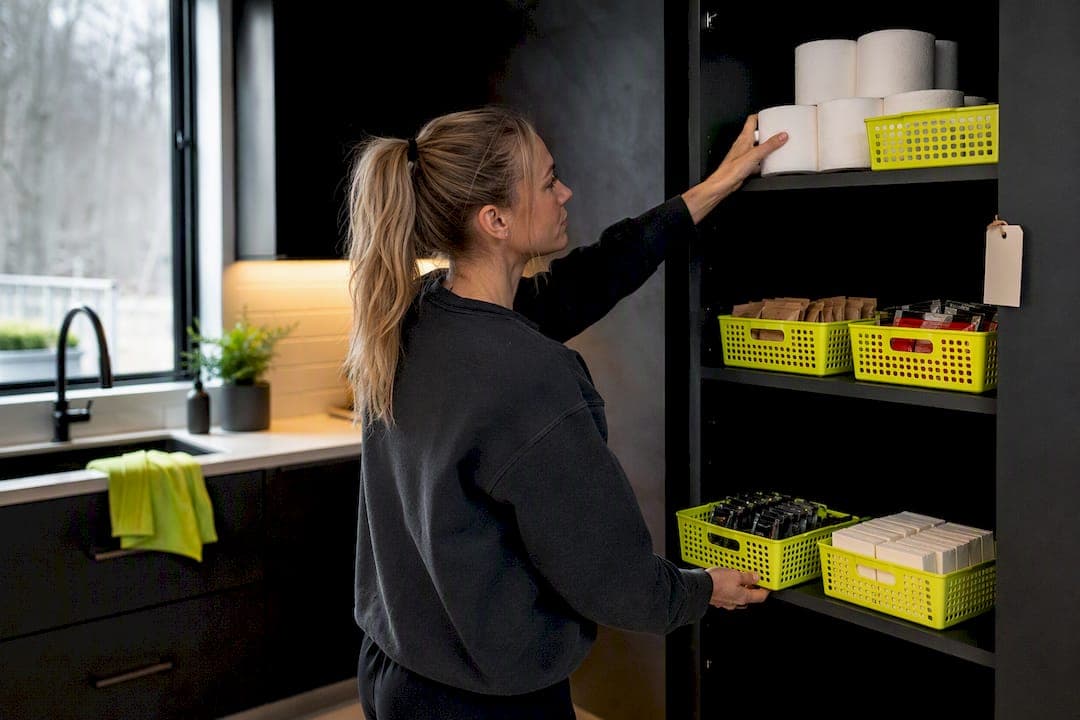
Stock coffee and tea, cooking basics, cleaning supplies and disposables in the kitchen; toilet paper, soap and towels in the bathroom; linens, pillows and chargers in the bedroom; and detectors, an extinguisher and a first-aid kit for safety. Restock all of it at every turnover using set par levels, and hand cleaners a documented checklist so nothing gets missed.
TL;DR:
- Stock consumables like coffee, tea, paper towels, and bin liners in quantities scaled to your property size to ensure availability during turnover.
- Maintain par levels and use a checklist with photo proof to prevent running out of essentials such as toilet paper, toiletries, and linens.
- Prioritize quality toiletries, reusable dispensers, and upgraded linens for higher guest ratings, and store spare stocks visibly for quick access.
- Follow local safety regulations by regularly testing detectors, checking extinguishers, and restocking first-aid kits to meet legal requirements and guest expectations.
- Outsourcing restocking to professional turnover services can ensure consistency, save time, and uphold high standards of cleanliness and supply management.
Table of Contents
- What is an airbnb consumables list, exactly?
- Kitchen consumables checklist and starter quantities
- Bathroom essentials: dispensers, towels and toilet paper par levels
- Bedroom and living room consumables guests actually notice
- Safety, first-aid and guest-facing tech supplies
- Restocking strategy: setting par levels that actually work
- What should go in a cleaner's restock kit?
- Shopping smart: bulk buying versus convenience costs
- Printable turnover checklist for your cleaner
- What professional turnover teams get right that hosts miss
- Let a professional turnover service handle the restocking
- Where to check policy and buying guidance
- Sources
What is an airbnb consumables list, exactly?
An airbnb consumables list is the set of items your guests use up or take with them, restocked at every turnover rather than fixed furnishings you buy once. It's different from your amenities list (Wi-Fi, air conditioning, a washer) because consumables run out. Toilet paper disappears. Coffee gets used. Bin liners vanish.
Airbnb's own guidance treats a small group of these as essentials, items hosts are strongly encouraged to provide: toilet paper, soap, one towel per guest, one pillow per guest, and linens for each bed listed as sleeping space, according to the Airbnb Help Centre. That's the floor. Five-star hosts go well past it, and the gap between the floor and a genuinely well-stocked property is where most of your reviews get won or lost.
The rest of this guide breaks the job into six practical categories: kitchen, bathroom, bedroom and living areas, safety and tech, restocking strategy, and the cleaner's own kit. Treat it as a working reference you can hand to whoever runs your turnovers.
Kitchen consumables checklist and starter quantities
Guests judge a kitchen fast. If there's no coffee on arrival morning or the dish soap bottle is empty, that's the first thing that goes in the review. A properly stocked kitchen removes friction before it happens.
The consumables that matter most for a strong turnover include coffee and tea (enough for the first morning at minimum), sugar, creamer, salt, pepper, cooking oil, dish soap, dishwasher detergent, sponges, bin liners, paper towels (at least two rolls), aluminium foil and plastic wrap, according to a rental consumables checklist built specifically for Australian short-term rentals. Think of this as your non-negotiable kitchen par.
- Coffee (ground or pods, plus tea bags): enough for two to three servings per adult guest
- Sugar, salt, pepper: small refillable shakers, not giant catering tubs
- Cooking oil: one small bottle, topped up rather than replaced every turnover
- Dish soap and sponge: one bottle, one sponge, swapped out when visibly worn
- Bin liners: minimum four spare bags left visibly under the sink
- Paper towels: two rolls minimum
- Foil and plastic wrap: one roll each, restocked when under a quarter full
Starter quantities scale with the property. A studio needs roughly half the volume of a two-bedroom, but the categories don't change, only the quantity per item. For a studio, one coffee sleeve and a single roll of paper towels covers most stays. A one-bedroom warrants doubling the paper goods and adding a second sponge in reserve. A two-bedroom sleeping four to six guests needs bin liners in bulk, at least three rolls of paper towels on hand, and enough dish soap concentrate to avoid a mid-stay refill call.
The five-star extras are where you separate an average listing from a booked-out one. Decent coffee, a jar of biscuits, and a small bowl for guests to see spare tea bags without opening every cupboard all cost very little and shift review language from "clean" to "thoughtful." Well-stocked kitchens with reliable basics correlate with stronger guest ratings and repeat bookings, according to that same Airbnb supplies checklist. Store everything in one labelled cupboard rather than scattered across three, and keep an inventory tag on the shelf so cleaners know exactly what belongs there. A more detailed kitchen expectations checklist breaks down what guests specifically look for when they open the fridge and cupboards on arrival.
Pro Tip: Buy one branded jar or canister for coffee and tea rather than leaving loose sachets in a drawer. Guests notice presentation faster than they notice price.
Bathroom essentials: dispensers, towels and toilet paper par levels
Bathrooms are unforgiving. One missing roll of toilet paper turns a five-star stay into a three-star review, no matter how nice the rest of the property looks.
Airbnb's stated minimum here is toilet paper, hand soap, and one towel plus one pillow per guest, according to the Airbnb Help Centre. That's the baseline every listing should clear. A property aiming higher adds shampoo, conditioner, body wash, a hair dryer, and enough towel sets to avoid same-day laundering between back-to-back bookings.
- Toilet paper: two spare rolls visible per bathroom, minimum
- Hand soap: one pump bottle or bar per basin
- Shampoo, conditioner, body wash: full-size or good-quality single-use, not the smallest hotel sachets
- Towels: one bath towel and one hand towel per guest, plus a spare set in the linen cupboard
- Hair dryer: one per bathroom, tested and working at every turnover
Dispenser vs. single bottle is the decision most hosts get wrong. Wall-mounted refillable dispensers look premium and cut plastic waste, and industry guides increasingly favour them as the eco-friendly, cost-effective option when they're topped up properly, according to Awning's supplies guide. The catch is maintenance discipline. A half-empty dispenser looks worse than a fresh single bottle, so only use dispensers if your cleaner checks fill levels every single turnover, not just when they remember. Smaller operations or those without a consistent cleaning team are often better off with individual bottles that get swapped wholesale.
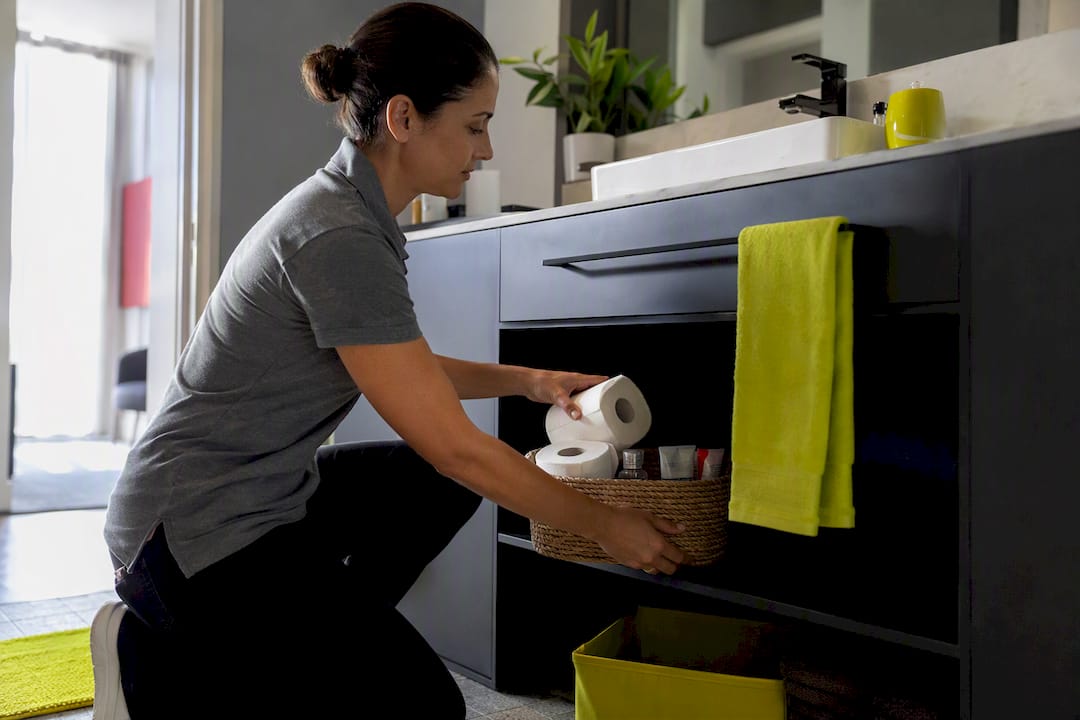
Store spare toilet paper and toiletries somewhere obvious. A basket under the sink or a small shelf with two extra rolls saves guests from digging through cupboards, and it saves you a bad review over something that costs a few dollars to fix. A full bathroom staging checklist covers presentation details that matter just as much as stock levels.
Bedroom and living room consumables guests actually notice
Linens are the biggest line item on any rental consumables checklist, and they're also the easiest to get wrong through under-buying rather than under-cleaning.
Airbnb's minimum is one pillow per guest and linens for every bed listed, according to the Airbnb Help Centre. In practice, run at least two full sheet sets per bed so one is always in rotation while the other launders, plus a mattress protector and pillow protectors on every bed to extend their life and protect against stains you'd otherwise have to replace outright.
- Sheet sets: two per bed minimum, three if turnover days are tight
- Pillows: two per guest where the bed allows, mixed firm and soft
- Mattress and pillow protectors: on every mattress and pillow, always
- Spare blanket: one per bedroom, stored visibly in a cupboard or ottoman
- Laundry bag: one per bedroom for guest convenience
Chargers and small consumables round out the bedroom brief. A shared charging cable (USB-C and Lightning), spare AA and AAA batteries for remotes, and a spare light bulb tucked in a drawer solve the three most common mid-stay complaints. In the living area, a spare throw blanket, remote batteries that actually work, and a small pack of basic cleaning wipes for spills all read as consumables to a guest even though they're barely a line item on your budget. A linen par system built around triple rotation keeps this from becoming a weekly scramble.
Safety, first-aid and guest-facing tech supplies
These aren't optional extras. A working smoke detector and a fire extinguisher within reach are baseline expectations for any short-term rental, and a basic first-aid kit costs next to nothing compared to the liability of not having one.
- Smoke detector: tested monthly, batteries checked every turnover
- CO detector: mandatory if there's any gas appliance or attached garage
- Fire extinguisher: kitchen-accessible, checked for charge and expiry
- First-aid kit: bandaids, antiseptic, paracetamol, restocked when opened
- Torch or lantern: charged and accessible for power outages
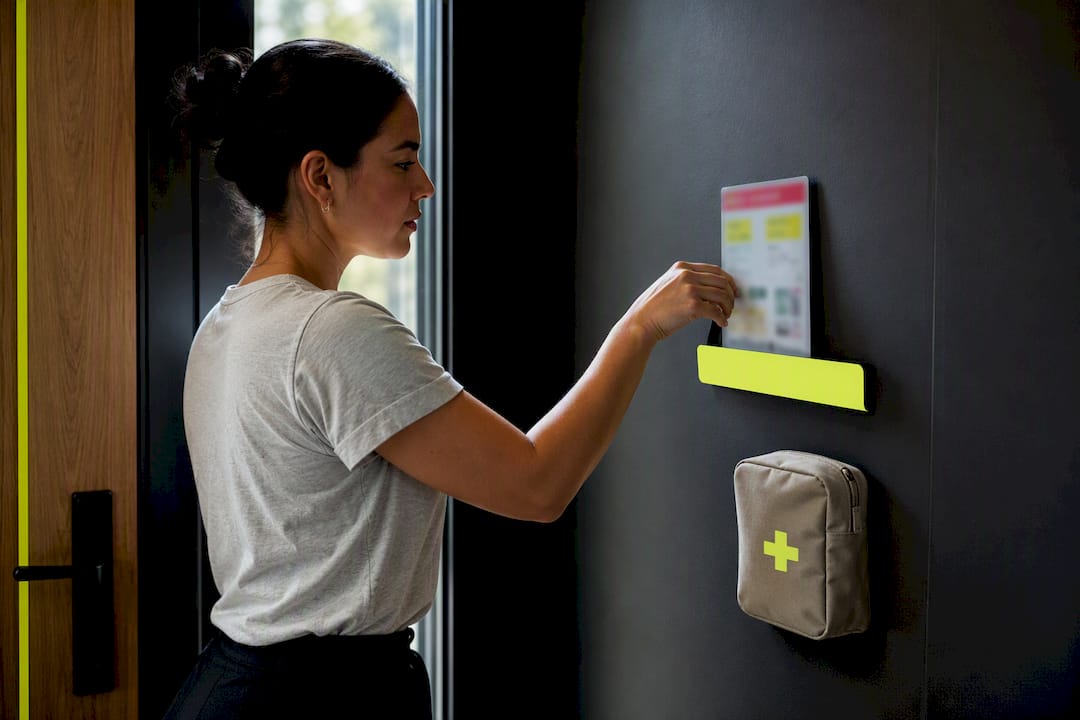
- Emergency info card: printed, with the nearest hospital and your contact number
Tech consumables matter too, even though they're smaller. A printed Wi-Fi card on the bench beats guests hunting through messages for a password. Spare charging cables near the bed, an accessible power board, and fresh batteries in every remote round out the list. Regulations around smoke alarms and extinguishers vary by state and property type, so check your local fire authority's current requirements rather than relying on general guidance.
Pro Tip: Laminate the emergency info card. It survives spills, gets reused every turnover, and never needs reprinting.
Restocking strategy: setting par levels that actually work
A par level is simply the quantity you always keep on hand, the trigger point that tells you to reorder before you run out mid-turnover. Get this right and consumables stop being a source of stress.
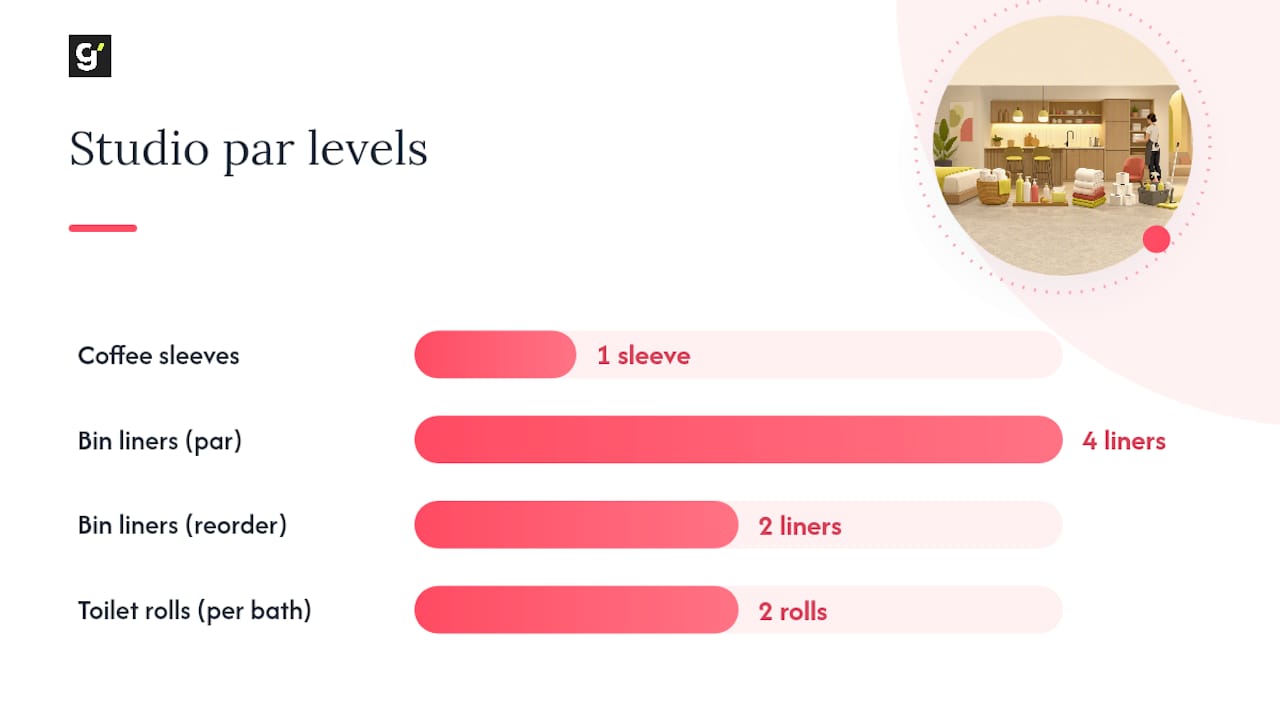
- Set a par per category, not per item. A studio might run a par of one coffee sleeve, four bin liners, and two toilet rolls per bathroom. A two-bedroom doubles most of that and adds a buffer for higher occupancy.
- Define the reorder trigger. When stock drops below half your par (say, two of four bin liners left), that's the signal to top up on the next supply run, not when the cupboard is empty.
- Give cleaners a checklist with photo proof. A quick photo of the restocked cupboard after each turnover confirms the job's done and gives you a record if a guest disputes what was provided.
- Store in bulk, dispense in small amounts. Keep a bulk supply closet on-site or nearby, and only stock what's visible in guest-facing cupboards to the actual par level.
Treating consumables as a managed operational line, rather than a reactive scramble, keeps monthly costs predictable, and the ongoing spend is modest set against the review-score upside of never running dry, according to Minoan's Airbnb supplies breakdown. A structured turnover cleaning workflow is where most hosts actually implement this par system day to day.
Pro Tip: Keep a simple spreadsheet with one row per consumable, its par level, and the date last restocked. Five minutes a month saves a dozen emergency Bunnings runs a year.
What should go in a cleaner's restock kit?
Your cleaner needs their own kit, separate from the guest-facing cupboards, so they're never restocking from stretched personal supplies or guessing what's needed.
- Toilet paper (spare rolls, not just what's in the bathroom)
- Hand soap refills
- Bin liners in bulk
- Dish soap and dishwasher detergent
- Sponges and all-purpose spray
- Disposable gloves
Photo documentation matters here more than most hosts realise. Industry checklists increasingly recommend cleaners photograph the restocked cupboard and submit it alongside a checklist, flagging anything running low, so consistency doesn't depend on which cleaner turns up that week. A reliable turnover checklist built around photo proof is the difference between "the kitchen had nothing" complaints and a property that always looks the same on arrival.
Grime Scene Services runs every short-term rental turnover against a fixed Scene Reset checklist, restocking to par, photographing the result, and flagging anything running low before it becomes a guest complaint.
Shopping smart: bulk buying versus convenience costs
Bulk-buying toilet paper, bin liners and paper towels through a wholesaler or membership warehouse cuts your per-unit cost dramatically compared to grabbing them at the supermarket during a panicked restock run. Reserve convenience buying for genuinely last-minute gaps, not as your default channel.
- Bulk channels: warehouse memberships, wholesale suppliers, bulk online retailers for paper goods, liners and cleaning products
- Convenience buys: supermarket top-ups for perishables like coffee and fresh soap, kept to a minimum
- Refillable dispensers: higher upfront cost, lower cost per guest over time, but only worthwhile with disciplined refill checks
A single property's initial stock-up typically runs a modest one-off cost, with ongoing monthly restocking scaling with occupancy and guest turnover frequency. Guides that track this consistently note the restock spend stays low relative to booking revenue once a par system is in place, which is the strongest argument for setting one up early rather than buying reactively.
Printable turnover checklist for your cleaner
| Room | Check item | Action if low |
|---|---|---|
| Kitchen | Coffee, tea, oil, foil, bin liners restocked to par | Top up from bulk closet, photograph shelf |
| Bathroom | Toilet paper (2 spare rolls), soap, towels per guest | Replace immediately, photograph cupboard |
| Bedroom | Sheets, pillows, spare blanket, charger cable | Swap from spare set, note in report |
| Safety | Detector batteries, extinguisher charge, first-aid kit | Flag to host same day, do not delay |
Pin this beside the cleaner's own restock kit and require a photo of each row before marking the turnover complete. If any item is under half its par, the rule is simple: restock now, don't wait for the next visit.
What professional turnover teams get right that hosts miss
Running restocks to a fixed par level sounds rigid until you see what happens without one. Every missed item becomes a guest message, and every guest message chips at your response rating even when the fix takes five minutes.
The teams that do this well don't rely on memory. They photograph every restocked cupboard, log it, and flag anything trending low before the next booking lands. Grime Scene Services builds its Scene Reset protocol for short-term rentals around exactly that discipline, because consistency, not luck, is what keeps a listing at five stars turnover after turnover.
— Lead
Let a professional turnover service handle the restocking
Running par levels, checklists and photo proof yourself works, but it eats hours every week that most hosts would rather spend on bookings, not bin liners. Grime Scene Services' Short Term Rental turnover packages fold consumable restocking straight into the clean: routine turnovers, full consumable top-ups, and the Scene Reset deep protocol for listings that need a reset before a big booking run.
Every job uses non-toxic, bleach-free agents, so the property is genuinely safe for the next family or pet that walks in, not just surface-clean. For hosts juggling multiple properties or back-to-back same-day turnovers, that consistency is what protects your rating when you can't be on-site to check the cupboards yourself. If you also handle a broader rental portfolio, this landlord maintenance checklist is a useful companion for the maintenance side of the job.
Check availability and get a quote for your next turnover on the Short Term Rental services page, or look into the Deep Decontamination Full Sweep if your property needs a full reset before its next guest arrives.
Where to check policy and buying guidance
- Airbnb Help Centre: essential amenities for the official minimum hosts should provide
- Airbnb Resource Centre: amenities guests want for how amenities affect search visibility
- Bulk Buys' Airbnb supplies checklist for Australian bulk-buying options
- Professional Holiday Homes' stocking guide for a room-by-room pantry breakdown
Sources
- Providing essential amenities for guests — Airbnb Help Centre
- Airbnb supplies checklist (Australia) — Bulk Buys
- Setting up your Airbnb: Ultimate guide to stocking consumables — Professional Holiday Homes