
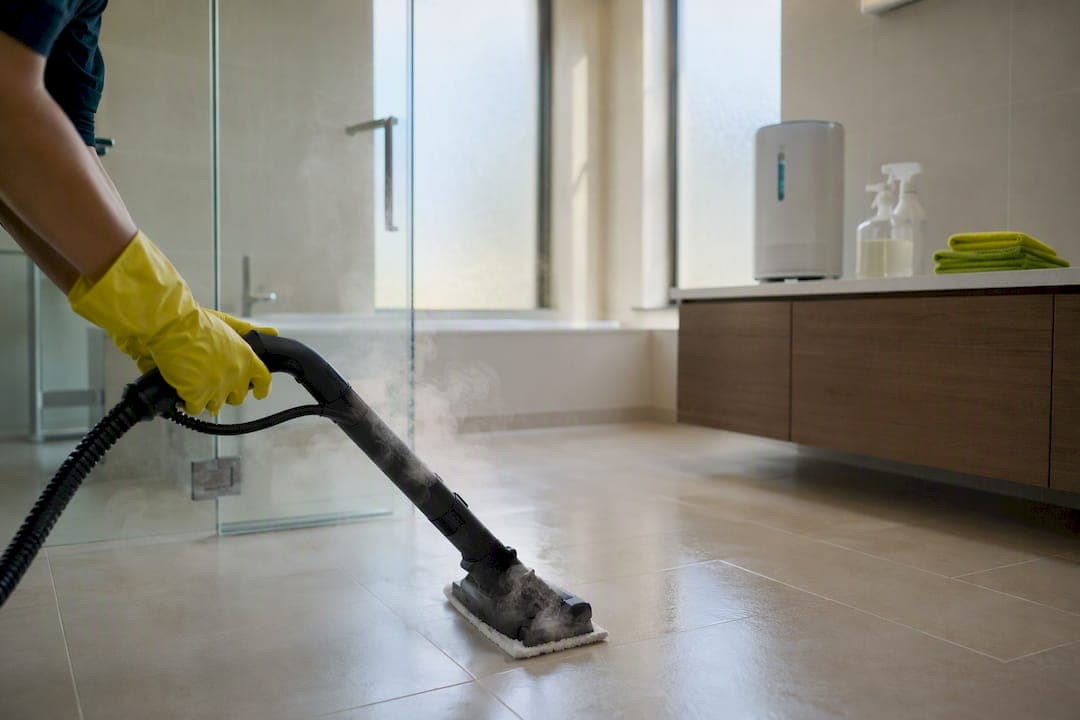
Clean the kitchen and bathrooms first, and do it while the house is still empty, ideally the day before or the morning of your move. Test the smoke and carbon monoxide alarms while you're at it, and take photos of every room before you touch a surface. Budget several hours for an average three-bedroom home, more if the previous owners left it rough.
TL;DR:
- Focus on cleaning kitchens and bathrooms first, as they contain the most bacteria and grime that you will encounter immediately after moving in.
- Prepare with a basic, organized cleaning kit, open windows to flush out stale air, and photograph each room before cleaning begins to document conditions.
- Conduct a room-by-room cleaning, starting high and working downwards, paying special attention to hidden spots like behind appliances, window tracks, and HVAC vents.
- Consider hiring professional cleaners if the property has undergone renovation, if heavy stains persist, or if time is limited for a large house.
- For pet owners or allergy sufferers, prioritize carpet steam cleaning and use fragrance-free products, plus swap HVAC filters and wipe low surfaces to reduce allergens.
Table of Contents
- Quick priorities: what to tackle first and why
- Supplies, tools and prep you need before you start
- Room-by-room move-in cleaning checklist
- Hidden spots and finishing steps before furniture arrives
- When to hire professional cleaners (and what to expect)
- Special considerations for pet owners or allergy sufferers
- Guidelines for post-cleaning inspection and touch-ups
- Common mistakes to avoid during move-in cleaning
- Publisher perspective: practical priorities we follow
- If you'd rather hire a deep clean: what the service covers
- Sources
Quick priorities: what to tackle first and why
Kitchens and bathrooms carry the previous occupant's grime, bacteria, and food residue, so they matter more than anywhere else in the house. You'll use both within hours of arrival, which makes hygiene here non-negotiable rather than optional. Red Energy's move-in guide puts these two rooms at the top of the list for exactly that reason.
Before you scrub anything, test every smoke alarm and carbon monoxide detector, swap the batteries if needed, and crack a few windows to clear stale air. Then work top to bottom: ceiling fans and light fittings before benchtops, benchtops before floors. Cleaning in that order stops dust from resettling on surfaces you've already wiped down, a sequence Lowe's move-in checklist backs as standard practice.
- Test smoke and CO alarms, replace batteries
- Open windows for airflow before you start
- Work high to low: ceilings, then walls, then floors
- Photograph each room before cleaning begins
Pro Tip: Photograph corners, skirting boards, and any existing marks with a timestamp visible on your phone. If a dispute over the property's condition ever comes up, dated photos settle it in seconds.
Supplies, tools and prep you need before you start
A cluttered cleaning kit slows you down more than a missing product does. Stick to the basics and you'll move through rooms without backtracking to the car for something you forgot.
- All-purpose cleaner, disinfectant spray, and a degreaser for kitchen grease
- Microfibre cloths (at least a dozen), a mop, and a decent vacuum
- Rubber gloves, an extendable duster, and a small stepladder for fans and vents
- A putty knife for scraping stuck-on grime, plus degreaser for rangehood filters
- A spare HVAC filter, ready to swap in before you finish
Before you start, open every window for around 30 minutes to flush out stale air and any off-gassing from new carpet or paint. Locate the breaker box and water shutoff while you're walking the house, and photograph each room now rather than halfway through. Stage a caddy with your core products so you're not hunting for the disinfectant in the garage. As a rough guide, allow 45 minutes for the kitchen, 30 for each bathroom, and 20 for a standard bedroom.
Room-by-room move-in cleaning checklist
This is the working list. Print it, save it to your phone, or customise a printable version if you want something to hand a helper on the day.
Kitchen
- Wipe down the inside of the fridge and freezer, including shelves and door seals
- Clean the oven interior, stovetop, and grates
- Soak the rangehood filter in degreaser overnight if it's greasy
- Empty and wipe every cabinet and drawer before you put anything in them
- Run the dishwasher empty, ideally with a citric acid cleaner to clear residue
- Wipe benchtops, splashback, sink, and tapware
- Mop the floor last, once every surface above it is done
Bathrooms and laundry
- Disinfect the toilet inside and out, including the base and hinges
- Descale the showerhead and taps if there's visible mineral buildup
- Scrub grout lines in the shower and around the vanity
- Remove and wash the exhaust fan cover
- Clean or replace the toilet seat if it's stained or loose
- Run an empty cycle with vinegar or a washing machine cleaner to clear leftover residue
- Mop bathroom and laundry floors once everything else is done
Living areas and bedrooms
- Dust ceiling fans and light fittings first, since debris falls downward
- Spot-wash walls where scuffs or marks are visible
- Wipe blinds slat by slat, then clean the glass
- Vacuum carpets thoroughly, or book a steam clean if they look tired
- Wipe out closets and shelving before you hang anything
Entry, hallways, garage and outdoor areas
- Wipe down door handles, hinges, and light switches
- Sweep entry thresholds and any tracked-in debris
- Check exterior lights are working and clean the fittings
Not everything needs the full treatment on day one. Surface-wipe low-priority areas like garage shelving or a rarely used spare room now, and schedule a proper deep clean for those spots once you've settled in. Save your energy for the rooms you'll use immediately.
Hidden spots and finishing steps before furniture arrives
The spots people forget are the ones you can't reach once a couch or fridge is sitting in front of them. Check behind where appliances will go, inside window tracks, on top of doors, and around switch plates. HVAC vents and return grilles collect dust that circulates through the whole house the moment the system runs, so wipe the covers and swap the filter now.
Once cleaning wraps up, protect your work. Lay felt pads under furniture legs, roll out cardboard along the main traffic path for moving day, and consider carpet protector film if you're expecting a lot of foot traffic before the boxes are unpacked. Cleaning an empty house gives you access to spots that become impossible to reach later, so this is genuinely your one shot at it.
- Behind and under appliance spaces
- Window tracks and door tops
- Switch plates and powerpoints
- HVAC grilles and filters
Finish with one more alarm test and a short run of the HVAC system to circulate fresh, filtered air before anyone moves a box inside.
When to hire professional cleaners (and what to expect)
Some jobs go beyond a weekend and a bottle of degreaser. If the property has just come out of a renovation, has pervasive staining, or you're short on time with a multi-bedroom house to cover, professional help is the better call. Post-construction dust and heavy grime often needs equipment most households simply don't own, and our own guide to deep cleaning after renovation covers why fine construction dust behaves differently to everyday dirt.
When you call around, ask three things: the exact scope of the clean, whether they use non-toxic products if that matters to your household, and what happens if you're not satisfied with the result. A reputable cleaner will have a clear rework policy.
- Post-construction dust or silica residue
- Stubborn stains that basic cleaners won't shift
- Large or multi-bedroom properties with limited time
- Rental turnovers needing a guaranteed standard
Pro Tip: Book professional cleaners 24 to 48 hours before your move date, and still take your own before-and-after photos. It protects you and gives the cleaner a clear record of the starting condition.
Special considerations for pet owners or allergy sufferers
If pets are moving in with you, or anyone in the household deals with allergies, a few extra steps are worth the effort. Pet dander and dust mites settle deep into carpet fibres and soft furnishings, and a standard vacuum pass won't shift all of it. If the carpets look tired or the previous occupants had pets themselves, a steam clean before move-in day makes a real difference to indoor air quality.
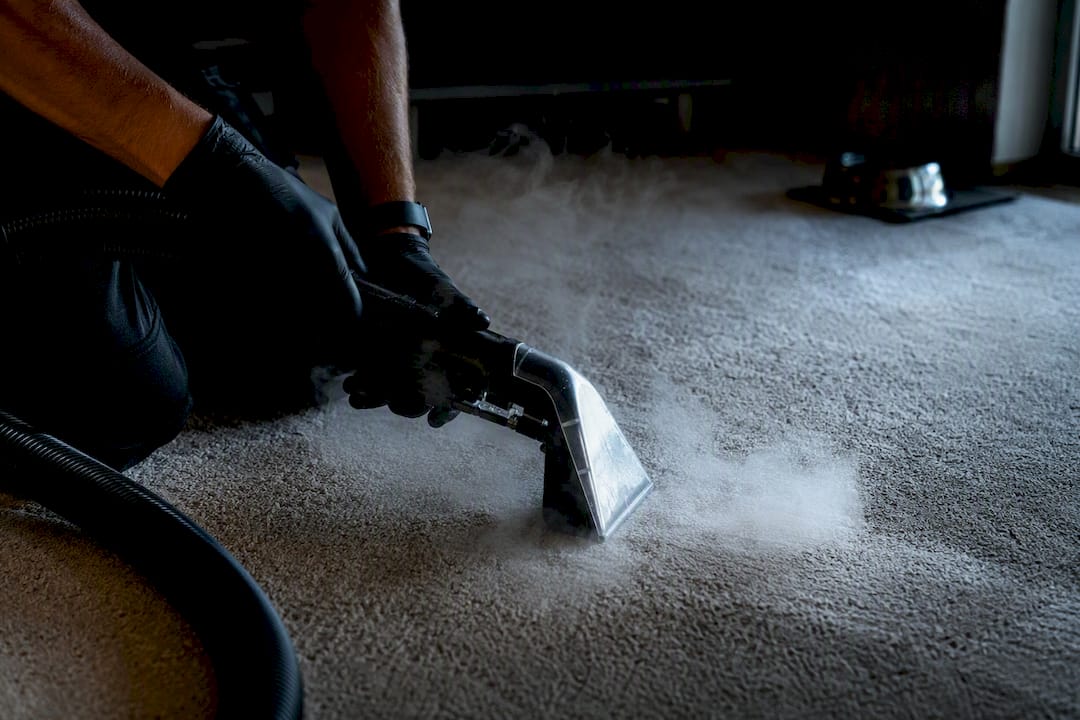
Skip fragranced sprays and heavily scented cleaning products if anyone in the house has sensitivities. Strong synthetic fragrances can trigger reactions in people with asthma or chemical sensitivities, and pets often react to them too. Stick to fragrance-free or naturally derived cleaners where you can, particularly on floors and soft surfaces your pet will spend time on.
Pay close attention to vents and filters. Dust and allergens circulate through HVAC systems, so a fresh filter before you move in matters more than most people realise, especially for anyone with respiratory sensitivities. Wipe down skirting boards and window tracks too. These low, often-missed areas are where pet hair and dust accumulate fastest.
Finally, check the yard or balcony for anything a curious pet might get into, from old chemical residue to garden treatments the previous owner used. A quick hose-down of outdoor tiles or decking removes any lingering product before your dog or cat has a chance to investigate it.
Guidelines for post-cleaning inspection and touch-ups
Once the cleaning is done, walk the property room by room with fresh eyes rather than assuming everything's covered. Natural light shows up streaks and missed spots that artificial light hides, so do this walk-through during the day if you can.
Check high-traffic surfaces first: benchtops, the stovetop, and bathroom tapware, since these are the areas guests and family notice within minutes of walking in. Run a hand along skirting boards and window sills. Dust that felt "clean enough" from a distance often isn't once you touch it.
Open every cabinet and drawer one more time. It's easy to wipe the visible edge of a shelf and miss the back corner. Check the oven and rangehood filter too. If they were soaking overnight, give them a final rinse and dry before they go back in.
Compare your after-photos against the before shots you took at the start. This isn't just for rental protection. It's a quick way to spot anything you rushed past. If something still looks patchy, a five-minute touch-up now beats living with it for weeks because you were keen to get furniture inside.
Common mistakes to avoid during move-in cleaning
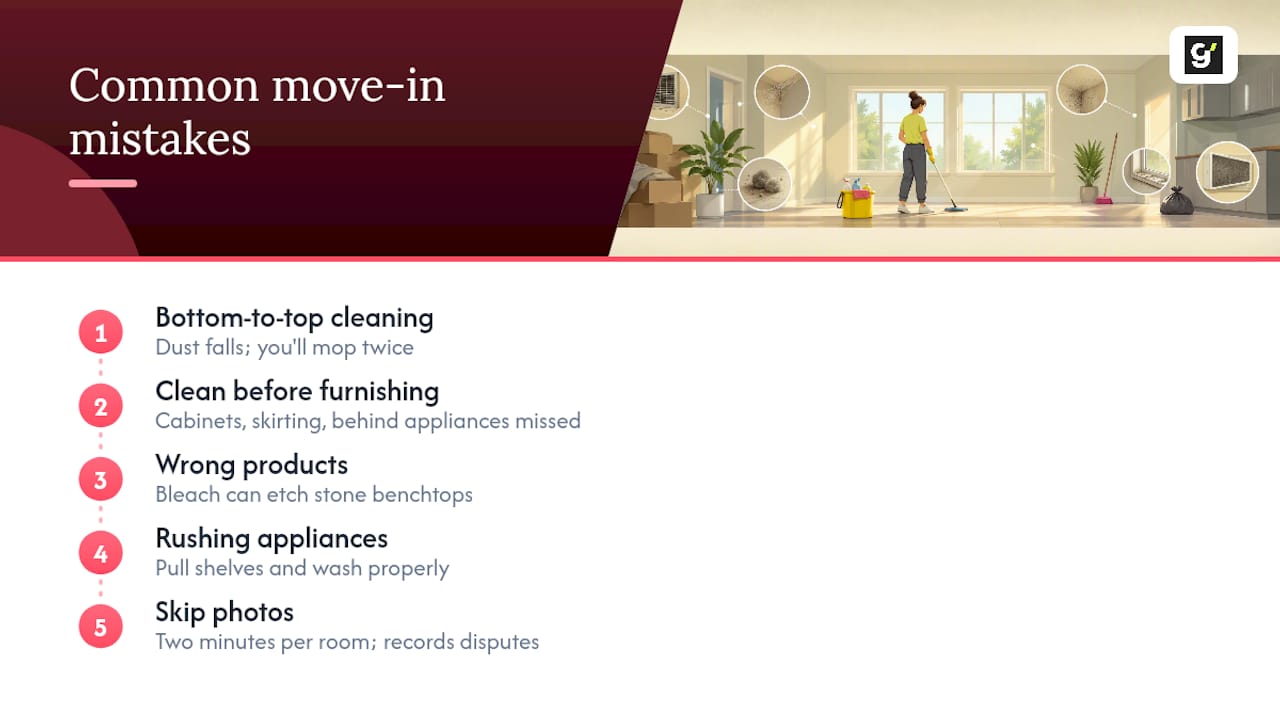
The biggest mistake is cleaning bottom to top. If you mop the floor before dusting the ceiling fan, you'll be mopping again once that dust settles. Work in the sequence outlined earlier and you save yourself doubling up.
Skipping the "empty house" advantage is another common one. People move furniture in first and plan to clean around it later, which means cabinet interiors, behind appliances, and skirting boards never get properly done. Once a fridge is in place, that gap behind it stays dirty until the next time you move.
Using the wrong product on the wrong surface causes damage rather than shine. Bleach-based cleaners on natural stone benchtops, for instance, can etch the surface permanently. Check what your benchtops, floors, and fittings are made of before you start spraying.
Rushing the appliance interiors is another trap. A quick wipe of the fridge shelves isn't the same as pulling them out and washing them properly, and skipping the dishwasher run means you inherit whatever residue the last tenant left behind.
Finally, don't skip the photo step because you're in a hurry. It takes two minutes per room and it's the only record you'll have if a dispute comes up later over the property's condition.
Publisher perspective: practical priorities we follow
Grimescene works from the same "empty house, top down" logic outlined here, using non-toxic agents through our Scene Reset protocol so you're not moving into a place that smells like a chemical plant. For appliance-heavy jobs, our appliance cleaning standards guide and bathroom staging checklist go deeper than this overview. Use this checklist yourself, or get in touch if the job's bigger than a weekend.
— Lead
If you'd rather hire a deep clean: what the service covers
Not every move-in clean fits into a spare Saturday, especially with boxes stacked in the hallway and a moving truck due at noon. Grimescene's Deep Decontamination | Full Sweep service handles the whole property, oven interiors, rangehood degreasing, grout, cabinet interiors, using non-toxic agents rather than harsh chemicals that leave residue behind for your family or pets to breathe in.

If your move date snuck up on you, the Rapid Response 2-Hour Tactical Clean covers urgent, high-impact zones fast, kitchen and bathrooms first, without waiting on a standard booking slot. Either way, book at least 24 to 48 hours ahead of your move date so the crew can work through the property while it's still empty. That's when access is easiest and the result lasts longest. Head to the Grime Scene Services booking page to lock in a date.
Sources
For a printable version, 101 Planners' move-in checklist offers a free customisable template, and Landlordforms has a move-in/move-out inspection template suited to rentals.
- Cleaning Your New Home Before Moving In
- New Home Cleaning Checklist | Lowe’s Move-In Guide
- How to Clean a New Home
- The New Home Cleaning Before Furniture Arrives Checklist: 33 Pro Tips for a Spotless Start | ChoreWiz
- Move-In Cleaning Checklist — Free Customizable Tool + Printable PDF